Facebook Catalog Ads for Shoes with Examples
Shoe brands use Facebook Catalog Ads to retarget viewers, show real time stock, highlight low inventory and push seasonal drops. This guide breaks down proven tactics like scarcity overlays, cross sells, flash sales and geo targeting to increase clicks, improve ROAS and scale footwear campaigns.


If you run a sneaker label, a DTC brand, or a retail catalog packed with styles, Facebook’s Catalog Ads might be your most underused asset. These ads aren’t flashy — but they work. They pull directly from your product feed, match buyers with shoes they’re likely to love, and keep your marketing running without any daily creative refreshes.
In this article, you’ll see how top footwear brands use Catalog Ads on Facebook — and how you can design yours to stop the scroll and start getting clicks.
Key takeaways
- Catalog Ads fit shoes perfectly. They're visual, seasonal, and personal, making them ideal for dynamic targeting.
- The automation will save you time— product feeds handle images, prices, stock, and more, so you don’t have to design each ad manually.
- Know that urgency and context convert — “Low stock,” countdowns, or weather-based messaging push people to buy now.
- Small details always matter. It overlays like “Free Shipping” or “4.8⭐ Rated” that help shoppers decide faster.
- There is a test to grow. You can rotate creatives, localize offers, and keep refining what works.
Why use catalog ads for shoes?
Shoes are highly visual and vary by season, style, and individual taste. Facebook Catalog Ads help you:
- Target shoppers based on browsing or cart behavior
- Automatically pull in pricing, size availability, and promo info
- Scale ads using product feeds—no need to design creatives one by one
- Make each product feel relevant and personalized
In short: it’s not just about showing products—it’s about showing the right shoes to the right people.
Best shoes catalog ad examples (Facebook)
Let’s explore real-world use cases and creative tactics with examples from top brands.
1. “Last Pairs Left” scarcity tactic
What this ad looks like: A clean carousel that shows popular shoes with overlays like "Only 1 Left!" or "Low Stock"
Why it works: Scarcity is a psychological trigger that pushes indecisive shoppers to act. Instead of generic promo language, you use dynamic tags that pull real inventory data to highlight low-stock items.
It is best for:
- DTC brands with fast-moving inventory
- Seasonal or trend-based collections

Pro tip: Use overlays like "Almost Gone," "Back Soon," or "Selling Fast" to test emotional urgency vs. factual urgency.
2. Personalized retargeting based on browsing
What this ad looks like: A product carousel showing the same items a shopper recently viewed, with the headline "Still thinking about these?"
Why it works: Retargeting is already powerful. But combining it with Catalog Ads takes things further. Facebook automatically pulls the exact products a user interacted with. It make the ad feel like a reminder, not a sales pitch.
It is mostly used to drive:
- High-traffic stores
- Products with longer consideration cycles (e.g., high-end sneakers, boots)
Bonus: You can layer discounts for cart abandoners: e.g., "Get 10% off your favorites—Today Only."
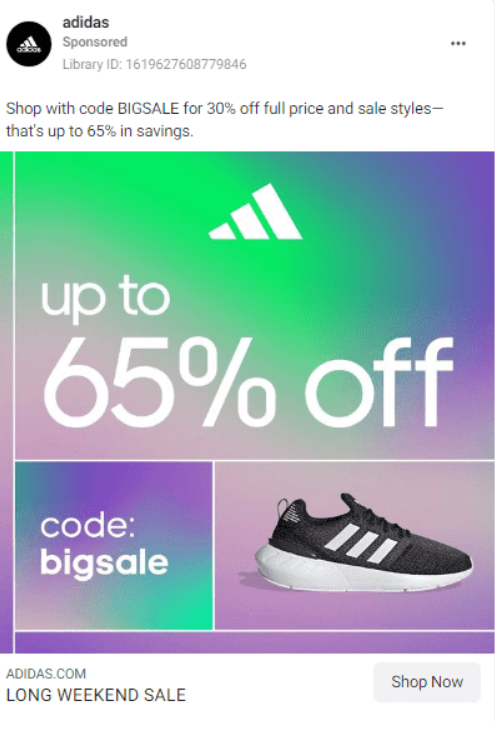
3. Cross-sell with matching accessories
This ad looks like a product set with sneakers, socks, and gym bags styled together under a theme like "The Weekend Pack."
Rather than pitching a single product, here you curate a look. Cross-sells increase AOV, and if items are styled well, shoppers feel that they’re getting a complete solution. It draws results for:
- Lifestyle-focused footwear brands
- Athletic or fashion retailers
Extra touch: Use tags like "Styled For You" or "Complete the Look."
4. Flash sale with countdown overlay
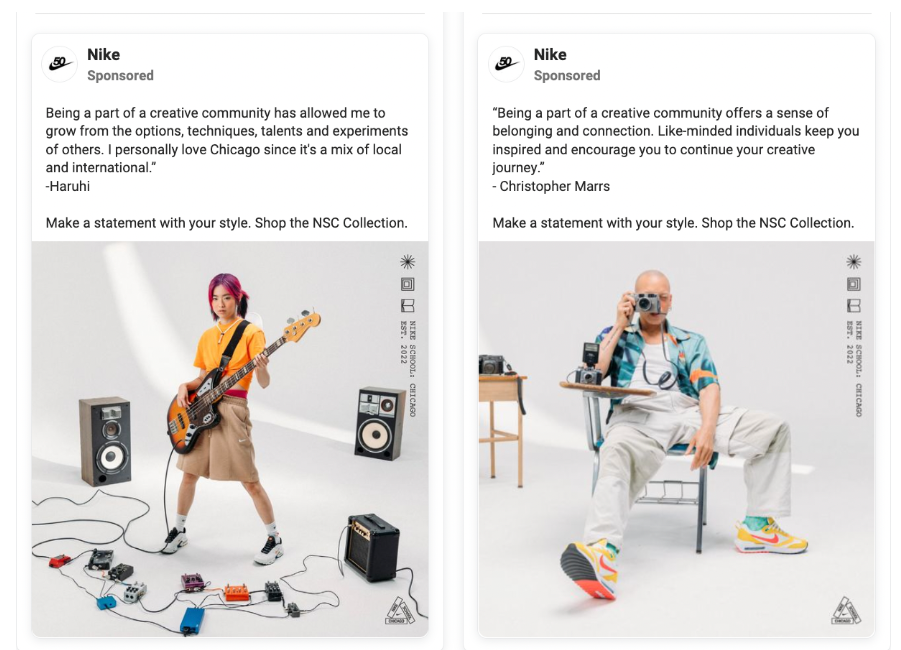
It is an animated catalog ad with a promo overlay: "Ends in 8 Hours! 20% Off All Sandals."
Why it works: Deadlines move people. When you overlay real-time countdowns or end dates, it creates urgency and frames the value of acting now.
Best for:
- Promo periods (Black Friday, Spring Sale)
- Mid-season clearance
Power combo: Add "Before" vs. "After" prices on the image itself, not just in the feed text.

5. New arrivals & seasonal drops
What this ad looks like: "Fall Collection Just Landed" carousel with autumn-colored backgrounds and text overlays like "New In."
Newness sells—especially in fashion. It highlights fresh arrivals and keeps ads feeling relevant and timely.
It is good for:
- Brands with regular product launches
- Seasonal collections (e.g., winter boots, summer slides)

Want to add an extra touch? Add "Shop Now" or "New Drop" as part of the creative layer.
6. Highlight perks like free shipping or returns
This ad includes a simple product image + overlay that says "Free Shipping" or "No-Hassle Returns."
Sometimes the only friction is delivery. By making these offers visible, you remove purchase blockers. It is prefered for:
- New customer acquisition
- Higher-priced shoes where return policy matters
For an optional add-on use trust signals like "Ships in 24h" or "4.8-star Rated"
7. Social proof at the product level
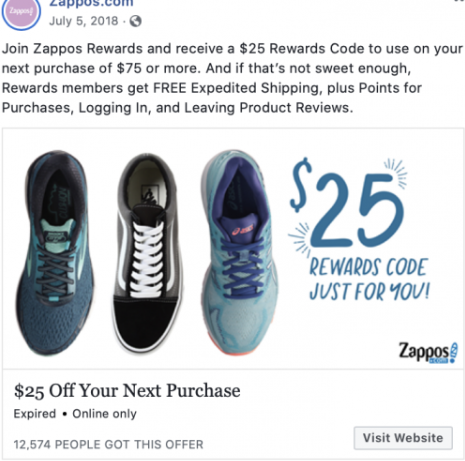
What this ad looks like? A catalog carousel where each product has a tag like "Best Seller," "5K+ Sold," or "Customer Favorite."
People trust people. They label top-performers gives undecided buyers a confidence boost.
It is best for:
- Stores with established customer base or UGC
- Running popular collections or styles
Plus added overlays like: "4.9 Stars | 2,000+ Reviews" are always a big help.
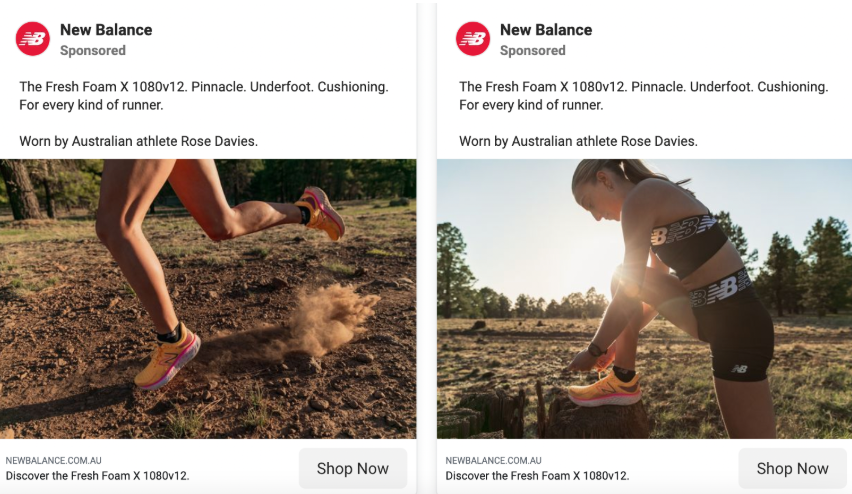
8. Run geo-targeted ads with weather relevance
What this ad looks like: "It’s Raining in NYC" with waterproof boots featured in the carousel.
Remember that the contextual ads convert. So, matching your catalog product sets to real-world weather or geography makes ads instantly relatable.
It is good for:
- Brands with wide geo-coverage
- Retailers with weather-sensitive collections (boots, slides, snow shoes)
And here is an advanced tiip for you: use weather-based triggers to automate creative and product set changes.
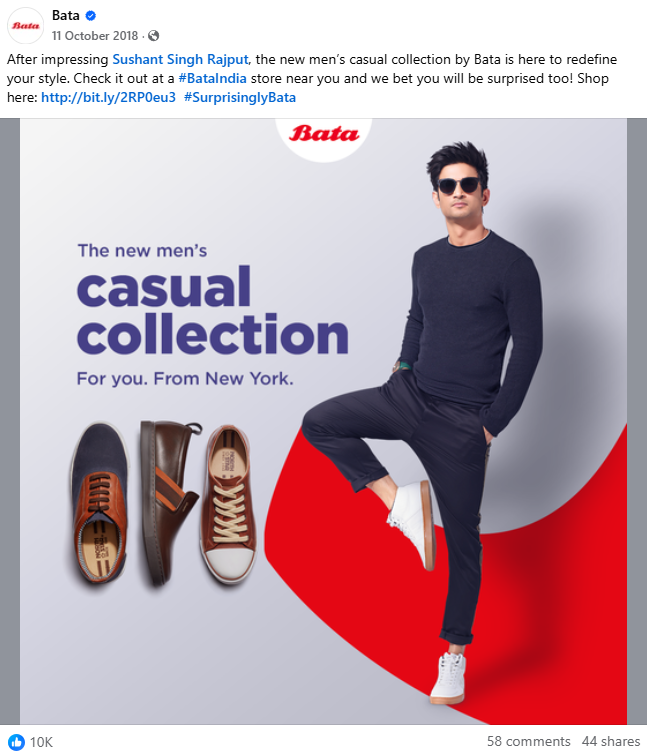
Want to build ads like these?
With a platform like Cropink, you can:
- Add overlays to your product feed (e.g. pricing, stock, tags)
- Automate creative at scale
- Use real-time inventory + promo data to update visuals dynamically
- Customize your product feed with overlays like pricing, stock info, reviews, or perks
- Automate creative updates at scale across 100s of SKUs
- Keep your ads always-on and always up-to-date based on inventory, discounts, and seasons
Whether you’re a fashion brand or a DTC startup, these catalog ad examples are just the beginning. Test creative formats, personalize your product feed, and watch your ROAS improve.
Let your product feed do the heavy lifting. Ready to scale your shoe ads? Start Now!
Bonus tactic: Add the localized elements
Big brands like Timberland or Crocs often tweak small things in their ads—like showing prices in local currency or adding delivery messages such as “Free shipping in Canada” or “Delivered in 2 days.”
These small changes can make a big difference, and Catalog Ads make it easy to apply them automatically at scale.
Pro tips for designing shoe catalog ads
Want better results? Here’s what works:
| Do this | Skip this |
|---|---|
| Use clean, high-quality shoe images | Using cluttered or low-res photos |
| Show price, discounts, and brand name | Hiding key info in small fonts or deep in captions |
| Use overlays sparingly (e.g., “Free Shipping,” “4.8⭐ Rated”) | Overloading every tile with badges or tags |
| Group products by category or season (e.g., “Monsoon Boots”) | Dumping your full catalog in one set |
| Rotate product tiles and test different formats | Letting ads go stale with no variation |
| Localize delivery info (e.g., “Ships Free in Delhi”) | Running generic, one-size-fits-all copy |
After working with hundreds of clients in our digital marketing agency, I learned that even a well-intentioned Facebook ad can fall flat, if NOT OPTIMIZED METICULOUSLY. One of the most common issues is 'PIXEL SIGNAL DISTORTION.' This happens when the Facebook Pixel isn't firing correctly. As a result, the algorithm struggles to understand what success looks like for your campaign, affecting everything from targeting to optimization. My advice: always double-check event setups and test the Pixel with Facebook's diagnostics. Be meticulous and track religiously.

VP of Demand Generation & Marketing at Thrive Internet Marketing Agency
Smart design tips that boost conversions
- Hook first, browse later: Use a strong lifestyle image upfront, then let users scroll through product tiles.
- Make product info dynamic: Show price, rating, or stock level using feed data — color-coded badges help guide decisions.
- Seasonal cues work: A simple “Winter Drop” or “Back-to-Campus Picks” background can lift clicks.
- Mobile-first always: Most people scroll Facebook on phones. Crop text overlays and visuals accordingly.
Final takeaway
It must be clear by now that the catalog ads are one of the easiest ways to sell more shoes. Just plug in great visuals, show clear info like price or discounts, and let Facebook do the targeting for you.
Start simple: clean product photos, strong headlines, and helpful labels like “Free Shipping” or “Best Seller.” Then test and tweak what works.
With small changes, you can get big results.
FAQs
It’s best to update your product feed regularly—ideally daily or in real-time—to ensure ads reflect accurate stock levels, pricing, and promotions, preventing wasted spend on unavailable products.
Yes, you can set up geo-targeted Catalog Ads that change dynamically based on weather conditions or the shopper’s location, such as showing waterproof boots when it’s raining in that area.
Avoid overloading your ads with too many badges or text overlays, using low-quality images, or running stale ads without refreshing product sets or creatives regularly.
Use Facebook’s A/B testing tools to rotate different catalog segments, overlays, or headlines, then analyze sales and engagement data to double down on what resonates.
Yes, by curating cross-sell or bundle product sets in your feed—like pairing shoes with accessories—you encourage shoppers to add more to their cart, boosting AOV naturally.
Manisha is a Data-Driven Marketing Expert who turns numbers into narratives and ad clicks into conversions. With a passion for performance marketing and a sharp eye for analytics, she helps brands cut through the noise and maximize their impact in the digital space.
Leszek is the Digital Growth Manager at Feedink & Cropink, specializing in organic growth for eCommerce and SaaS companies. His background includes roles at Poland's largest accommodation portal and FT1000 companies, with his work featured in Forbes, Inc., Business Insider, Fast Company, Entrepreneur, BBC, and TechRepublic.
Related Articles


How Can Cropink Help?
Start with Cropink is easy and free
No credit card required