Facebook Advertising Case Studies: 10 Meta Success Stories
Looking for proof that Meta ads work? These Facebook advertising case studies take you behind the scenes of 10 real campaigns, the strategies behind them, and the lessons you can apply to your own ads.


At this point, ‘try Facebook ads’ has become the marketing equivalent of ‘drink more water.’ But at the back of your mind, you’re still wondering if Meta ads are truly effective as they say. Well, you’re in the right place to find out.
Today, we’re taking you through 10 Meta ads case studies so you can finally have the proof you need, and also get a few ideas for your next Meta campaign.
Quick view of Facebook Advertising Case Studies
| Brand | Strategy | Outcome | Key lesson |
|---|---|---|---|
| Sephora | Creator partnership ads + Advantage+ Catalog Ads | 1.56X higher omnichannel ROAS | Pair creators with personalized product ads. |
| Leroy Merlin Poland | Enriched Meta catalog ads | 79% higher ROAS | Add more product information to your creatives. |
| Seltzer Goods | Lookalikes + gradual budget scaling | 785% revenue growth | Scale only after finding a winning campaign. |
| Leading Fashion Brand | Branded catalog ads | +6.8-point brand awareness lift | Keep your branding consistent across every catalog ad. |
| LANEIGE | Creator partnership ads | +28-point ad recall | Use creators to launch new products. |
| Cruise Critic | Value-optimized catalog ads | 22% higher ROAS | Optimize for purchase value, not volume. |
| Design Pickle | Low-friction offer | Sales cycle reduced to under 7 days | Make it easy for people to buy. |
| Walgreens | Localized video ads + audience segmentation | 244% above video view goal | Refine targeting with retargeting, lookalikes, and customer lists. |
| Buffer | $5/day campaign | Learned what each objective could achieve | You don't need a big budget to start testing. |
| Aurum Brothers | Segmented retargeting | 13X ROAS | Tailor ads to each audience segment. |
How to read a Facebook ads case study
As you go through these Facebook advertising case studies, pay attention to:
- Budget: Was it a small test or a large-scale campaign?
- Audience: Who did the brand target, and why?
- Creative: Which ad formats, messaging, or visuals did they use?
- Offer: What gave people a reason to click or buy?
- Funnel stage: Was the campaign targeting new prospects or retargeting previous visitors?
- Outcome: Which metrics improved, and what strategy likely contributed to that improvement?
10 Meta case studies to learn from
Read on to discover Meta success stories from some of the top brands today.
1. Sephora increased omnichannel ROAS with creator content and Meta Advantage+ catalog ads
Sephora wanted to increase sales across its website, stores, and mobile app through a single Meta campaign. The retailer already used omnichannel ads, but wanted to see whether combining them with creator content and personalized catalog ads could attract new shoppers and drive more purchases.
The campaign paired creator partnership ads with Meta Advantage+ Catalog Ads. This allowed product recommendations from Sephora's catalog to appear alongside authentic creator photos and videos.
Ads ran across Instagram Feed, Stories, and Reels between August 19 and September 15, 2025.
The campaign generated 1.56X higher incremental omnichannel return on ad spend, 1.04X return on ad spend for in-store purchases, and 3% higher incremental reach compared with Sephora's usual omnichannel campaigns.
Why it worked
- Combined creator content with personalized Meta Advantage+ Catalog Ads.
- Used real shopping experiences to make the creative authentic and relatable.
- Reached new audiences through both Sephora's and the creators' Instagram accounts.
- Expanded targeting with Advantage+ Audience to find shoppers beyond the brand's existing audience.
- Ran one campaign that supported online, in-store, and in-app purchases.
Takeaway
Creator content can become much more powerful when paired with personalized product recommendations. Sephora combined trusted voices with dynamic catalog ads. It gave shoppers authentic inspiration alongside products they were likely to buy.
2. Leroy Merlin Poland increased ROAS by 79% with enriched Meta catalog ads
Leroy Merlin Poland wanted social media to become a larger driver of online sales during its busiest season.
The team partnered with Cropink to improve the performance of its Meta campaigns, increase return on ad spend, and drive more purchases between March and July 2025.
Cropink replaced standard catalog ads with Enriched Catalog Ads and Dynamic Product Ads powered by the retailer's product feed.
Product information was refreshed every two hours, while creatives automatically displayed pricing, discounts, campaign themes, and other purchase cues that matched each shopper's intent.
Example of a successful Facebook ads ecommerce case study.
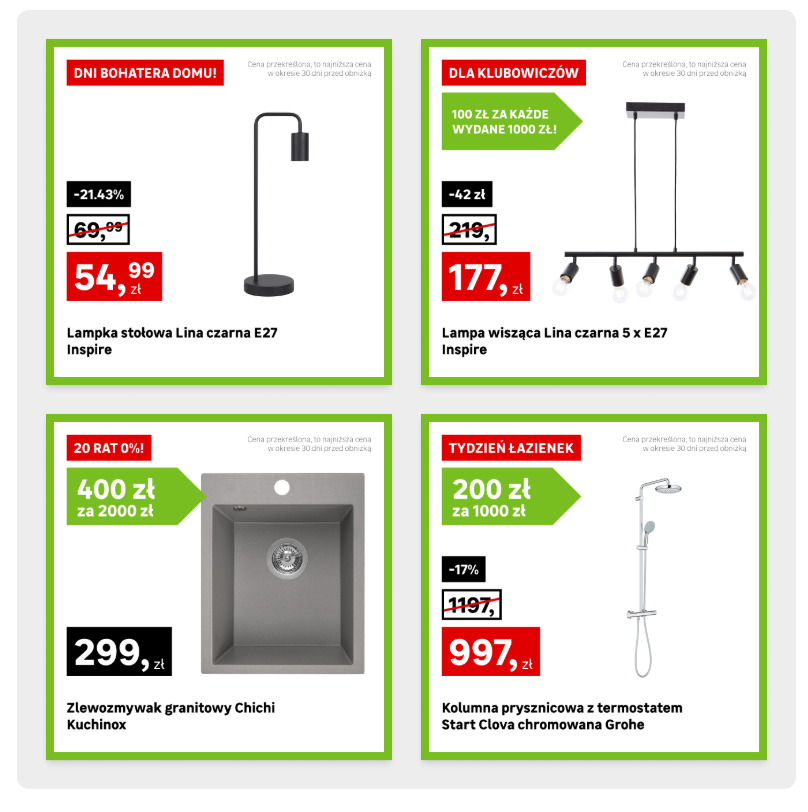
The first full month after implementation delivered a 79% year-over-year increase in ROAS and a 353% increase in conversion rate. By July, ROAS had climbed 514% year over year, while conversion rate peaked at 910% year over year in June.
Why it worked
- Used enriched catalog ads that combined product feed data with branded creative.
- Automatically updated more than 99,000 products every two hours to keep pricing and promotions current.
- Added purchase alerts such as discounts, strikethrough prices, campaign themes, and savings messages directly into the creative.
- Personalized ads based on shopper intent with Dynamic Product Ads.
- Standardized creative production, making seasonal campaigns easier to launch and scale.
Takeaway
Leroy Merlin didn't improve performance by showing more ads. It improved performance by showing more relevant ones. Enriching product feed data with branded, personalized creatives helped the retailer attract shoppers who were ready to buy. As a result, it enjoyed a better return on ad spend during the busiest sales period.
3. Seltzer Goods increased monthly revenue by 785% with a simple Meta ads strategy
At the start of the COVID-19 pandemic, Seltzer Goods saw wholesale orders decline sharply and needed online sales to survive.
The company, therefore, decided to increase investment in Meta ads to introduce its artist-designed puzzles to new customers.
The campaign targeted only cold audiences and created just one Facebook ad and another Instagram ad. However, they used interest targeting, where they created lookalike audiences for website page visitors, AddToCart users, and Purchasers.
It was actually the very first Facebook ad that Seltzer Goods ran.
Budgets were increased gradually, at a 10–15% rate every few days.
The team also ran A/B tests to find the best-performing version.
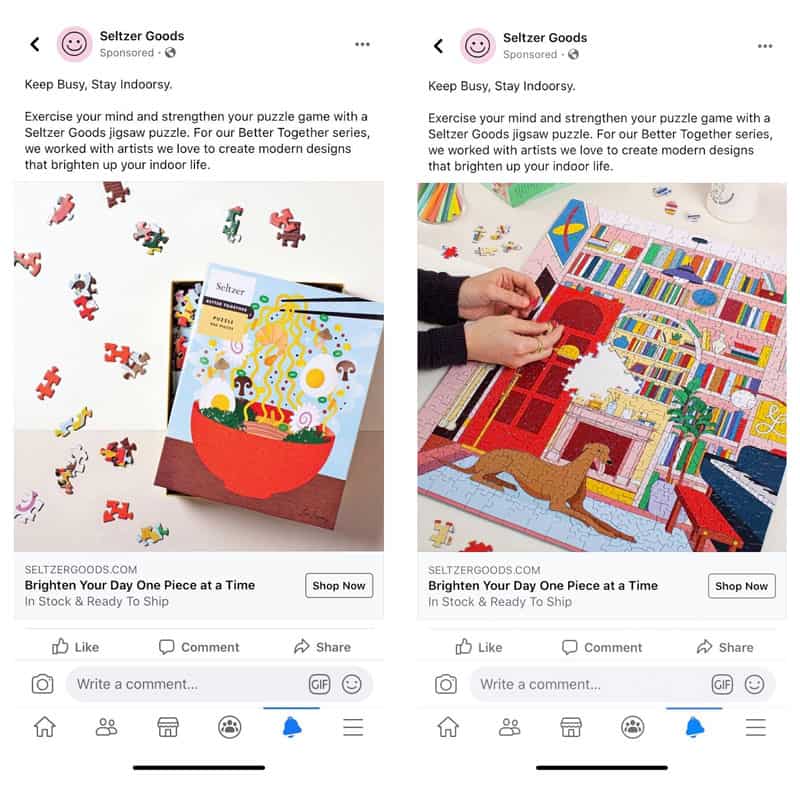
The campaign delivered a 9.68x return on ad spend, a 785% increase in monthly revenue, and it cost $4.87 per acquisition according to Meta attribution.
Why it worked
- Used Meta Pixel data to build lookalike audiences from website visitors, cart abandoners, and previous customers.
- Kept automatic placements enabled to let Meta find the most efficient inventory.
- Increased budgets gradually instead of making large jumps that could disrupt performance.
- Paired vibrant product imagery with timely, positive messaging that connected with shoppers.
Takeaway
Scaling works best after you've found a winning campaign. Seltzer Goods combined creative that commanded attention and high-quality audience data. Rather than pulling back during uncertainty, the brand leaned into demand and gave Meta's algorithm the data it needed to find more buyers.
4. A leading fashion brand increased brand awareness by 6.8 percentage points with Meta catalog ads
One of Poland's leading fashion retailers wanted more from its Meta campaigns.
Before changes, sales campaigns and brand campaigns ran separately, creative updates kept resetting Meta's learning phase, and testing new ideas meant sacrificing campaign momentum.
The brand partnered with Cropink to combine branding and performance into one catalog campaign. Dynamic Product Ads were enriched with branded creative, promotional messaging, and lifestyle elements.
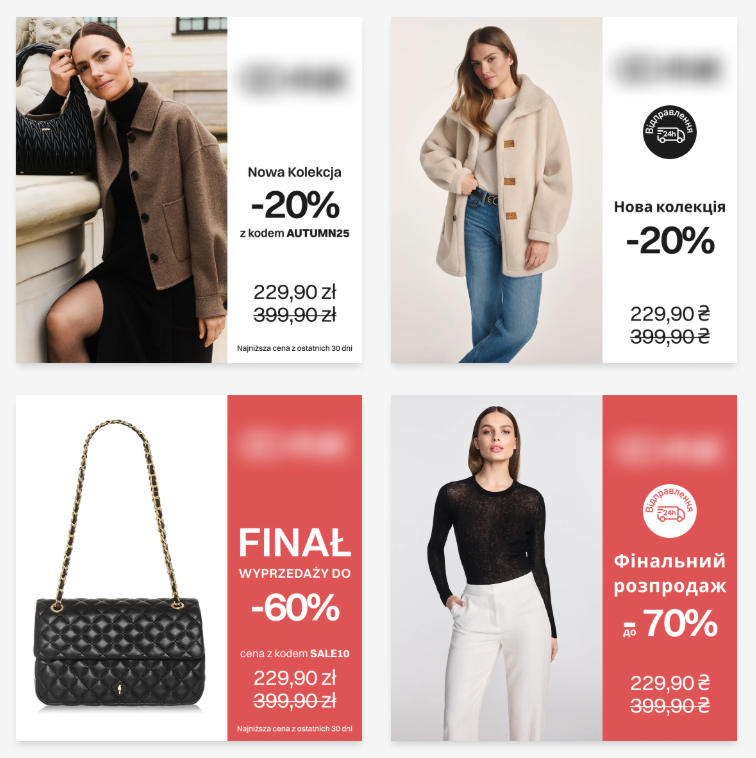
This helped the team to launch fresh creatives without disrupting campaign learning. The same campaign could now drive purchases while reinforcing brand recognition across three European markets.
The new strategy increased brand awareness by 6.8 percentage points in a Facebook Brand Lift study, improved CTR by 2 percentage points, and reduced cost per click in prospecting campaigns.
Why it worked
- Combined branding and sales objectives within the same catalog campaign.
- Updated more than 9,000 products automatically every four hours, which ensured shoppers were getting relevant product information.
- Added branded overlays, promotions, and lifestyle imagery to Dynamic Product Ads.
Takeaway
Catalog ads don't have to focus only on conversions. This campaign shows they can also amplify brand awareness when product feed data is paired with consistent branding and creative messaging.
5. LANEIGE increased ad recall by 28 points with creator partnership ads
LANEIGE wanted to make an assertive first impression with the launch of its JuicePop Box Lip Tint collection in the US. Although the brand already had elevated recognition, it wanted to reach new beauty shoppers, increase awareness of the product, and encourage purchases.
The campaign combined photo, video, Reels, and partnership ads featuring well-known creators and celebrities.
Partnership ads appeared across both the brand's and creators' accounts, expanding reach while adding social proof.
Campaigns were optimized for three objectives, including reach, traffic, and video views, and directed shoppers to Sephora to complete their purchase.

The campaign delivered a 28-point lift in ad recall, a 22-point lift in brand awareness, and a 7-point lift in consideration, according to a Meta Brand Lift study that happened between January 27 and March 31, 2026.
Why it worked
- LANEIGE partnered with creators to reach audiences outside of the brand's existing followers.
- Paired creator content with multiple Meta ad formats, increasing both reach and repeated exposure during the product launch.
- Used different campaign objectives to support awareness, engagement, and website traffic.
- Kept the call to action consistent by directing shoppers to Sephora.
- Narrowed targeting to women aged 18–44 who were already interested in beauty products.
Takeaway
Don't rely on your brand account alone to launch a new product. Partnering with creators gives your campaign instant credibility and introduces it to audiences you may never reach organically. Pair that trust with multiple ad formats and a consistent call to action, and your product stays visible throughout the buying journey.
6. Cruise Critic increased return on ad spend by 22% with value-optimized Meta catalog ads
Cruise Critic wanted to attract higher-value customers without increasing ad spend.
Its catalog campaigns were already delivering conversions, but they were optimized for volume. In short, Meta prioritized getting as many purchases as possible at the lowest cost.
The company tested a different strategy using Meta Advantage+ Catalog Ads optimized for value.
The new strategy optimized for shoppers who were more likely to generate higher-value purchases.
Cruise Critic also used Advantage+ placements and Advantage+ campaign budget to automatically deliver ads across the placements and ad sets with the greatest potential.
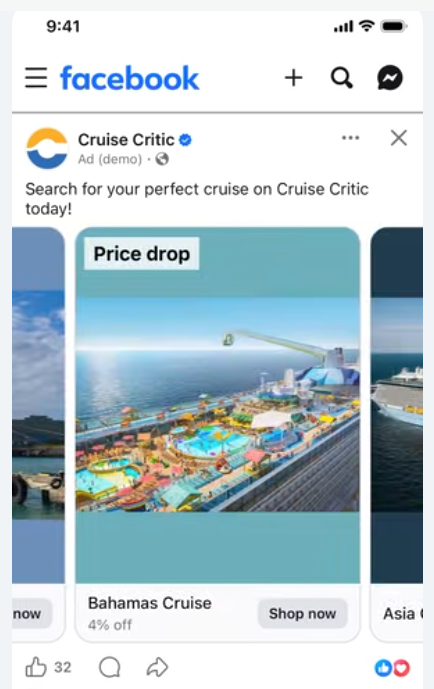
The test found that campaigns optimized for value delivered a 22% higher incremental return on ad spend than campaigns optimized for volume.
Why it worked
- Optimized catalog ads for customer value instead of conversion volume.
- Used Meta's machine learning to prioritize shoppers likely to make higher-value purchases.
- Enabled Advantage+ placements to automatically deliver ads where they were most likely to perform.
- Allowed Advantage+ campaign budget to shift spend toward the highest-performing ad sets.
Takeaway
Customers gained through Meta ads will not be equally valuable. If your products have different price points or profit margins, optimizing for purchase value can generate more revenue than chasing the highest number of conversions.
7. Design Pickle Facebook Ads Case Study
Before Design Pickle became a leading subscription design service, founder Russ Perry experimented with a traditional B2B enterprise sales model.
The company hired an experienced salesperson, implemented a CRM, booked sales appointments, and relied on lengthy discovery calls to close customers.
The strategy mirrored the six-figure sales process Perry had used while running his agency.
However, this sales-led approach added friction.
Prospects wanted to schedule calls, ask questions, involve other decision-makers, and delay trying the product. The average sales cycle stretched to more than 30 days.
Facebook ads produced the opposite outcome.
Prospects could discover the service, click through, and sign up on their own. Perry said the self-serve model dramatically outperformed the traditional sales process, shortening the average purchase journey to under 7 days.
Campaign strategies
- Disruptive creatives that grabbed attention with unexpected visuals, such as a dude in a pickle appearing on screen.
- Audience-specific messaging tailored to different customer segments. For example, ads aimed at gym owners stressed design work and case studies relevant to fitness businesses.
- Simplifying the conversion path by replacing lengthy product demos and webinar-style funnels with a straightforward ‘try it’ message.
Our Facebook ads were massively outperforming our sales guy, like by 10,000% or more… At the end of the day, it's just try it. Just try it and see if you like it. That, to me, has always worked better than any type of funnel automation, webinar sales process we've tried.

Founder, Design Pickle
Why it worked
- Used disruptive creatives to stop the scroll.
- Personalized messaging for specific customer segments instead of using one generic ad.
- Replaced long demos and sales calls with a low-friction ‘try it’ offer.
- Reduced the average purchase journey from more than 30 days to under seven days by removing unnecessary steps.
Takeaway
Don't make people work to become your customer. Design Pickle knew this and removed unnecessary calls, demos, and long sales funnels, making it easy for prospects to try the service immediately. Pairing that low-friction offer with audience-specific messaging and scroll-stopping creatives shortened the buying journey and drove far more conversions.
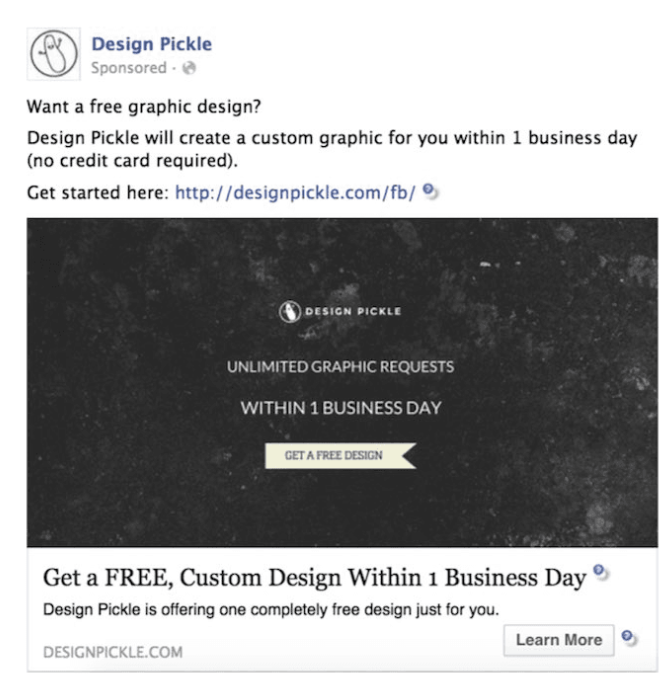
One of Design Pickle's Facebook ads used a free custom design to remove friction and encourage prospects to try the service.
8. Walgreens exceeded its Facebook video goals with localized campaigns
In 2016, Walgreens wanted to make its annual Red Nose Day fundraising campaign more engaging and reach more people across the United States. The retailer set an ambitious goal of raising $20 million for children living in poverty and decided to make video the centerpiece of its Meta advertising strategy.
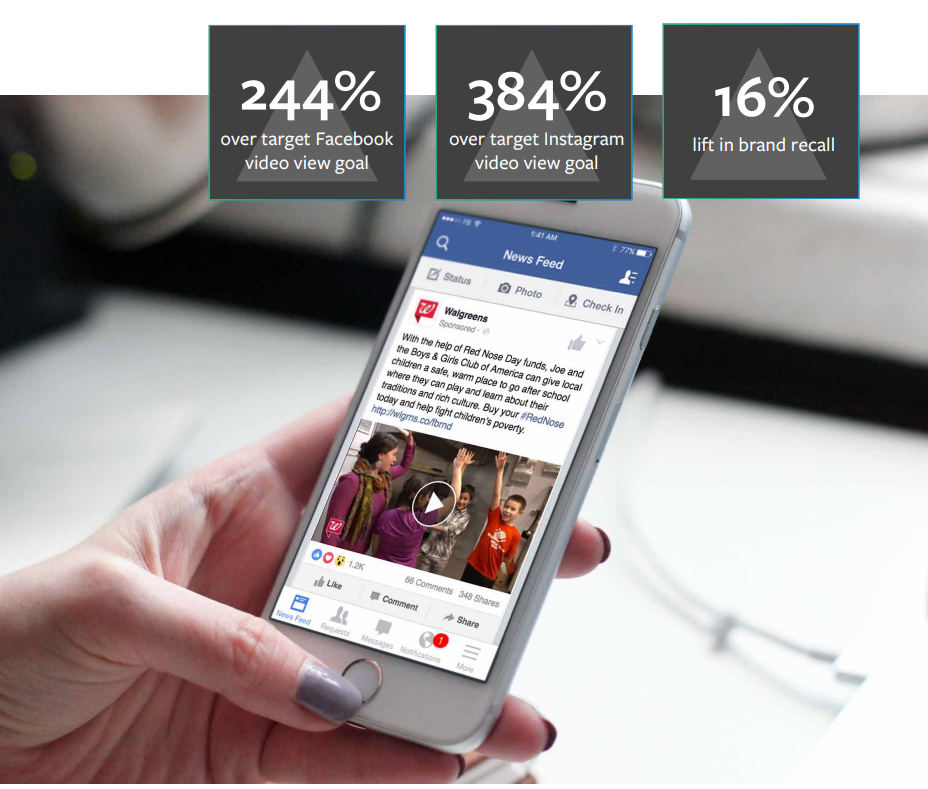
Walgreens started with broad geographic targeting, then analyzed performance across different video lengths before refining delivery with engagement retargeting, lookalike audiences, and loyalty audiences built from its Balance Rewards program.
The campaign exceeded its Facebook video view goal by 244%, surpassed its Instagram video view goal by 384%, and generated a 16% lift in brand recall, according to a Nielsen Brand Lift study.
Why it worked
- Created localized video ads tailored to all 50 states.
- Tested 15-, 30-, and 60-second video formats to identify the highest-performing creative.
- Used engagement retargeting, lookalike audiences, and loyalty audiences to refine targeting.
- Continuously refreshed creatives and adjusted bids based on campaign performance.
Takeaway
If you want to scale your campaigns, start testing first. Walgreens identified its highest-performing videos, adapted them for local audiences, and used retargeting and lookalike audiences to amplify what was working.
9. Buffer Meta case study shows that $5 a day is enough to start learning
Buffer wanted to find out what a business could achieve with just $5 a day on Facebook. The team ran separate campaigns for Page Likes, website clicks, and boosted posts to understand how a modest Facebook ad budget performed across objectives.
For every $5 spent, Buffer gained about 9 new Page Likes, one website visitor, or reached 787 new people with a boosted post.
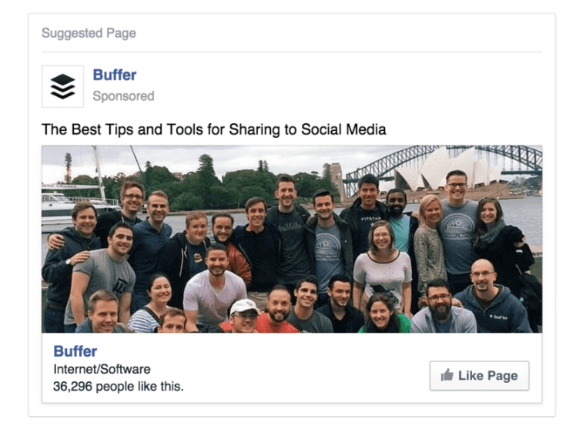
The company also found that one of its best-performing ads featured a photo of the Buffer team because it gave the campaign a more human, relatable feel than a typical promotional image.
Why it worked
- Tested one campaign objective at a time to understand what $5 could accomplish.
- Targeted a focused audience interested in social media while excluding existing followers.
- Used a team photo that felt authentic and encouraged people to engage with the brand.
- Started with a budget that made testing affordable before committing more spend.
Takeaway
A limited budget doesn't mean you have to settle for forgettable ads. Buffer's best creative featured real people, which made their brand approachable and trustworthy. If your budget is tight, your creative becomes an even bigger advantage. An authentic image, a compelling message, and a well-defined audience will give you great results even with a modest budget.
Pro tip: You can actually run a Meta campaign with just $1 a day. However, this is best used for the engagement objective or when you’re trying to learn more about which audience responds better to your ads. Learn more about it in our guide on Minimum Budget for Facebook Ads? [2026 Cost Guide]
10. Aurum Brothers doubled monthly sales with Facebook retargeting
Luxury men's accessories brand Aurum Brothers wanted to increase brand awareness and turn more website visitors into customers.
The team settled on Facebook retargeting, recognizing that shoppers at different stages of the buying journey needed different messages.
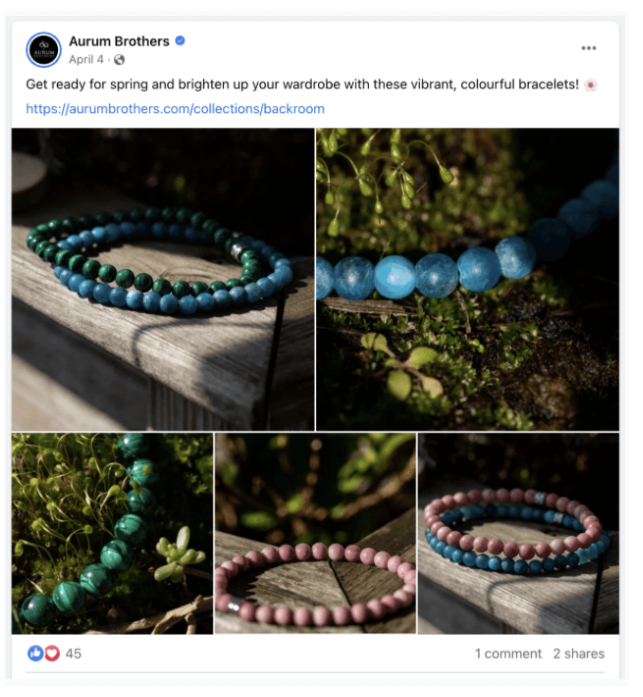
The campaign segmented visitors into three audiences: those who added products to their cart, those who viewed specific products, and those who visited the website without taking further action.
Aurum Brothers paired those audiences with eye-catching photo and video ads, then tested bidding strategies and campaign objectives to improve performance.
The strategy led to a 100% increase in monthly sales between September and December 2015, a 13X return on ad spend, and by 2016, 50% of the company's revenue came directly from Facebook ads.
Why it worked
- Created separate retargeting campaigns for cart abandoners, product viewers, and website visitors.
- Used product-focused photo and video ads that stood out in the Facebook News Feed.
- Matched ad messaging to each stage of the customer journey.
Takeaway
Not every visitor is ready to buy after the first click. Aurum Brothers treated each audience differently, delivering more relevant ads based on how people interacted with the website. Segmenting retargeting audiences and tailoring creative to buying intent can dramatically improve both conversion rates and return on ad spend.
Why Facebook Ads Remain a Top Advertising Channel
- Massive reach: With around 3 billion monthly active users and 2 billion daily active users, Facebook gives businesses access to one of the largest online audiences.
- Flexible budget control: Meta lets you set daily or lifetime budgets, control spending at the campaign or ad set level, schedule campaigns in advance, and adjust budgets as performance data comes in.
- Smarter targeting with Advantage+: Meta's Advantage+ tools use machine learning to identify people who are more likely to take action. As the platform relies less on manual targeting, high-quality creatives and compelling offers play a bigger role in helping campaigns succeed.
- Better targeting with Meta Pixel: The Meta Pixel helps Meta understand what people do after clicking your ads. You can also send custom event data, including product categories, purchase values, customer types, or subscription status. That extra context helps Meta identify similar high-value shoppers and deliver ads to people who are more likely to convert.
How to Run Facebook Advertising Campaigns
Hopefully, these Meta advertising case studies have given you a better understanding of what to expect from your campaigns.
When you're ready to run Facebook ads, it comes down to this:
1. Know your objective
Decide what success looks like. Are you trying to drive sales, increase engagement, generate leads, or build brand awareness? When you've chosen your objective, tailor everything else around it, from your audience and budget to your creative and messaging.
2. Know who you want to reach
Be clear about your target audience and the psychology behind how they make purchasing decisions. What problem are they trying to solve? What would stop them from buying? What information do they need before saying yes? The better you understand your audience, the more relevant your ads can be.
3. Write copy that makes people feel seen
Speak to your audience in a way that makes them think, ‘This is exactly what I need.’ Address their pain points, acknowledge their goals, and explain why your product or service is the right fit.
4. Make your creative work harder
Creative is the new targeting, so make sure it's relevant to the person seeing the ad. If you're an ecommerce brand, we recommend Meta catalog ads because they let you personalize creatives for every shopper based on the products they're most likely to buy.
If you're working with a catalog automation platform like Cropink, you can enrich your creatives with information that makes shoppers say yes to your offer.
For instance, instead of showing only a product image and price, you can add discount badges to persuade shoppers, customer reviews to build trust, unique selling points as text overlays to help them see the value, and your brand colors to keep your brand top of mind.
Learn more about setting up your enriched catalog ads.
Summary: What these Facebook ad case studies teach us
No two campaigns in this Meta ad case studies list followed the same playbook, yet they all point to the same conclusion.
Better performance comes from understanding your audience, matching your creative to their intent, and improving your campaigns one test at a time.
Now it's your turn.
Use these Facebook success stories as inspiration, experiment with different combinations of targeting, creative, and budget, and keep refining what works until you find the formula that delivers constant growth.
Want to put these ideas into practice? Cropink helps ecommerce brands create enriched Meta catalog ads from their product feed, making it easier to personalize creatives and launch campaigns without manually designing every variation.
FAQs
What is a Facebook ads case study?
A Facebook ads case study is a real-world example of an advertising campaign that breaks down the goal, strategy, audience, creative, targeting, budget, and results. It shows what worked, what didn't, and the lessons marketers can apply to their own campaigns.
What are the best Facebook ads case studies to learn from?
Some of the best Facebook ad case studies include Sephora for creator partnerships, Leroy Merlin for enriched catalog ads, Cruise Critic for value-based optimization, Design Pickle for simplifying the conversion path, Buffer for low-budget testing, and Aurum Brothers for segmented retargeting.
Are Meta ads case studies the same as Facebook ads case studies?
Meta Ads covers advertising across Facebook, Instagram, Messenger, and WhatsApp. Since Facebook Ads Manager is now part of Meta Ads Manager, many campaigns previously referred to as Facebook ad case studies now fall under the broader Meta ads ecosystem.
What should I copy from a successful Facebook ad campaign?
Focus on the strategy instead of copying the creative itself. Look at the audience segment, offer, messaging, ad format, testing process, or retargeting flow that made the campaign successful, then adapt those ideas to your own business.
What makes a Facebook ad campaign successful?
Successful campaigns combine a well-defined goal, the right audience, a compelling offer, relevant creative, accurate tracking, and enough budget for Meta's algorithm to gather data and optimize performance.
How can ecommerce brands apply these case studies?
Ecommerce brands can apply these strategies by improving their catalog ads, segmenting audiences, retargeting previous visitors, and making product creatives more persuasive with reviews, promotions, pricing, and delivery information.
Sources
- Facebook. Sephora US. Increasing omnichannel sales by running partnership ads from creators paired with Meta Advantage+ catalog ads
- Cropink. How Cropink Helped Leroy Merlin Poland Achieve +79% ROAS and +353% CR Growth
- Inflow. Meta Advertising Case Study: How 2 Facebook Ads Increased B2C Sales by 785% in 30 Days
- Cropink. How a Leading Polish Fashion Brand Increased Brand Awareness by +6.8pp and Boosted CTR with Cropink
- Facebook. LANEIGE. Perfecting the product launch formula with partnership ads and Reels
- Facebook. Cruise Critic. Amplifying incremental return on ad spend using Meta Advantage+ catalogue ads optimised for value
- The SaaS Podcast. Scaling SaaS Revenue to $160K MRR With a Simple Offer
- Kenshoo. Walgreens Gets Serious Results for Red Nose Day with Facebook Video Ads
- Scribd. Facebook Ads Success Case Studies
- DigitalTrainingAcademy. Facebook case study: Luxury wristwear brand shows targeting and sales go hand-in-hand
Damaris is a Digital Marketing Specialist who writes about digital marketing and performance marketing. At Cropink, she creates data-driven content to help businesses run better ad campaigns for better performance and ROI.
Leszek is the Digital Growth Manager at Feedink & Cropink, specializing in organic growth for eCommerce and SaaS companies. His background includes roles at Poland's largest accommodation portal and FT1000 companies, with his work featured in Forbes, Inc., Business Insider, Fast Company, Entrepreneur, BBC, and TechRepublic.
Related Articles


How Can Cropink Help?
Start with Cropink is easy and free
No credit card required