Instagram Dynamic Product Ads (DPA): The Complete Guide [2026]
70% of shoppers use Instagram for purchase inspiration, making it a powerful channel for ecommerce. This guide explains how Dynamic Product Ads automatically show relevant products based on browsing behavior, using product feeds and Meta data to improve targeting, increase conversions and scale catalog campaigns.


![Instagram Dynamic Product Ads (DPA): The Complete Guide [2026]](https://honest-garden-2954e8e7e9.media.strapiapp.com/instagram_dpa_thumbnail_2b27b3c8ff.png)
Instagram Dynamic Product Ads, often searched as Instagram dynamic ads or Instagram DPA, are catalog-based ads that show products from your feed to people based on their behavior.
They're used for retargeting site visitors, re-engaging cart abandoners, and reaching new shoppers through Meta's catalog ad system.
This guide covers what DPAs are, how the underlying matching works, how to set them up step by step, which formats perform best, and how to make the product visuals themselves convert, since the catalog decides which product appears, but the creative decides whether someone stops scrolling.
DPA Meaning in Marketing
DPA stands for Dynamic Product Ads. In marketing, a DPA is an ad format that pulls product information from a catalog and automatically shows the most relevant item to each person, based on what they viewed, added to cart, or purchased.
On Instagram, this means showing products from a Meta catalog in Feed, Stories, Reels, or Explore placements, without building a separate ad for every product.
Instagram Dynamic Ads vs. Instagram DPA vs. Meta Advantage+ Catalog Ads
If you've researched this topic across different guides, you've likely seen three different names for what is largely the same thing, and the inconsistency isn't your imagination.
In older guides, you may see the term "dynamic product ads" or "DPA." In Meta's current naming, these now sit under the Advantage+ catalog ads family.
For Instagram advertisers, the practical setup hasn't changed: you still need a Meta catalog, tracking events, and a campaign that can pull products dynamically from that catalog.
Whether Meta calls the feature "DPA" or "Advantage+ catalog ads" in the interface, the underlying mechanics and the troubleshooting are the same.
What Are Instagram Dynamic Product Ads?
Instagram Dynamic Product Ads are catalog-based ads that automatically show relevant products to people based on their past interactions with your website or app.
Instead of manually building an ad for each product, Meta pulls product details- image, title, price, availability, directly from your catalog and matches the right item to the right person.
How Do Instagram DPAs Work?
The basic loop is straightforward. Someone visits your site, views a product, and leaves without buying. The Meta Pixel (or Conversions API) records that activity and sends it to Meta.
Later, on Instagram, that person sees an ad showing the exact product they viewed, or a similar one from your catalog. If they click, they land back on your site to complete the purchase.
The part that's easy to overlook is product matching. When someone views a product, Meta needs to receive an event that includes the same product ID used in your catalog.
If those IDs don't match, the ad system has no reliable way to know which product to show that person, which is the single most common reason DPA campaigns underperform or show the wrong items.
When Instagram DPAs Are Useful for Ecommerce
DPAs aren't a universal fix, but they're particularly effective in a few specific situations.
You need a product catalog and enough site activity to retarget meaningfully; without that baseline, there's nothing for Meta to match against.
Common use cases include abandoned-cart reminders (showing the exact item someone left behind), product-view retargeting (resurfacing items a visitor browsed but didn't act on), sale promotion for a specific product set (discount campaigns scoped to a category or margin tier), and broad catalog prospecting (using catalog data to reach new shoppers with relevant products, not just retargeting past visitors).
Instagram DPA Setup Checklist
Before walking through the setup steps, it helps to see the full picture of what needs to connect. Each of these pieces depends on the others: a catalog without matching Pixel events won't retarget correctly, and a campaign without product sets will show your entire inventory to everyone.
- Product feed (clean titles, accurate prices, working image links)
- Meta catalog in Commerce Manager
- Meta Pixel or Conversions API installed and firing
- Event matching confirmed (catalog product IDs match Pixel content_id values)
- Product sets defined (by category, sale status, or margin)
- Campaign objective set to Sales with Catalog Sales as the ad type
- Instagram placements selected (Feed, Stories, Reels, Explore)
- UTM parameters added for tracking
- Launch QA: preview ads, confirm correct products are pulling through
Setting Up Instagram Dynamic Product Ads
Step 1: Install the Meta Pixel
Before running DPAs, you need the Meta Pixel installed on your website to track user activity. This is what allows Meta to know who viewed which product.
Go to Meta Business Manager, then Events Manager. Select Pixel and follow the setup instructions. Once installed, verify the Pixel is firing correctly using Meta Pixel Helper, and confirm that ViewContent, AddToCart, and Purchase events are sending the correct product ID.
Step 2: Create a product catalog
Your product catalog is the backbone of DPAs- it's what Meta uses to match users with relevant products.
In Meta Business Manager, go to Commerce Manager, select Create a Catalog, and upload your product feed. Use feed automation (Google Sheets, Shopify integration, or a dedicated feed tool) to keep it updated automatically, since stale prices or sold-out items showing in ads will hurt trust and performance.
Step 3: Confirm event matching before launch
This step is easy to skip but causes most of the problems advertisers run into later. In Events Manager, check that the content_id sent by your Pixel events matches the product IDs in your catalog exactly. If they don't align, Meta can't reliably connect a person's browsing behavior to the right product in your catalog.
Step 4: Launch your dynamic ad campaign
Once your Pixel and catalog are ready and verified, go to Ads Manager and create a new campaign. Choose Sales as the objective, select Catalog Sales as the ad type, pick the catalog and product set you want to use, and set your audience. Optimize for Conversions to prioritize purchases over clicks.
Step 5: Define your target audience
Which audience to start with depends on what data you already have.
Start with retargeting if you already have product views or add-to-cart events; this is the easiest way to reconnect with people who showed real interest but didn't buy. Use broad catalog targeting when your catalog is clean and you want Meta to find new shoppers based on catalog-wide signals.
Use lookalike audiences once you have enough purchase data for Meta to model who your best customers resemble.
Step 6: Review product sets and creative before going live
Before launching, confirm your product sets are scoped correctly (sale items, new arrivals, bestsellers shouldn't all be lumped into one set), and preview how the ads actually look. This is also the point to check whether your product images need any enrichment, covered in detail below.
Make Catalog Ad Visuals Work Harder
For catalog ads, the product image does most of the selling before someone even reads your caption. The feed gives you the raw material to add context shoppers need before clicking: sale price, old price, discount badge, product rating, shipping note, brand logo, or a seasonal label like "Black Friday."
The feed decides which product appears, but the creative decides whether someone stops scrolling. Adding price context, promotion badges, delivery information, or ratings to the product image helps shoppers understand the offer before they click.

CEO at Cropink & Feedink
If your catalog ads still look like plain product photos on a white background, a feed-based creative tool can add this context automatically.
Cropink connects to your product feed, lets you build a reusable ad template, and generates enriched product visuals with elements like logo, sale badge, regular price, sale price, ratings, delivery notes, and additional product images, applied across your whole catalog without editing each item by hand.
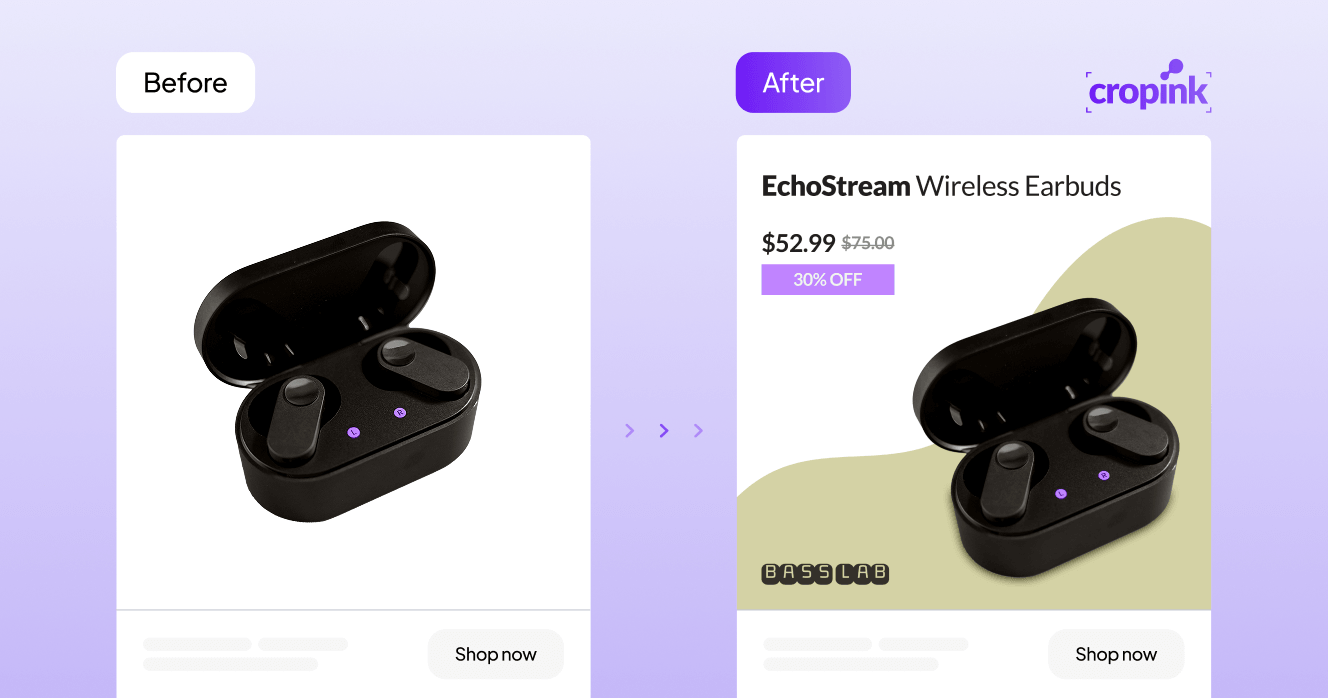
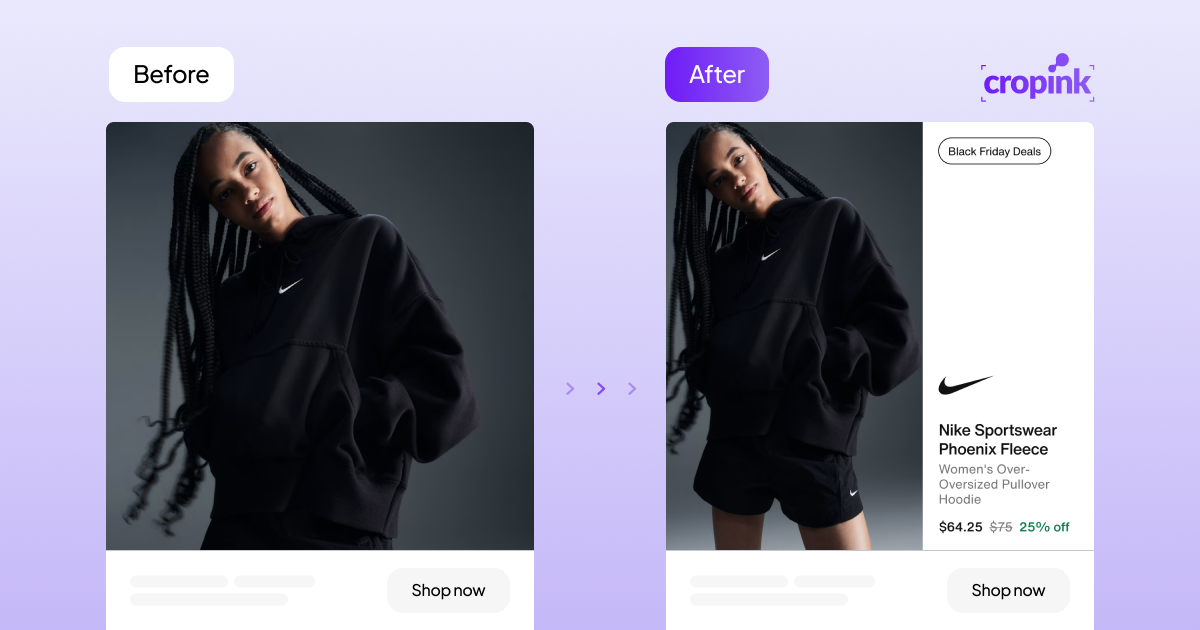
Here's a discount-led version, with the sale price, original price, and a percentage-off badge added directly from feed data:
Types of Instagram Dynamic Product Ads
The format you choose shapes how much information you can show and how the ad feels to the person scrolling. Here's what each one is best for.
Single image ads
A single, high-quality image with copy and a clear call-to-action. Best for spotlighting one flagship product, announcing a limited-time offer, or driving traffic to a specific product page.
Because there's only one image to work with, this is the format where price, discount, and brand overlays matter most; there's no second card to provide context.
Carousel ads
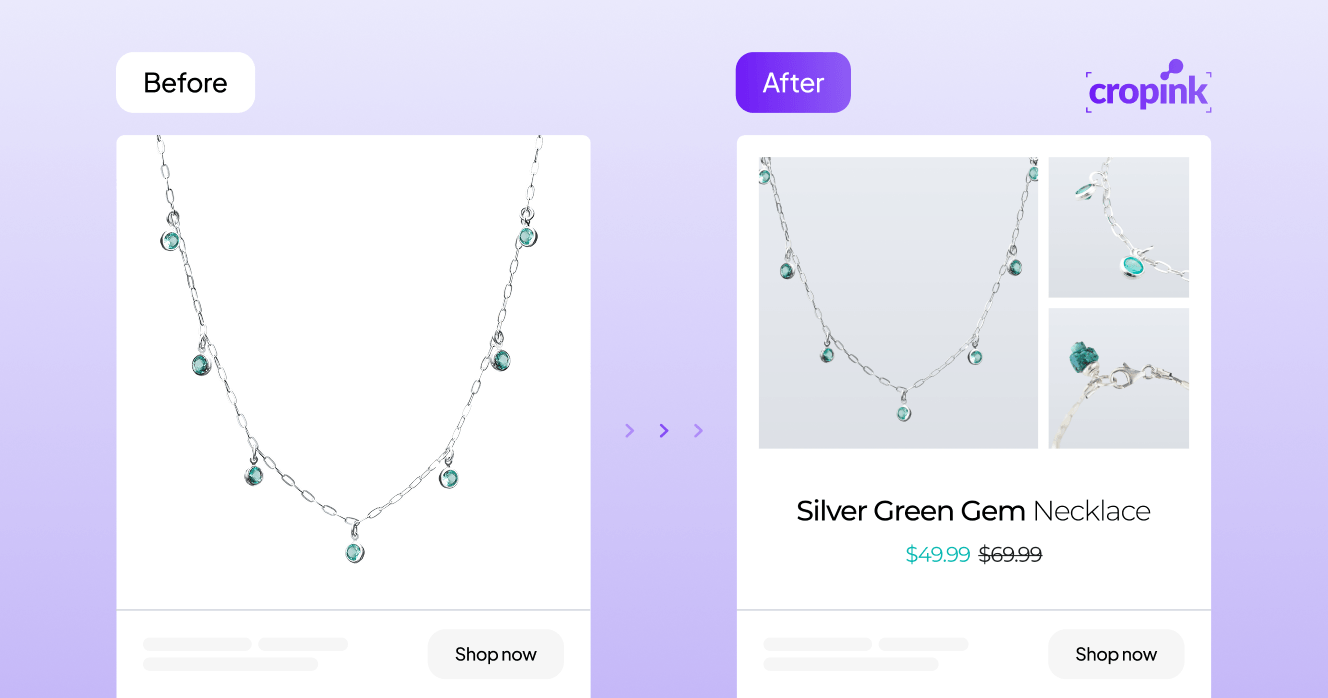
A swipeable series of up to 10 images or videos, each with its own link. Best for showing a range of related products, detailing multiple features of one product, or telling a brand story across cards.
Each card should carry consistent branding and pricing treatment so the carousel feels like one cohesive ad rather than several unrelated images.
Video ads
Dynamic visuals up to 60 seconds, useful for demonstrating how a product works, sharing customer testimonials, or launching something new. Video is the format least dependent on static overlays, but a price or offer shown in the first few seconds still helps.
Collection ads
A primary image or video with a row of product images below it. Tapping opens an Instant Experience—a full-screen, in-app browsing page. Best for showcasing a new product line or driving direct purchases from mobile, since the shopping experience stays inside Instagram.
Stories and Reels ads
Full-screen vertical ads that appear between users' Stories or in the Reels feed. Best for limited-time promotions, reaching younger or mobile-first audiences, and driving immediate action.
Because the format is vertical and full-screen, text and badges need to be large and high-contrast, an overlay that works on a square Feed image can become unreadable in a vertical Stories crop.

Which Instagram DPA Format Is Right for You?
| Format | Best for | Creative note | When to avoid |
|---|---|---|---|
| Single Image | Highlighting one flagship product or promotion | Price and discount overlays carry more weight with only one image | Large catalogs where one product can't represent the range |
| Carousel | Showing multiple products or a brand story | Keep pricing and branding consistent across all cards | Single hero-product campaigns where swiping adds no value |
| Video | Demonstrating products or sharing stories | Front-load the offer in the first few seconds; add captions | Campaigns needing fast, low-cost creative turnaround |
| Collection | New product lines, mobile shopping | Ensure the Instant Experience page loads quickly | Smaller catalogs where a full collection feels sparse |
| Stories/Reels | Urgency-driven, mobile-first offers | Use large text and vertical-safe overlays | Detail-heavy products that need more than one screen to explain |
Best Instagram DPA Creative Examples
These four patterns come up repeatedly in catalog campaigns that perform well. Each one pairs a specific feed-driven treatment with a specific use case.
Sales-led product ad
What appears on the visual: product image, strikethrough original price, sale price, and a discount percentage badge. When to use it: discount campaigns, seasonal sales, or clearance—anywhere the price difference itself is the hook.
Best-seller carousel
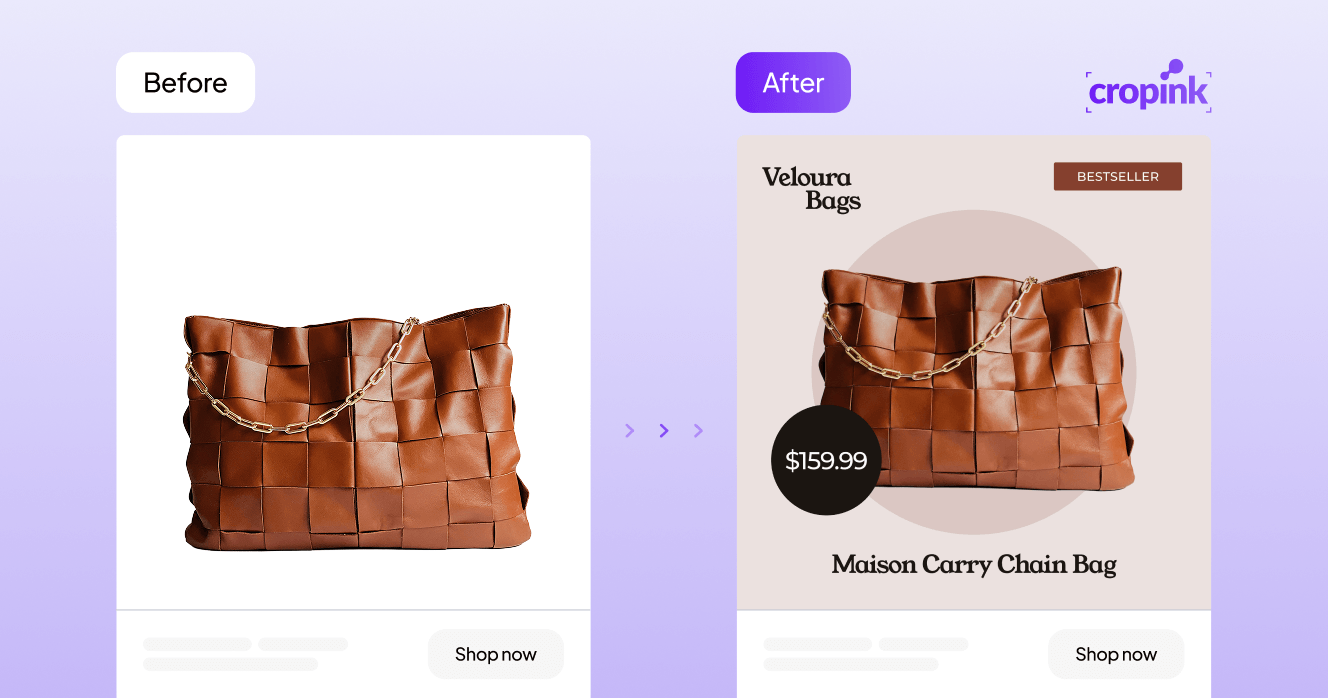
What appears on the visual: a "Bestseller" or "Customer Favorite" badge alongside the product name and price, consistent across each card. When to use it: prospecting audiences who haven't seen your brand before, where social proof helps establish trust quickly.
New-arrivals collection
What appears on the visual: a "New Arrival" or "New Collection" badge, clean product image, and brand logo placement.
When to use it: launching a new line to audiences who've engaged with the brand before but haven't seen the new products yet.
Abandoned-cart reminder
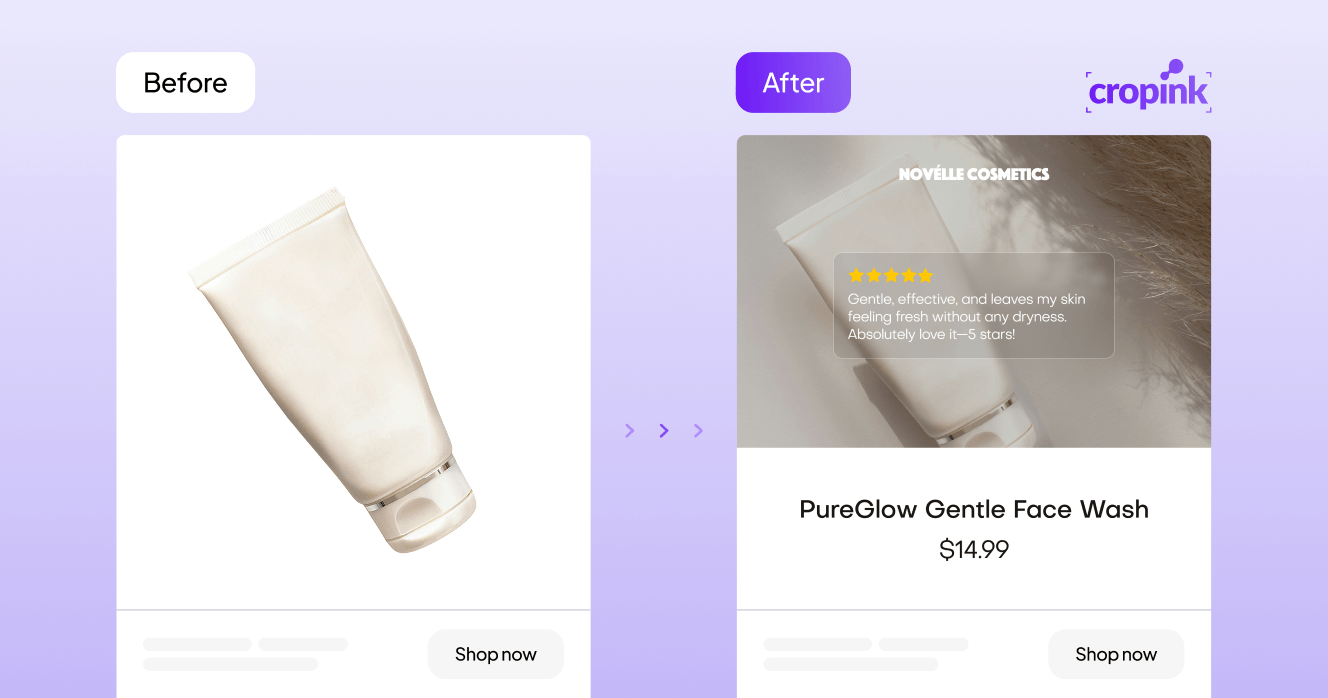
What appears on the visual: the specific product the person added to cart, its price, and a trust signal—a star rating, review count, or a delivery cue like "Free Returns."
When to use it: retargeting cart abandoners, where the goal is removing the last bit of hesitation rather than introducing something new.
The example below combines a star rating and customer review directly on the product image:
Platforms That Integrate DPA with Social Media Ads
If your catalog and tracking are already set up, the next question is usually about tooling- specifically, what connects a product feed to ad creative across the platforms you actually use.
The right platform should do more than upload a feed to Meta.
It should help turn feed data into ad creative: connecting to your product feed, supporting reusable templates, and automatically updating product visuals as prices, stock, and promotions change in the feed, ideally across channels like Meta, TikTok, and Snapchat, not just one.
Cropink fits this role for ecommerce teams running catalog ads across more than one channel. It connects to your product feed, lets you build a template once, and applies it across your catalog, so a price change or new sale badge updates everywhere automatically, without re-editing each ad manually.
Pro Tips for Maximizing Instagram DPA Performance
- Segment your retargeting audiences instead of targeting all visitors as one group cart abandoners and product viewers behave differently and often respond to different messaging.
- Test different creative treatments systematically. Rotate which feed elements you overlay (price only, price plus rating, price plus urgency badge) to see what actually moves performance for your catalog, rather than assuming more elements are always better.
- Exclude recent purchasers from retargeting. Showing someone an ad for a product they just bought wastes money and can feel intrusive.
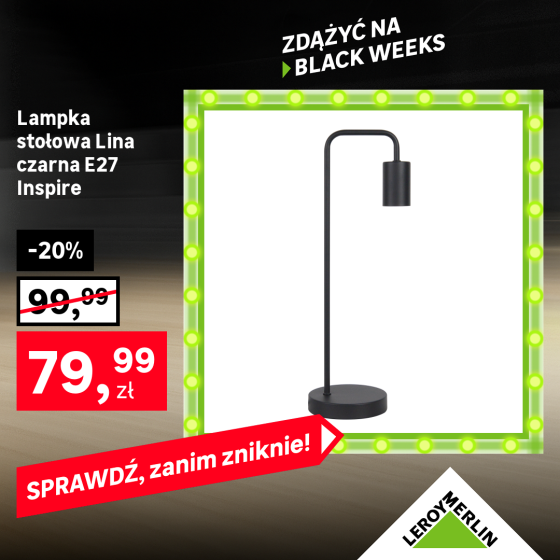
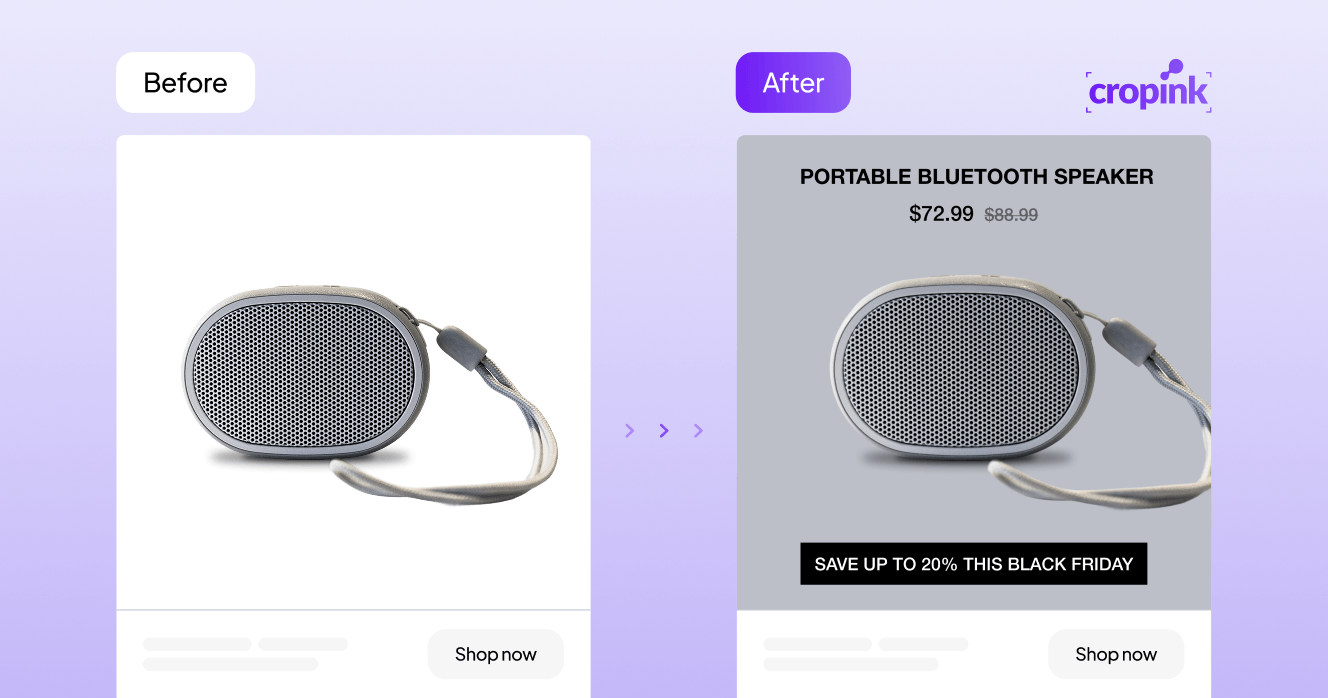
- Refresh sale labels and seasonal badges as promotions change. A "Black Friday" badge still showing in January undermines trust in the rest of the ad.
The example below shows a seasonal badge and updated background applied to a catalog ad for a Black Friday campaign:
- Monitor your catalog for errors regularly. Rejected items, broken image links, or missing prices in Commerce Manager will quietly shrink your active product set without any obvious warning in Ads Manager.
- Add UTM parameters to your ad links so performance data flows into Google Analytics alongside your Meta reporting, giving you a fuller picture of what happens after the click.
Troubleshooting: Why Instagram DPA Campaigns Fail
Most DPA problems fall into a handful of recurring causes.
Wrong products showing, or ads not delivering: Check for product ID mismatch between your catalog and Pixel events first; this is the most common cause by far. Open Events Manager and confirm the content_id sent by ViewContent and AddToCart events matches your catalog IDs exactly.
Feed issues: A stale feed (prices or stock not reflecting your actual site), or items rejected by Meta for missing required fields will shrink the pool of products your ads can show—often without an obvious error in Ads Manager itself. Check the Commerce Manager's diagnostics regularly.
Audience too small: If your retargeting audience doesn't have enough recent activity, Meta may struggle to deliver ads efficiently. Broadening the time window or combining audience segments can help.
Weak product images: Even with a technically correct setup, plain white-background images with no price or context tend to underperform. This is where feed-driven enrichment makes the most measurable difference.
No product exclusions: Without exclusions, recent purchasers keep seeing ads for items they already bought, and broad campaigns can cannibalize retargeting audiences.
Unclear sale information: If a product is on sale but the ad doesn't show the discount, shoppers have no reason to click now rather than later.
Wrapping Up
Instagram DPAs work when your catalog, tracking, audience logic, and creative are all aligned—and most setup guides only cover the first two.
If your product feed and Pixel are already in place, the next lever is how those products actually appear in the ad. Cropink helps turn catalog data into richer product visuals for Meta, TikTok, and Snapchat campaigns, so the same feed that powers your targeting also powers better-looking ads.
FAQs
What does DPA mean in marketing?
DPA means Dynamic Product Ads. These ads use a product catalog to automatically show relevant products to each person based on their behavior or likely interests.
Are Instagram DPAs the same as Instagram dynamic ads?
In most e-commerce contexts, yes. "Instagram dynamic ads" and "Instagram DPA" both describe catalog-based ads that dynamically show products from a Meta catalog. Meta's current interface increasingly groups these under Advantage+ catalog ads, but the setup and mechanics are the same.
Do I need a Facebook Shop to run Instagram DPAs?
No. You need a product catalog connected to Meta and the Meta Pixel (or Conversions API) installed on your website to track activity and retarget visitors.
What platforms integrate DPA with social media ads?
Look for tools that connect to your product feed, support reusable templates, and can prepare feed-based creative for channels like Meta, TikTok, and Snapchat. Cropink fits this use case for enriched catalog ads.
Can I customize Instagram DPA product images?
Yes. Meta offers some native creative tools, and external tools like Cropink can enrich product images with feed data such as price, sale badges, ratings, delivery notes, and brand elements—applied automatically across your catalog.
Why are my Instagram DPAs not showing the right products?
The most common causes are mismatched product IDs between your catalog and Pixel events, incomplete event tracking, an outdated feed, or catalog items rejected by Meta.
Can Instagram DPAs be used for new customer acquisition, or only for retargeting?
Both. DPAs are strongest for retargeting visitors who browsed your site, but broad catalog targeting lets Meta show your products to people who haven't visited yet but share characteristics with your existing buyers.
How much budget should I allocate for Instagram DPAs?
Starting around $10–$20 per day is a reasonable baseline for testing, then scale based on ROAS, cost per purchase, and conversion rate once you have enough data to evaluate performance.
Sources
- Meta Business Help Center. About Advantage+ Catalog Ads
- Meta Business Help Center. Dynamic Ads
- Hootsuite. Instagram Ads Guide
- Shopify. Instagram Retargeting Strategies
- Sprout Social. Instagram Marketing Strategy
- Cropink. Instagram Ads
Manisha is a Data-Driven Marketing Expert who turns numbers into narratives and ad clicks into conversions. With a passion for performance marketing and a sharp eye for analytics, she helps brands cut through the noise and maximize their impact in the digital space.
Leszek is the Digital Growth Manager at Feedink & Cropink, specializing in organic growth for eCommerce and SaaS companies. His background includes roles at Poland's largest accommodation portal and FT1000 companies, with his work featured in Forbes, Inc., Business Insider, Fast Company, Entrepreneur, BBC, and TechRepublic.
Related Articles


How Can Cropink Help?
Start with Cropink is easy and free
No credit card required