8 Valentine’s Day Ad Examples That Drove Real Sales [2026]
Discover how real brands win Valentine’s Day with catalog ads that actually convert. This article breaks down proven Valentine’s Day ad examples from top brands, showing how smart product feeds, pricing clarity, and gift-focused structures drive real sales, not just likes.


![8 Valentine’s Day Ad Examples That Drove Real Sales [2026]](https://honest-garden-2954e8e7e9.media.strapiapp.com/valentines_day_ads_examples_thumbnail_b1fb2649d1.png)
Valentine’s Day is one of the most competitive ad seasons of the year. CPMs rise. Attention spans drop. Everyone runs discounts.
Yet some brands still win.
The difference is not louder copy or bigger discounts. It is how products are shown, how relevance is created, and how fast shoppers see what they want.
That is why the best Valentine’s Day campaigns lean heavily on catalog ads, not static creatives.
In this guide, we break down real Valentine’s Day ad examples, with a strong focus on Facebook and Instagram catalog ads, because those are the formats that consistently drive product-level conversions.
Why catalog ads dominate Valentine’s Day campaigns
When talking about Valentin’s shopping, we know that people do not want to browse endlessly. They want:
- A gift that fits their relationship
- A price that matches their budget
- Fast confirmation that it will arrive on time
Catalog ads solve this instantly. Instead of selling one product, they:
- Show multiple gift options at once
- Auto-update prices and availability
- Match products to browsing behavior
- Scale across prospecting and retargeting
That is why almost every high-performing Valentine’s campaign uses them.
Valentine’s day catalog ad examples (real brands)
Below are real-world examples of how brands across industries use catalog ads during Valentine’s Day. Each one focuses on structure, logic, and execution, not just visuals.
1. Jewelry brand: Mejuri
Industry: Jewelry
Ad format: Meta catalog carousel
Why it works: Price clarity + emotional positioning
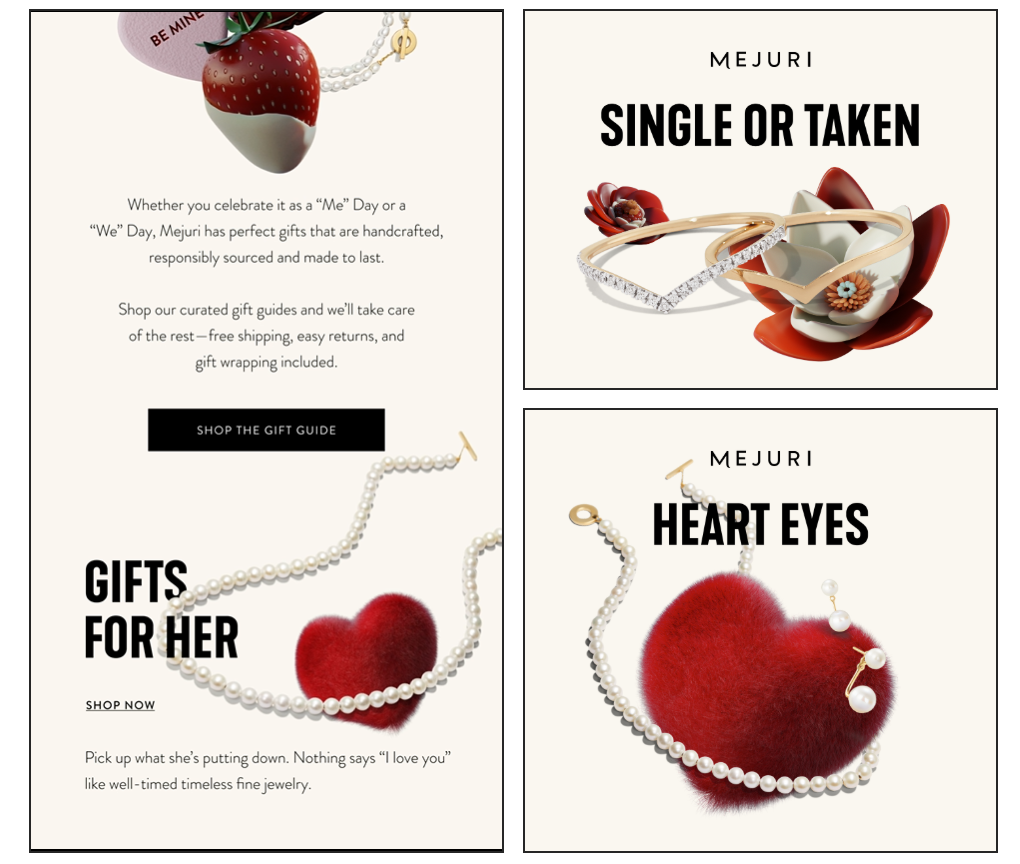
Mejuri regularly runs Valentine’s catalog ads that group products by gift intent, not just category.
Instead of “Shop Jewelry,” the ad structure feels like:
- Everyday gold gifts
- Statement pieces under a certain price
- Minimal designs for daily wear
Each product card shows:
- Clean product image
- Clear price
- Simple headline
This removes friction. Shoppers do not need to guess whether something fits their budget or style.
2. Footwear Brand: Nike
Industry: Footwear & apparel
Ad format: Meta catalog ads
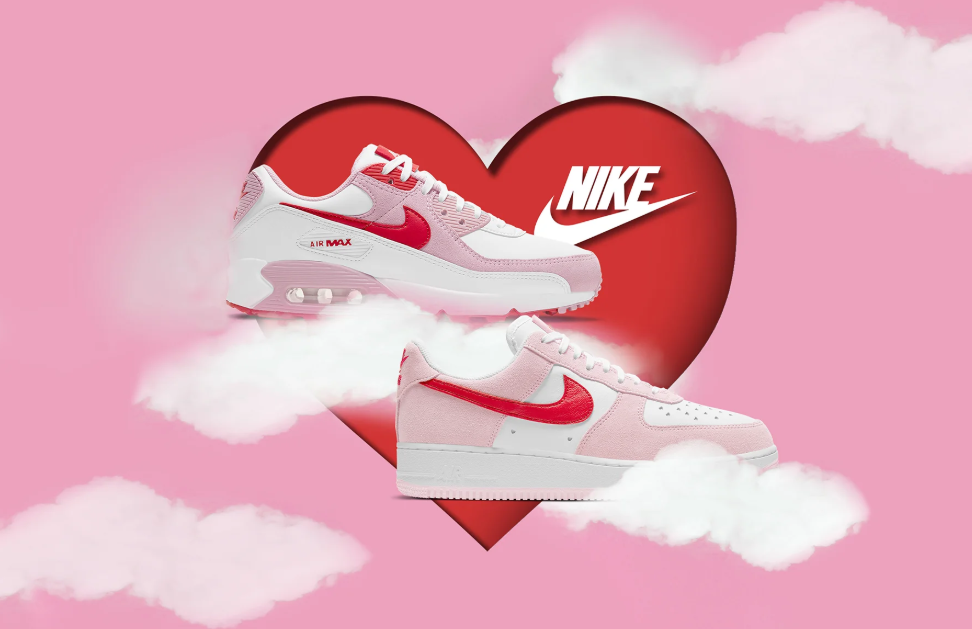
Nike uses Valentine’s as a shared identity moment, not a romantic cliché.
Their catalog ads often feature matching sneakers or coordinated styles.
The carousel feels like:
- His & hers picks
- Color-matched products
- Lifestyle imagery paired with product tiles
It works because it speaks to couples who bond over style, not just gifts.
3. Beauty brand: Sephora
Industry: Beauty
Ad format: Meta dynamic product ads
Why it works: Bundle-first strategy
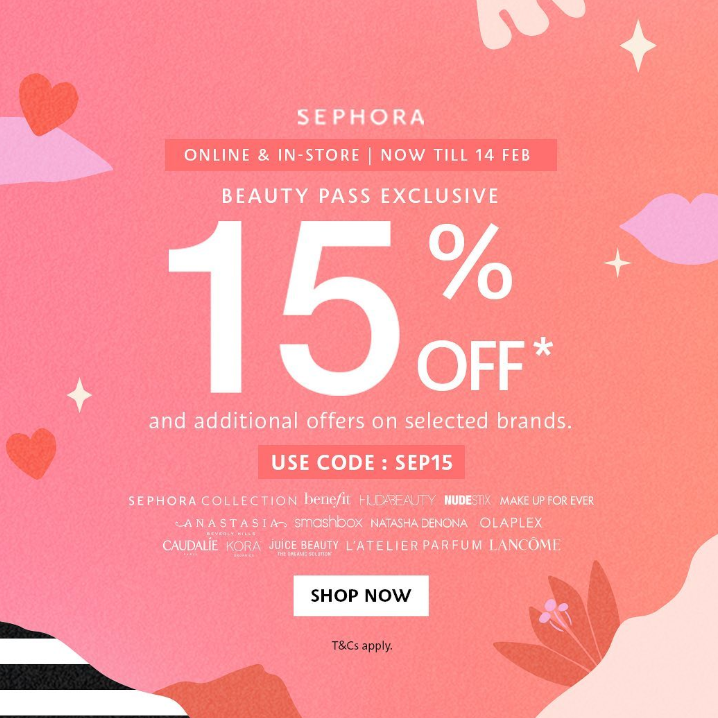
Sephora leans heavily into bestseller psychology for Valentine’s Day. Their catalog ads highlight products that already have social proof. Instead of pushing romance messaging hard, the carousel quietly says:
“These are the gifts everyone loves.”
Each card typically includes:
- Product image on a clean background
- Star ratings or bestseller tags
- Clear pricing
It works because gifting feels safer when someone else has already approved the choice.
4. Online Gifts Brand: Etsy
Industry: Marketplaces & gifting
Ad format: Meta catalog carousel
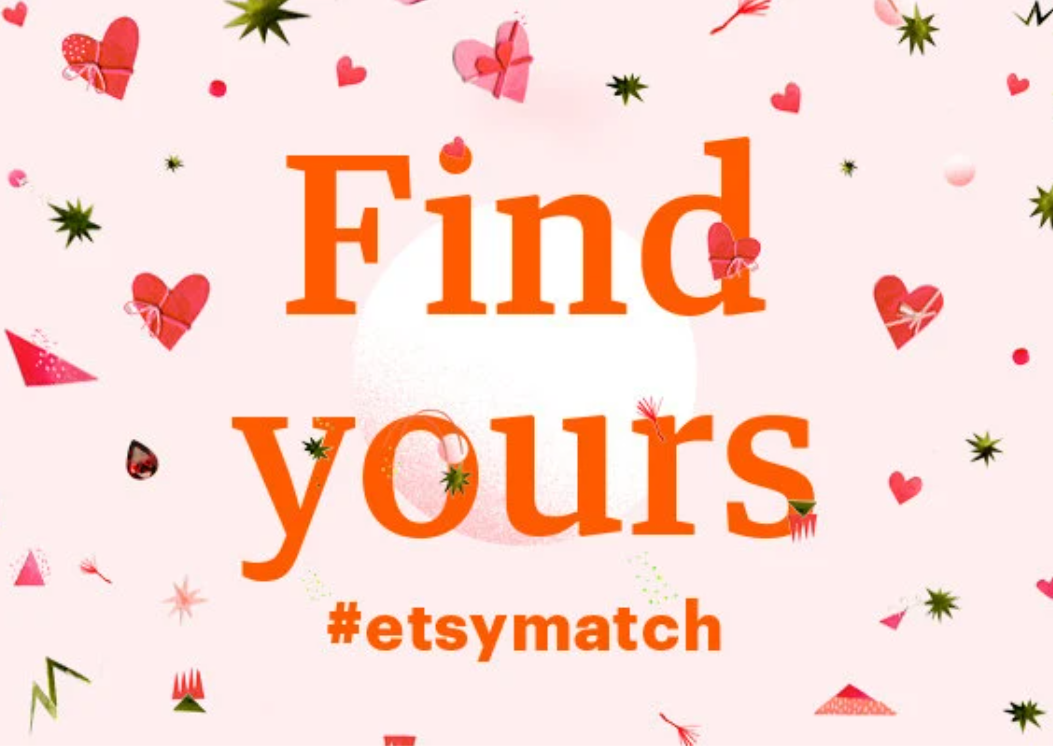
Etsy’s Valentine’s catalog ads shine because they feel personal at scale. Products are grouped by recipient personality, not product type.
You’ll often see:
- “For the sentimental one”
- “For the creative one”
- “For the minimalist”
Each card feels intentional, even though the ad is fully automated.
5. Luxury Beauty: Dior

Industry: Luxury beauty
Ad format: Meta dynamic product ads
Dior’s Valentine’s catalog ads rely on brand recognition, not persuasion. The carousel highlights iconic products shoppers already recognize.
Each tile feels premium:
- High-contrast product photography
- Elegant typography
- No clutter, no extra copy
This works because luxury shoppers want reassurance, not explanation.
6. Fashion Brand: Zara

Industry: Fashion
Ad format: Meta catalog carousel
Zara’s Valentine’s ads feel more like a styling guide than a promotion. The catalog carousel is built around how the product will be worn.
Some common themes include:
- Dinner date outfits
- Minimal evening wear
- Red and black statement pieces
Instead of selling individual items, Zara sells the moment. Shoppers imagine the night out before even clicking.
7. Accessories Brand: Fossil

Industry: Accessories
Ad format: Meta catalog carousel
Fossil positions Valentine’s gifting around longevity and meaning. Their catalog ads highlight watches and jewelry as keepsakes, not trends.
Each product card shows:
- Close-up product shots
- Clear pricing
- Short emotional cues like “A gift they’ll keep.”
It’s a subtle shift from impulse buying to sentimental buying, perfect for Valentine’s.
8. Home & Lifestyle: IKEA

Industry: Home & lifestyle
Ad format: Meta catalog carousel
IKEA’s Valentine’s catalog ads avoid obvious gifting. Instead, they focus on shared spaces.
The carousel usually includes:
- Candles, bedding, and small decor
- Cozy room visuals
- Affordable price points
It taps into the idea that Valentine’s doesn’t need luxury, just comfort and intention.
What all high-performing Valentine’s catalog ads have in common
Across industries, the winning patterns stay consistent.
They:
- Use clean, distraction-free product images
- Group products by gift intent
- Show prices clearly
- Avoid heavy copy
- Let the catalog do the selling
Most importantly, they update automatically, which matters during short, high-pressure seasons like Valentine’s Day.
How brands scale these ads without manual work
Behind every good catalog ad is a well-structured product feed. The best parts about winning brands:
- They keep titles short and readable
- Use consistent product images
- Add promotional overlays when needed
- Segment feeds by occasion or price range
This is where feed optimization tools matter. When feeds are clean and flexible, marketers can not only launch Valentine’s campaigns faster, but also duplicate winning structures, and adjust pricing and messaging without rebuilding ads
This is exactly why many performance teams rely on tools like Cropink to manage feed rules, overlays, and product segmentation without touching every SKU manually. Simply put, the ad examples above are not creative miracles. They are feed-driven systems.
Common Valentine’s Day ad mistakes to avoid
Many brands lose money during Valentine’s Day because they:
- Run only static creatives
- Push one product instead of a range
- Ignore catalog segmentation
- Forget mobile-first layouts
- Overwrite emotional copy
Note that Catalog ads fix most of these problems by design.
Final thoughts
In conclusion, we can say that the best Valentine’s Day ads are not the ones that are just flashy.
They are:
- Relevant
- Fast
- Product-driven
- Feed-optimized
If your Valentine’s campaigns struggle, the issue is rarely creative talent. It is usually how products are structured and delivered inside ads. Catalog ads give you the leverage here, and clean feeds give you the scale. And this combination is what converts during Valentine’s Day.
FAQs
Catalog ads consistently perform the best during Valentine’s Day. They show multiple products at once, update prices automatically, and match products to shopper intent, which is critical during short, high-pressure sales windows.
Yes. Static ads push one product and rely heavily on copy. Catalog ads let shoppers browse, compare prices, and self-select gifts, which reduces friction and increases conversion rates during gift-driven seasons.
Facebook and Instagram deliver the strongest results because of their dynamic product ads and retargeting capabilities. Many brands also extend winning catalogs to Google Shopping for additional reach.
Most brands start testing Valentine’s campaigns 3–4 weeks in advance. This allows time to identify winning product segments and scale budgets closer to February 14, when purchase intent peaks.
Yes. Successful Valentine’s campaigns often focus on self-gifting, shared experiences, or everyday items. Brands like IKEA and Nike prove that Valentine’s ads don’t need traditional romance to convert.
High-performing catalogs group products by intent, not category. Common groupings include budget ranges, recipient type, usage occasions, or bestsellers. This makes decision-making faster for shoppers.
Yes. Catalog ads scale well across both. For prospecting, they introduce relevant products based on behavior signals. For retargeting, they reconnect shoppers with products they already viewed or considered.
Manisha is a Data-Driven Marketing Expert who turns numbers into narratives and ad clicks into conversions. With a passion for performance marketing and a sharp eye for analytics, she helps brands cut through the noise and maximize their impact in the digital space.
Leszek is the Digital Growth Manager at Feedink & Cropink, specializing in organic growth for eCommerce and SaaS companies. His background includes roles at Poland's largest accommodation portal and FT1000 companies, with his work featured in Forbes, Inc., Business Insider, Fast Company, Entrepreneur, BBC, and TechRepublic.
Related Articles


How Can Cropink Help?
Start with Cropink is easy and free
No credit card required