Bandwagon Advertising: How Popularity Drives Conversions Fast
Bandwagon advertising uses social proof to influence buying decisions. With 69% of millennials driven by FOMO and 20% of consumers influenced by celebrity endorsements, this guide explains how popularity, urgency, and visibility drive conversions.


Why do some products suddenly go viral while others struggle to get noticed? Bandwagon advertising holds the answer. With 69% of millennials driven by FOMO and 20% of consumers influenced by celebrity endorsements, popularity sells.
And it doesn't stop there. 75% of rewarded customers return and share their experiences, creating a ripple effect on social media that fuels even more growth.
Here’s how bandwagon advertising works and how you can use it to grow your brand.
Key takeaways
- Popularity is a powerful trigger. Bandwagon advertising taps into the natural desire to belong. With 69% of millennials influenced by FOMO and 20% of consumers swayed by influencer endorsements, showing that others love your product can drive serious action.
- Visual proof beats vague claims. Phrases like “Over 10,000 sold” or “Top-rated this week” aren’t just filler—they create instant trust. Especially in catalog ads, embedding this kind of proof visually helps reinforce credibility and influence decisions.
- Momentum fuels itself, but only if it feels real. Once people see a product gaining traction, more will follow. But sustainability comes from authenticity. When 75% of rewarded users share their experiences, the ripple effect grows—so long as your campaign keeps evolving with real value behind it.
What is Bandwagon Advertising?
Bandwagon advertising is a strategic marketing approach that persuades people to buy a product or support a brand simply because others are doing it.
It works by projecting popularity, triggering a psychological response to belong, fit in, or avoid missing out.
The bandwagon effect is deeply rooted in human behavior. When people perceive that many others are taking a particular action, buying a product, joining a trend, or following a brand. they are more likely to do the same.
This drive comes from a blend of emotional and psychological factors, primarily social belonging, FOMO (fear of missing out), and conformity.
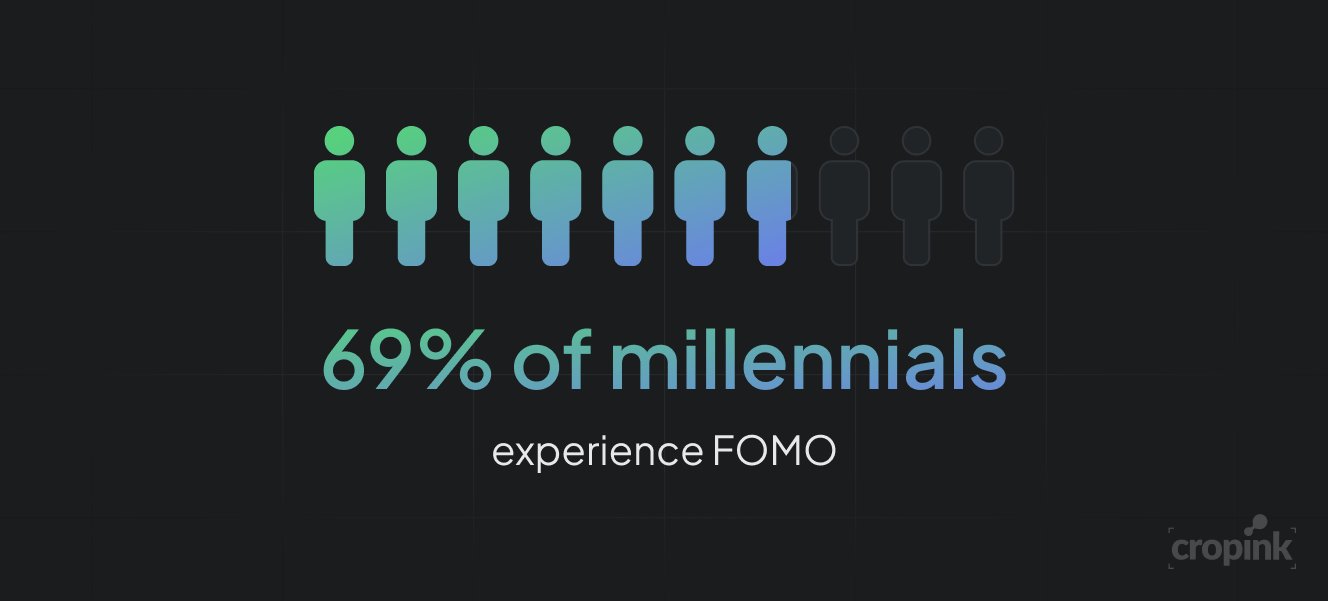
A recent study shows that 69% of millennials experience FOMO, directly influencing their purchase decisions and loyalty patterns.
To convey this effectively in marketing, brands use specific slogans and copy that evoke collective participation. Here are examples of common slogans that capture the essence of bandwagon advertising:
- "Join millions who already switched"
- "America’s favorite brand"
- "Everyone’s loving it"
These messages imply popularity without needing proof, triggering the belief that the product must be good simply because it’s widely accepted.
Brands with strong communities and easy-to-share value, especially those focused on digital performance and creative automation, are particularly well positioned to benefit from this effect.
How Bandwagon Advertising Works (3-Step Breakdown)
At its heart, bandwagon advertising is about making people feel like choosing your product is the safe, smart, and exciting thing to do; because everyone else already is.
Bandwagon advertising works not because it tricks people but because it reflects how we naturally respond to social momentum. When your brand feels like a movement, people want to be part of it.

CEO and Co-founder of Cropink
That effect is built across three deeply connected forces: Visibility, Emotional Trigger, and Reinforcement. When you understand how they work together, you unlock a strategy that doesn’t just sell, it spreads.
1. Visibility: Making Popularity Impossible to Ignore
The first step in sparking the bandwagon effect is simple: show people that others are already on board. Visibility isn’t just about impressions or reach, it’s about social validation. People trust what others use, especially when they’re uncertain.
That’s why phrases like:
- “10,000 sold this week”
- “Over 1 million happy customers”
- “America’s favorite”
...are so effective. They give buyers permission to say yes, because the crowd already has.
Turn data into design, not just text
This kind of proof needs to live not just in the fine print, but inside the creative itself. Visual cues like ratings, testimonial quotes, or a customer count badge can completely shift how an ad is perceived. Especially in performance ads like product catalogs, this detail gets overlooked.
That’s where tools like Cropink help teams embed real-time proof right into their visuals. Instead of static product grids, brands can now launch dynamic ads that reflect popularity and momentum, like “Top 100 Trending,” “Most Added to Cart Today,” or “Fan Favorite.” It’s visual validation, at scale.
2. Emotional Trigger: Belonging, FOMO, and the Fear of Being Left Out
Once visibility creates trust, the next layer is emotional. Bandwagon advertising only works when it taps into something deeper: the need to feel included. The most effective ads don’t just show that something is popular, they make people feel like they’re missing out if they don’t join in.
It’s not manipulation. It’s human instinct.
That’s why you’ll often see campaigns pairing social proof with urgency:
- “Only 3 left”
- “Offer ends at midnight”
- “Join the challenge — thousands already have”
Tap into culture, not just copy
Emotion also comes from feeling connected to what others are doing right now, whether that’s a TikTok challenge, a trending aesthetic, or even a nostalgic theme. That’s why the best campaigns often ride on community moments, not just product features.
And the brands that succeed here are the ones who adapt their creatives quickly. With Cropink, for example, brands can instantly launch seasonal, trending, or influencer-led ad versions using the same catalog feed.
It keeps the message timely and the emotional spark alive — without slowing the campaign down.
3. Reinforcement: When Momentum Becomes the Message
This is where everything comes full circle. When enough people join in, the popularity starts to sustain itself. People start seeing it everywhere. Friends are sharing it. Ads are retargeting. Influencers are posting. And soon, the product or brand becomes the safe default.
This is the reinforcement loop, and it’s where real brand momentum is built. As more people join in, the perception of value grows.
This is how fitness trackers like Fitbit exploded, not just through features, but through visible participation from real users, celebrities, and everyday posts on social media. From 1 million units sold in 2012 to 22 million by 2016, driven largely by social proof and community effect.
Keep your momentum alive with agile creative
But here’s the challenge: once the buzz starts, you have to keep feeding it. Repetition is powerful, but only when it stays fresh. If your ads don’t evolve with the movement, your momentum can stall.
That’s why high-performing brands use platforms like Cropink to keep their ads aligned with what’s working. Need to swap in testimonials that reflect current buyers?
Or launch a “Top-Seller” creative as real-time stats roll in? That’s what keeps the reinforcement loop tight, your creative evolves as the audience does
Pros and Cons of Bandwagon Advertising
Bandwagon advertising has powerful advantages, but it's also important to be aware of its risks. Here’s how it can support or harm your brand:
How bandwagon advertising helps your brand:
- Builds fast trust: Social proof makes customers feel safe following the crowd.
- Accelerates adoption: Seeing others enjoy a product creates urgency.
- Boosts viral growth: Bandwagon ads are designed to spread naturally via peer-to-peer sharing.
- Cost-effective: Once traction begins, it reduces reliance on paid ads due to organic momentum.
- Loyalty multiplier: 75% of rewarded consumers make repeat purchases and share their experience, amplifying your message.
Example: McDonald’s Monopoly campaign combined fun, shared rewards, and urgency to drive mass participation. It became a cultural event, not just a promotion.
What to watch out for:
- Can feel manipulative: If it’s too aggressive, people may feel tricked.
- Fad risk: Popularity that isn’t backed by real value fades quickly.
- Alienates individualists: Some customers dislike mass appeal messaging.
- Overuse leads to skepticism: Without authenticity, consumers may disengage.
Despite these risks, when done right, bandwagon tactics enjoy high effectiveness in fashion, tech, luxury, and eCommerce—especially when your brand has the tools to update creatives quickly and align with fast-moving trends.
Bandwagon Campaigns That Worked
Bandwagon advertising isn’t just about popularity. It’s about showing that the product or idea is already embraced by others, and inviting the audience to become part of that story.
The most effective campaigns don’t simply say “everyone’s doing it.” They show it through design, strategy, and emotionally resonant execution.
Let’s look at several real-world campaigns that successfully leveraged the bandwagon effect, each from different industries, using fresh angles and emotional drivers that speak to different segments of the market.
1. Nike — “You Can’t Stop Us” (2020)
This global campaign landed during a time of collective uncertainty and cultural tension. Rather than just promote products, Nike built a movement centered around perseverance, unity, and the power of sport to bring people together.
They edited a powerful video that stitched together clips of athletes moving in perfect sync across a split screen, symbolizing shared purpose and resilience. It wasn't just about sport, it was about community. The visual metaphor made people feel like they were part of something bigger.
The video was distributed across YouTube, TV, and social platforms, and it resonated globally. Within weeks, it had racked up over 58 million views and became a talking point far beyond sports. The sense of emotional belonging and global momentum created a powerful bandwagon moment.
2. Glossier — Community-Led Growth
Glossier took a different approach by making their customers the center of their brand story. Rather than rely on polished celebrities, they focused on real users sharing their everyday routines, looks, and reviews.
On Instagram, Glossier consistently reposted photos from fans using their products, positioning them as the “it” products not because of hype, but because of community trust. It gave potential buyers the sense that everyone they relate to is already on board.
This was especially effective in 2017 and beyond when Gen Z and Millennials were looking for authenticity. As of their early years, about 70% of Glossier’s revenue came from peer referrals and organic social media — showing how powerful the bandwagon effect can be when it’s driven by real users.
3. Telfar — The “Everyone Bag”
Telfar is one of the best examples of using scarcity and inclusion to fuel cultural momentum. Their weekly shopping bag drops sold out within minutes, creating urgency and the feeling that everyone was racing to get one.
But the appeal wasn’t about luxury exclusivity. It was about access. Their slogan, “Not for you, for everyone,” reflected values of inclusivity and community. Social media exploded with unboxing videos and styled photos, turning each purchase into a badge of belonging.
The buzz didn’t come from marketing stunts. It came from real customers sharing real excitement, reinforcing social proof every time a drop launched. The limited nature of the product plus the communal pride in owning it made Telfar bags one of the most powerful fashion symbols of the moment.
4. Spotify Wrapped — Yearly Shared Ritual
Every December, Spotify turns private listening data into a public celebration. Spotify Wrapped gives users personalized music stats and encourages them to share their top songs, artists, and genres with friends.
This ritual has become a cultural event. People rush to post their Wrapped graphics on Instagram Stories and TikTok, partly to express themselves, partly to join the buzz. Seeing so many others participate sparks curiosity, and that curiosity often turns into action.
The beauty of Spotify Wrapped is that it makes people feel special, but also part of something much larger. That blend of individual pride and collective belonging is what turns it from a product feature into a bandwagon moment.
5. Crocs — Celebrity Drops and TikTok Resurgence
Once dismissed as uncool, Crocs made a dramatic comeback through clever collaborations and social media strategy. They teamed up with artists like Post Malone and Bad Bunny, releasing limited-edition drops that sold out quickly.
Simultaneously, TikTok creators began styling Crocs in unexpected ways, turning them into a quirky fashion statement. The combination of celebrity influence and organic user trends created a feedback loop — people saw others wearing Crocs and wanted to try them too.
From 2020 to 2022, the brand’s visibility soared, with social media mentions in the millions. The campaign didn’t try to make Crocs fit in. It made them stand out, and it made standing out feel cool.
What These Campaigns Teach Us
These examples show that the bandwagon effect works best when it’s emotionally honest and visually engaging. Whether through celebrity power, user-generated content, scarcity, or collective rituals, the goal is to spark social proof that feels real.
Each of these campaigns activated a different psychological driver:
- Nike appealed to purpose and shared resilience.
- Glossier built trust through authenticity.
- Telfar turned access into pride.
- Spotify made self-expression social.
- Crocs embraced fun and uniqueness to inspire mass adoption.
What connects all of them is momentum, and that’s exactly where Cropink fits in for modern marketers. Whether you’re running dynamic product ads or building brand identity at scale, Cropink helps you design and deploy visuals that reflect social trends and feed into the bandwagon cycle.
From real-time creative swaps to social-proof overlays and seasonal updates, Cropink lets brands move at the speed of culture, and that’s what turns attention into action.
How to Use Bandwagon Advertising in Your Marketing
To use this strategy effectively, you need tools and tactics that help you stay visually current and socially relevant.
How to implement bandwagon tactics in your campaigns:
- Show real-time stats: Add banners like “3,500 joined this month” or “Trending now among marketers.”
- Highlight testimonials and reviews: Feature quotes from real users and link to review platforms. Remember, 75% of consumers will leave a review if prompted.
- Use UGC: Ask customers to tag you in their posts and feature them on your site or stories. This builds social proof and shows wide adoption.
- Launch community challenges: Create a branded hashtag and invite submissions.
- Collaborate with influencers: 20% of consumers buy based on influencer or celebrity endorsements.
- Combine urgency + proof: Use lines like “Only 12 left” alongside “Top-rated by creators.”
Even better if you use a platform that helps automate creative changes, apply your brand system, or launch campaigns across platforms without waiting on design cycles. It’s easier than ever to align product data with visual storytelling, and that’s when bandwagon messaging really takes off.
Ethical Use of Bandwagon Advertising
Bandwagon ads can spark excitement, but with great influence comes responsibility. Done right, they build community and trust. Done wrong, they cross into manipulation.
Here's how to stay on the ethical side while still creating powerful momentum.
Stick to What’s Verifiable
Saying “everyone loves this” only works if you can back it up. In the US, the FTC’s Section 5 makes it illegal to use claims like “millions sold” unless they’re true and provable.
The EU takes a similar stance. Its Unfair Commercial Practices Directive bans exaggerated social pressure tactics, especially if they target vulnerable groups like teens or the elderly.
Instead of vague hype, show real metrics:
- “10,000 sold this month”
- “Rated 4.8 by 1,200+ customers”
Luckily, about 75% of consumers are happy to leave reviews when asked. That’s authentic social proof, and much more persuasive than inflated slogans.
Match Popularity with Substance
Getting people to try something is only the beginning. If your ad says it’s popular, it should also show why it’s worth trying. The American Advertising Federation recommends pairing popularity cues with real product value and clear benefits.
If you use influencers or partners, be transparent. And if you’re showing fast growth, pair it with a customer quote or result.
Tools like Cropink make it easy to plug verified stats and testimonials into your creatives, so you can show both the numbers and the human stories behind them.
Show Belonging Without Exclusion
Bandwagon appeal works because people want to feel like they’re part of something. But that doesn’t mean making others feel left out.
Avoid:
- Ads that only show one type of person or lifestyle
- Messaging that implies people are “less than” if they don’t join in
Instead, highlight diversity and openness. Show your product in different contexts, with different types of people. Belonging should feel like an invitation, not pressure. The goal is to say “people like you are loving this”, not “you’re behind if you don’t jump in.”
FAQs
An example of a bandwagon is when a large group of people start using a product, and others follow simply because they don’t want to feel left out. For instance, when millions downloaded a trending app after seeing friends use it, that’s the bandwagon effect at play.
Coca-Cola is an example of bandwagon advertising because it creates a sense of collective joy and community through campaigns like "Share a Coke." The brand uses personalization, large-scale participation, and global visibility to make people feel like everyone is part of the experience.
An example of a bandwagon appeal in advertising is the phrase “Join millions who already made the switch.” It suggests the product is widely accepted, encouraging people to follow the crowd and adopt it too.
An example of the bandwagon effect in marketing is when a product gains popularity quickly after being endorsed by influencers. As more people buy and post about it, others feel social pressure to join the trend, driving even more sales and visibility.
Explore related ad strategy resources:
- Social Proof Ad Examples
- 10 Advertising Techniques Examples
- Ad Networks for Small Publishers
- Customize Your Facebook Dynamic Product Ads
- 40+ Referral Marketing Statistics
- Product Ads Performance
Final thoughts
Bandwagon advertising isn't just a tactic, it's how products turn into cultural moments. When people see others buying, sharing, and talking about your brand, they want to join too.
The key is making that energy feel real and relevant. From trending designs to real-time social proof, it all starts with smart, creative execution.
With Cropink, you can turn product data into ads people actually want to click. Want to ride the wave of popularity and make it your own?
Sources
Ansherina helps brands create powerful digital marketing and performance marketing strategies. With a passion for ad design and audience engagement, she is dedicated to making brands more visible and impactful.
Leszek is the Digital Growth Manager at Feedink & Cropink, specializing in organic growth for eCommerce and SaaS companies. His background includes roles at Poland's largest accommodation portal and FT1000 companies, with his work featured in Forbes, Inc., Business Insider, Fast Company, Entrepreneur, BBC, and TechRepublic.
Related Articles

How Can Cropink Help?
Start with Cropink is easy and free
No credit card required