View Through Conversions on Facebook and How to Use Them [2026 Update]
Discover why Facebook sometimes credits conversions even when no one clicks your ad and what that means for your campaigns. Learn how view through conversions work, when they matter, and how to use them to better measure ad impact.


![View Through Conversions on Facebook and How to Use Them [2026 Update]](https://honest-garden-2954e8e7e9.media.strapiapp.com/view_through_conversions_facebook_thumbnail_b84d1c1246.png)
Have you ever seen outstanding conversion results in your Facebook reporting dashboard, only to find that when you check Google Analytics, the numbers don't match?
The reason behind that mismatch is usually Facebook's view-through conversions.
And that’s why today we’re explaining view-through conversions on Facebook. We’ll also analyze whether there’s a need to track this attribution data or trust it.
Key takeaways
- View-through conversions occur when someone sees your ad but doesn't click it, then buys within 24 hours.
- Facebook counts view-throughs in your results by default, which is why your numbers look better than what Google Analytics shows.
- Tracking View-through data is not recommended for retargeting and lead generation Facebook ads.
- Meta removed the 7-day and 28-day view-through windows in January 2026, so now you only get 1-day view-through tracking.
- Click-through conversions are better for analyzing if your ads are effective than view-through conversions.
What are view through conversions on Facebook?
A view-through conversion is counted when someone sees your ad but does not click it, then later completes a conversion through another way, for example, typing your website URL directly.
With view-through attribution, the logic is that ad exposure influenced the conversion decision, even if a user didn’t click the ad.
For instance, someone might see your ad for a recruitment webinar on Instagram and scroll past it without engaging.
A few hours later, they Google the webinar name and register. Facebook links that registration back to the original ad exposure, and it’s attributed as a view-through conversion.
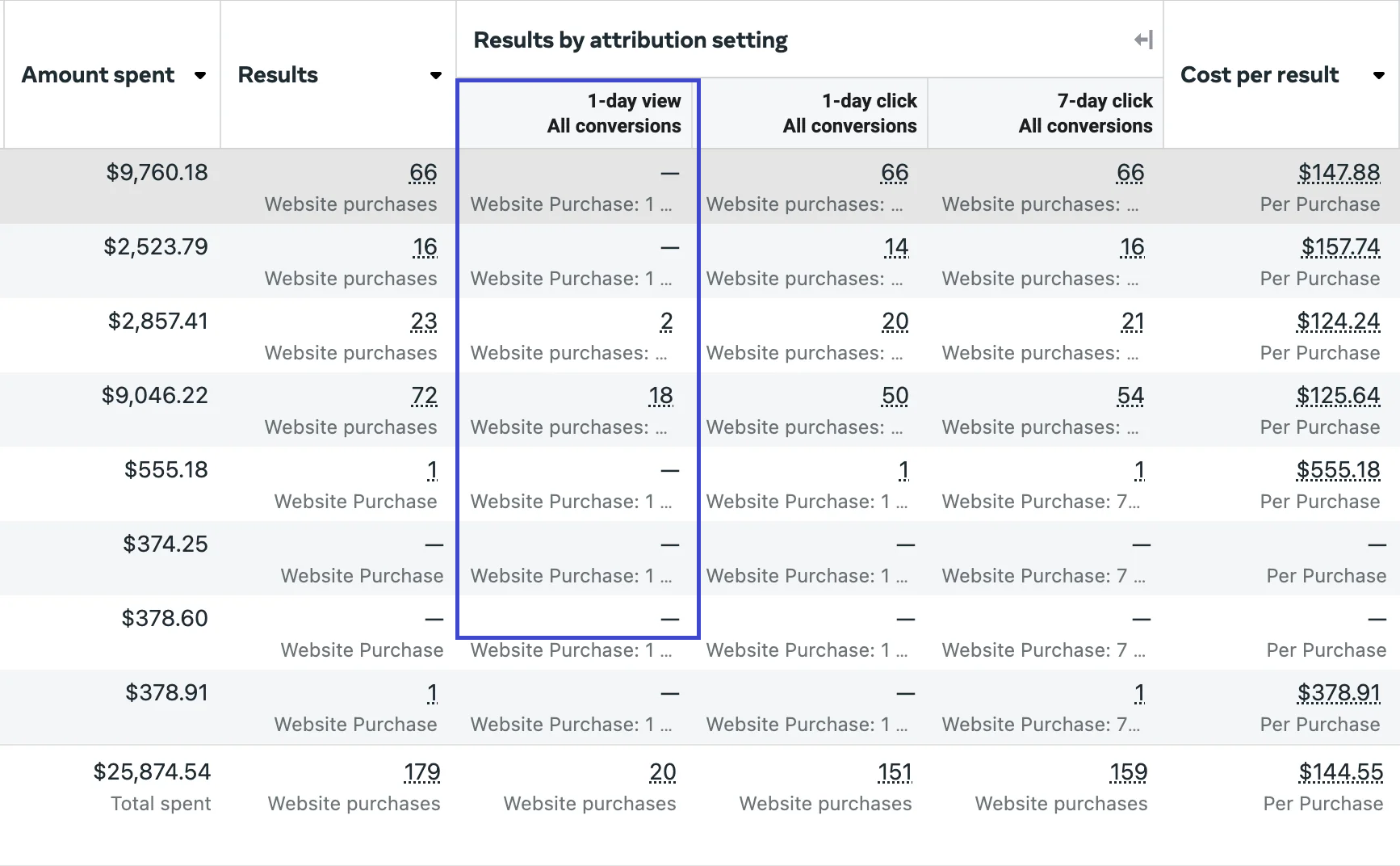
Meta's recent attribution update
On January 12, 2026, Meta eliminated longer view-through attribution windows that advertisers had relied on for years.
These attribution models are no longer available:
- 7-day view-through attribution
- 28-day view-through attribution
- Any combined attribution models using those windows
What's still available:
- 1-day view-through attribution
- 1-day, 7-day, and 28-day click attribution windows
View through conversion vs. click through conversions
Click-through conversions happen when someone clicks your ad and converts within a specific window (1-day, 7-day, or 28-day). This type of attribution shows direct engagement with your ad before the conversion takes place.
View-through conversions only require ad exposure. The user sees your ad, doesn't interact with it, but converts within 24 hours through another channel. Facebook still attributes that conversion to your ad campaign.
Click-through conversions provide better proof that your ad is responsible for a conversion.
View-through conversions, on the other hand, assume influence without concrete evidence of intent.
This distinction is important when you're evaluating campaign performance.
If most of your conversions come from view-throughs rather than click-throughs, you're making assumptions about ad effectiveness that may not hold up under scrutiny.
Should you use and trust view-through conversions?
The answer depends on your campaign type and what you're optimizing for.
When view-through conversions are worth tracking
If you run video ads, include view-through conversions in your reporting.
Viewers who are interested in your offer often navigate away from the video to search for your product or visit your site directly, rather than clicking the ad itself.
View-throughs, in this case, will help you identify which video ads are causing conversions, even when users don't click.
View-through attribution also helps when you're measuring brand awareness. If your goal is to get your product in front of people and influence future behavior, view-throughs show how exposure contributes to conversions over time.
The transparency problem of view through conversions on Facebook.
View-through attribution doesn't always tell you the full story about ad performance.
That’s because a user may see your ad, doesn't click, and buys your product within 24 hours. Facebook attributes the sale to your ad. But that user might have already planned to purchase, regardless of whether they saw your ad or not.
Click attribution gives you more transparent data about how much your ad actually contributed to conversions. Someone who clicked your ad and then converted showed undeniable intent influenced by your campaign.
When to ignore view-through conversions
If you're running retargeting or remarketing campaigns, view-through conversions can be misleading.
These audiences already know your brand, visit your site, or are on your email list. They're likely to convert anyway. Crediting view-throughs in this scenario inflates your results without proving your ads caused the action.
The same goes for non-purchase campaign goals, such as lead generation or app installs. If someone didn't engage enough to click, attributing that conversion to your ad is questionable.
Do we completely ignore view through conversions? No. The bottom line is that context is necessary when talking about viewthrough. View through conversions don't have as much value as click-through conversions… But there are times when they do have some value. When it's a purchase, you can make a really solid argument for view through conversions. The view through conversions from a new audience are going to be most valuable. Completely ignore them for non-purchase events or for remarketing.

Facebook ads educator and strategist at Jon Loomer Digital
How to disable view-through conversions tracking on Facebook
- Set attribution at the campaign level
When setting up your campaigns, go to the ad set level and find the conversions section. Choose after clicking ad and select either 7-day click or 1-day click attribution. This tells Facebook to only count conversions that happen after someone clicks your ad.
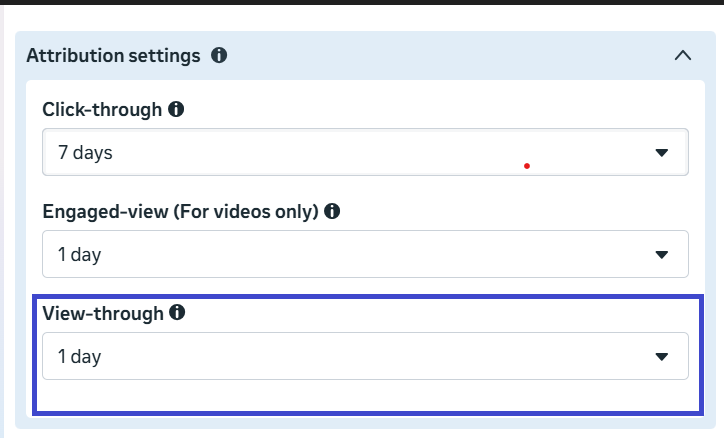
- Remove view-through data from reporting
If you've already launched campaigns with view-through attribution enabled, you can filter it out of your reporting view.
In Ads Manager, click Columns, then Customize Columns. Remove any view-through data points from your column selections. This won't change how Facebook optimizes your campaigns, but it removes view-through conversions from the metrics you're analyzing.
Final thoughts
View-through conversions are still an important attribution model, but they work best when you're running purchase campaigns to new audiences or tracking the impact of brand awareness ads.
However, don't rely on view-through data alone. Make sure to report it alongside click-through conversions and cross-reference with Google Analytics or third-party tracking platforms.
This will provide a more complete picture of what's causing conversions versus what Facebook assumes contributed.
If you want to learn more about Facebook advertising, check out our articles on how to create good Facebook ads and our quick guide on Meta Ads Manager.
FAQs
A view-through conversion occurs when someone sees your ad without clicking it, then converts within 24 hours through another channel. Facebook attributes that conversion to your ad solely based on exposure.
Facebook conversions are actions people take after interacting with your ads, such as purchases, sign-ups, downloads, or form submissions. You define these conversion events based on your campaign goals.
The cost per 1,000 impressions (CPM) on Facebook varies widely based on your industry, audience, ad quality, and competition. Most advertisers see CPMs ranging from $5 to $20, though highly competitive niches can exceed $30.
Sources
Damaris is a Digital Marketing Specialist who writes about digital marketing and performance marketing. At Cropink, she creates data-driven content to help businesses run better ad campaigns for better performance and ROI.
Leszek is the Digital Growth Manager at Feedink & Cropink, specializing in organic growth for eCommerce and SaaS companies. His background includes roles at Poland's largest accommodation portal and FT1000 companies, with his work featured in Forbes, Inc., Business Insider, Fast Company, Entrepreneur, BBC, and TechRepublic.
Related Articles


How Can Cropink Help?
Start with Cropink is easy and free
No credit card required