What Is Digital Ad Intelligence? And Why Do You Need It?
Digital ad intelligence tools track competitor ads, spending patterns, and creative performance across platforms. With advertisers wasting up to 25% of ad budgets on underperforming campaigns, these tools help marketers identify winning creatives, monitor competitors, and optimize campaigns using real-time advertising data.


Digital advertisers waste an average of 25% of their budget on underperforming campaigns.
This happens because most advertisers make campaign decisions based on intuition rather than real-time data. Without a systematic way to track what's working, you're flying blind while your ad spend ticks up by the hour.
Digital ad intelligence changes that. It helps you understand what's happening with your ads in real-time so you can respond before your budget gets wasted.
Read on to learn what digital ad intelligence is, and why it's so vital for your advertising.
Key takeaways
- The ad intelligence software market is projected to grow from $3.5 billion in 2025 to $10.5 billion by 2035.
- Ad intelligence helps you see exactly what your competitors are spending on each platform and which of their creatives are performing best.
- Modern ad intelligence platforms now provide AI-powered recommendations that tell you exactly what to change, rather than just showing you data.
- Ad intelligence is essential for reducing wasted spend because it shows you precisely which ads to scale and which ones to cut.
What is Digital ad intelligence?
Ad intelligence helps you track how your ads perform across multiple channels. You get to learn which channels, campaigns, ad sets, creatives, and messaging give you the best ROI, and which you need to iterate or drop entirely.
Thanks to digital ad intelligence, you can also see what's working for others in your industry, spot trends before they become saturated, and find gaps in the market you can exploit.
You can collect all this data manually, but since most companies run numerous ads or simply want greater accuracy, they’ll usually invest in ad intelligence tools.
Today, because of said platforms and AI technology, ad intelligence now looks like access to real-time data, unified in one central place, and automatic recommendations based on this data.
For instance, let's assume you’re running Facebook and Google ads for your latest product launch.
With AI and ad intelligence tools, you can gather ad performance data from multiple campaigns related to the launch and draw data-backed conclusions that can improve the campaign.
If you choose a good ad intelligence tool, it can also provide sensible recommendations based on that data.
These are a few example insights of what you can unravel with ad intelligence:
- Competitors spent heavily on YouTube last week
- Your video creatives outperform images by a certain percentage
- Conversions spike whenever you target women of a certain age in a specific city
- Cost per click increases on Fridays, so you increase your ad spend earlier in the week
You will then use these insights to refine your creatives, adjust your budget, and plan your campaign improvements.
Should you invest in digital ad intelligence?
Absolutely. Ad intelligence is arguably one of the most important aspects of your advertising, second only to creating the campaign itself.
Skipping ad intelligence sets you up for failure and wasted ad spend.
In fact, guessing what works for your campaigns will typically result in thousands of dollars lost due to ineffective creatives or targeting strategies.
Below are three reasons why digital ad intelligence is necessary for every advertiser.
Measure your ROI
How much is each campaign actually bringing in? Is it worth your while, or are you pouring money into a black hole? What specific changes can you make to turn an underperforming campaign into a winner?
Ad intelligence helps you answer all these questions with hard data rather than gut feelings.
You can track performance down to individual ad sets and creatives. Such a level of granularity means you stop wasting budget on ads that don’t work and double down on those that do.
Cater to your audience's needs better
Ad intelligence gives you access to what messaging and creatives work best for your customers. You can see which headlines grab attention, which ad creatives push clicks, and which calls to action lead customers to press the buy now button.
You can then improve your ads based on these insights. The result will now be advertising that feels more relatable to your audience and converts at higher rates.
Get a better understanding of competitors and the industry
Ad intelligence helps you benchmark your campaigns against competitors.
You learn how much competing brands are spending, where they're allocating budget, and what their messaging and creatives look like.
You'll also discover the latest trends that are proving effective in your industry. Maybe video ads are suddenly outperforming static ads in your niche, or perhaps a new platform is delivering surprisingly good ROAS for similar brands.
Ad intelligence will surface these opportunities before your competitors catch on.
Who can benefit from ad intelligence?
Anyone spending money on ads needs ad intelligence.
That's the short answer, but let's break down who gets the most value from it.
Ad intelligence is valuable for teams that manage multiple campaigns, rely on paid channels for growth, or operate in competitive markets. The more complex your advertising operation, the more critical these insights are.
If you fall into any of these categories, you're a prime candidate for ad intelligence:
- Marketers who need to optimize budgets and improve campaign performance
- Founders who want ROI visibility to determine if they're making a worthy investment
- Agencies that handle multiple client accounts and need to prove their value with concrete data
Anyone responsible for making ad decisions or proving advertising returns must invest in ad intelligence.
Even if you are a small business or an ecommerce store, you will still benefit from knowing exactly where your ad dollars go and what results they're bringing back.
The digital ad intelligence process
Ad intelligence may sound complex, but the process boils down to three steps.
- You collect data from your ads,
- process and analyze it, and
- make optimizations to improve performance.
Read on to see what each of these steps entails.
Collect the data from your ads
The first step is gathering all relevant information about your campaigns. This data can come from multiple sources, such as:
- Ad spying tools
- Your own campaigns and tracking pixels
- Official ad network and publisher integrations
- Aggregated, anonymized data from browsers and apps
- Social listening and sentiment tools
- CRM and sales data
Usually, you’ll most likely be working with an ad intelligence tool that can integrate with different platforms to collect this data.
Once you have that data, you're ready to proceed with processing and analysis.
Process the data and then analyze it
This is where you clean, structure, and examine your data to understand trends, patterns, and performance drivers.
The main steps here look like this:
- Combine data from multiple sources to get a complete view of campaign performance.
- Clean and standardize data to guarantee accuracy and consistency across platforms.
- Segment audiences and campaigns to see which groups respond best to your ads.
- Identify trends and patterns in clicks, conversions, and engagement over time.
- Benchmark performance against competitors or industry averages to spot opportunities.
- Detect anomalies or issues such as sudden drops in performance or spikes in spend.
Make optimizations to better your ads
The final step is using the data from your analysis to improve campaign performance.
That data can lead you to adjust budgets, refine targeting, test more effective creatives, and address issues you may have overlooked without this level of visibility.
As we mentioned previously, if you have the right ad intelligence tool, it will typically provide data-backed recommendations, allowing you to make changes more quickly.
Examples of ad intelligence tools
The ad intelligence software market was valued at $3.13 billion in 2024 and is expected to grow from $3.5 billion in 2025 to $10.5 billion by 2035.
With a market this large, you have numerous options.
However, since we can’t cover all options, here are #3 examples of digital ad intelligence tools.
1. SocialPeta
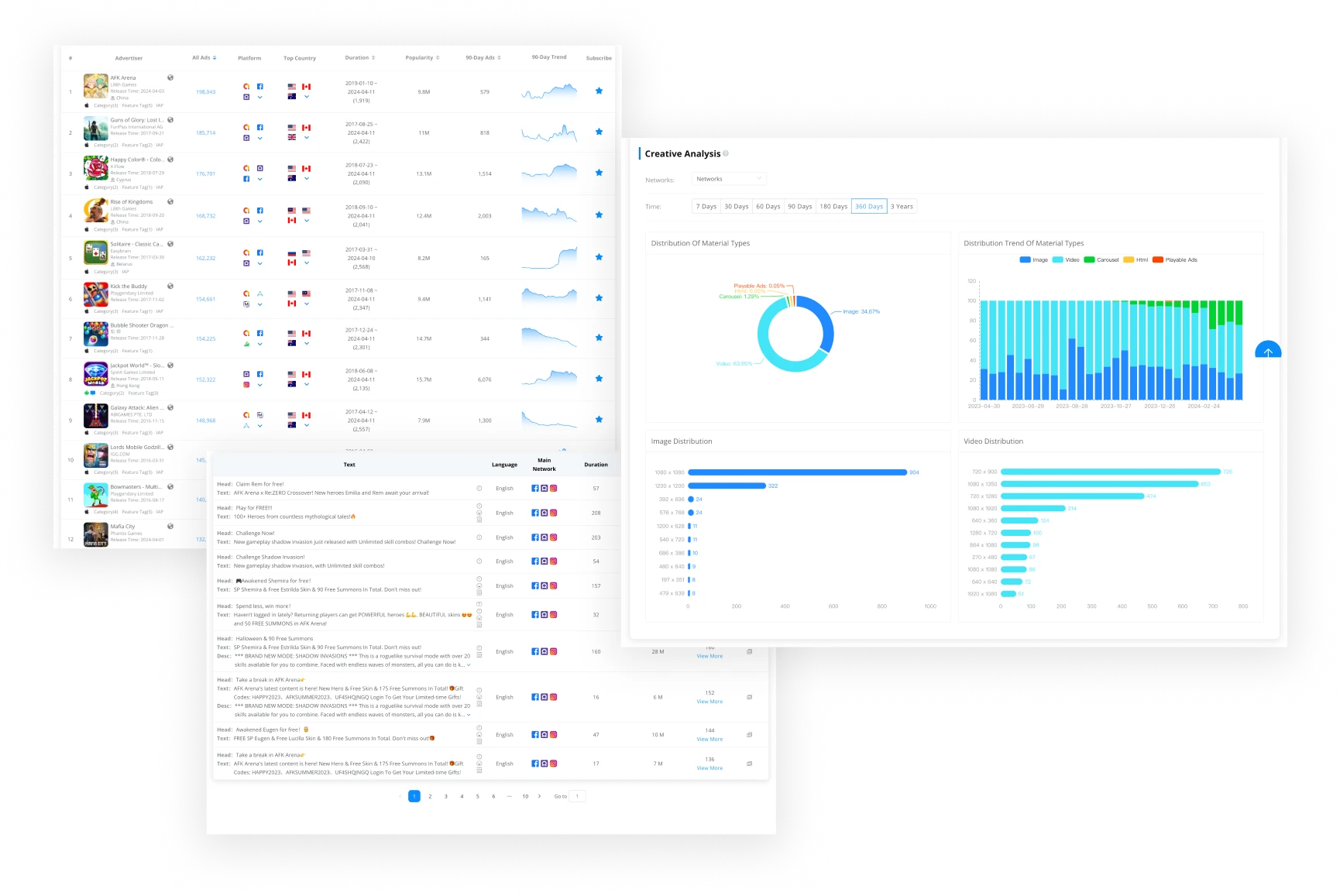
SocialPeta gathers ad data from dozens of channels around the world and gives you a window into ads being run by other brands.
You can browse a vast library of global ad creatives across networks like Facebook, TikTok, YouTube, and more. You'll also have access to data about how much they might be spending.
SocialPeta also provides cross-channel and cross-market intelligence.
You can study trending ad formats, audience targeting strategies, and e-commerce or app-market signals if you run an online store.
2. Pathmatics
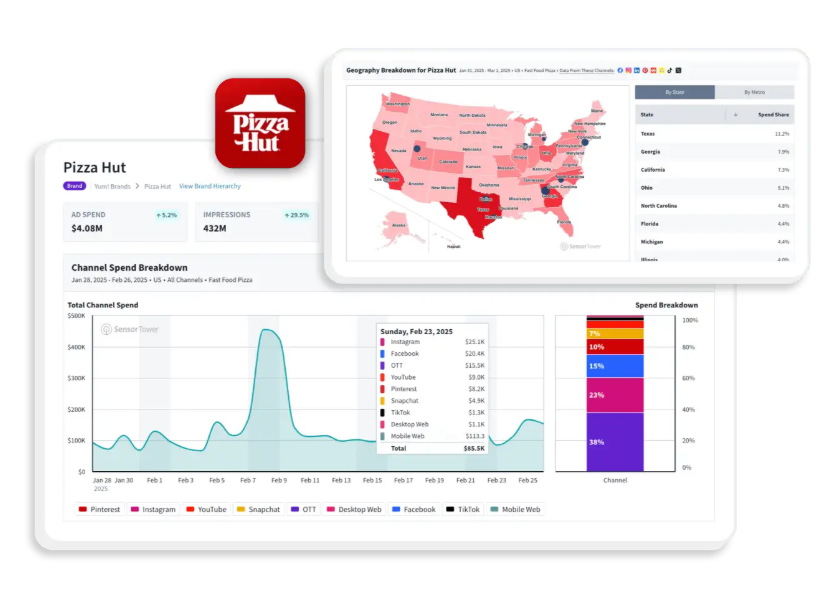
Pathmatics also surfaces data on what other advertisers are doing across different channels and markets. You get visibility into their spend patterns, impressions, creatives, placements, messaging, and seasonal trends.
This data is super helpful for benchmarking your campaigns and spotting advertising opportunities.
3. Intellsys AdGPT
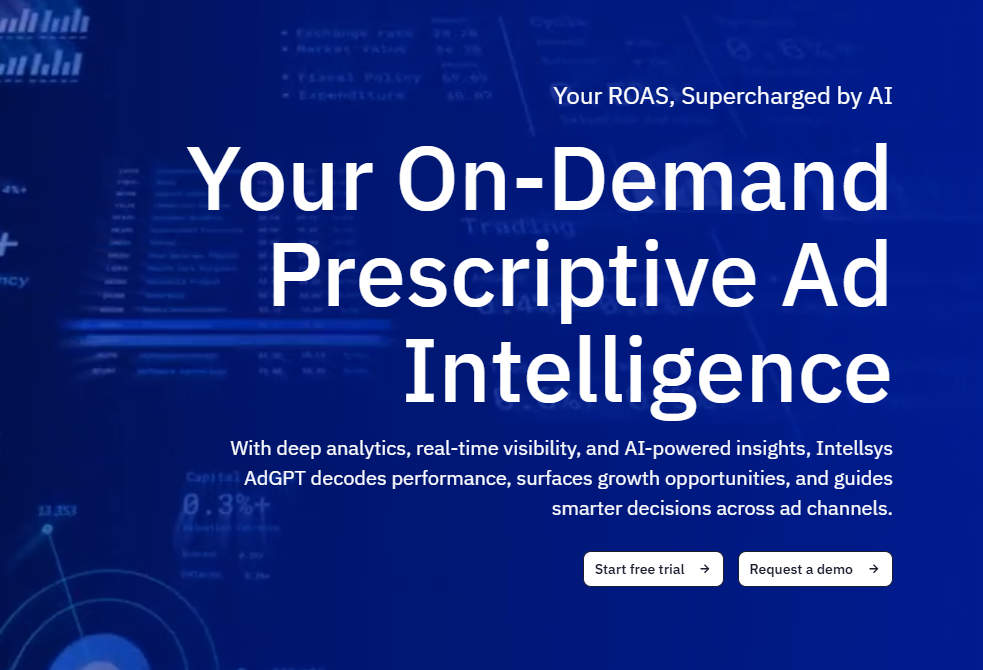
Intellsys AdGPT uses AI to provide prescriptive recommendations for your advertising campaigns.
The platform integrates with over 200 marketing and commerce platforms, including Google Ads, Meta, Amazon, and Shopify.
You can ask ad-related questions in plain English and get data-backed answers with projected impact and confidence scores.
Intellsys AdGPT also analyzes campaign performance across multiple channels in real time, compares different campaigns to quantify conversions, and connects ad spend to customer journey stages.
We also love that it comes with auto-generated reports and evidence-backed explanations for every recommendation.
If you are looking for full-on ad spying tools, here are three blogs to help you analyze competitor campaigns.
Explore related ad strategy resources:
- Types of Digital Ads
- PPC Tools in Digital Marketing
- 50+ Digital Transformation Statistics
- ROI in Digital Marketing
- Responsive Ad Design
- Cropink for Enterprise
Wrapping up
Ad intelligence is one of the best investments you can make if you're running ads. It will help you collect insights that improve campaigns and outpace competitors.
We recommend finding a digital ad intelligence tool that can compile data from multiple campaigns across different sources, process and analyze everything from a centralized platform, and either make recommendations or provide accurate data to inform your optimization decisions.
Once you have that foundation in place, the next step is ensuring your targeting and creatives are spot on. We can help with the creative part.
Check out cropink.com to learn how you can automate the creation of your ad creatives.
In fact, we offer a free forever plan to get you started. Sign up here.
FAQs
Ad intelligence is the process of collecting, analyzing, and acting on data about your advertising campaigns and competitors' strategies. It helps you understand which ads, channels, and audiences deliver the best ROI so you can optimize your campaigns.
Adtech refers to the software used to plan, run, measure, and optimize digital advertising. It includes everything from ad platforms like Meta and Google to analytics, targeting, and programmatic tools.
Competitive intelligence involves analyzing your competitors' business strategies, products, pricing, and market positioning. In contrast, ad intelligence tracks advertising performance, creative strategies, spend patterns, and campaign tactics across digital channels. Ad intelligence is a specialized form of competitive intelligence.
Sources
- Search Engine Land. Study Finds Small Businesses Waste 25 Percent Of Their PPC Budgets
- WiseGuy Reports. Ad Intelligence Software Market Overview
Damaris is a Digital Marketing Specialist who writes about digital marketing and performance marketing. At Cropink, she creates data-driven content to help businesses run better ad campaigns for better performance and ROI.
Leszek is the Digital Growth Manager at Feedink & Cropink, specializing in organic growth for eCommerce and SaaS companies. His background includes roles at Poland's largest accommodation portal and FT1000 companies, with his work featured in Forbes, Inc., Business Insider, Fast Company, Entrepreneur, BBC, and TechRepublic.
Related Articles

How Can Cropink Help?
Start with Cropink is easy and free
No credit card required