Objectives of Advertising: Drive Growth, Loyalty, and ROI in 2026
Objectives of advertising extend beyond visibility. With 63% of global ad spend shifting to digital and triggered emails converting 88% better, this guide explains how awareness, lead generation, loyalty, and engagement support long term ROI.


Brands are losing up to 20% of their ad budgets every year by following outdated strategies.
In 2026, with over 63% of global ad spend shifting to digital, aligning with modern goals has never been more urgent.
This guide breaks down the true objectives of advertising so you can drive impact, reduce waste, and stay ahead in a data-first, fast-moving market.
Key takeaways
- Advertising is no longer just about selling, it’s about connection. With over 63% of global ad budgets now going digital, strategies must prioritize visibility, relevance, and emotional engagement across multiple touchpoints.
- Personalization is the new baseline. More than 70% of consumers expect personalized experiences, and 83% are willing to share their data for better relevance, showing that ads must feel tailored to resonate.
- Lead generation and ROI are now inseparable. Triggered emails convert 88% better than scheduled ones, and programmatic buying (expected to power 90% of display ads by 2026) lets brands target smarter, faster.
- Customer loyalty requires more than just retention tactics. With 75% of rewarded customers likely to share and repurchase, loyalty-building ads need to spark engagement, not just repeat exposure.
- Ethical advertising builds long-term trust. Inaccurate or manipulative messaging can backfire fast. Ad goals must balance persuasion with transparency to meet rising consumer expectations and global regulations.
What Are the Main Objectives of Advertising?
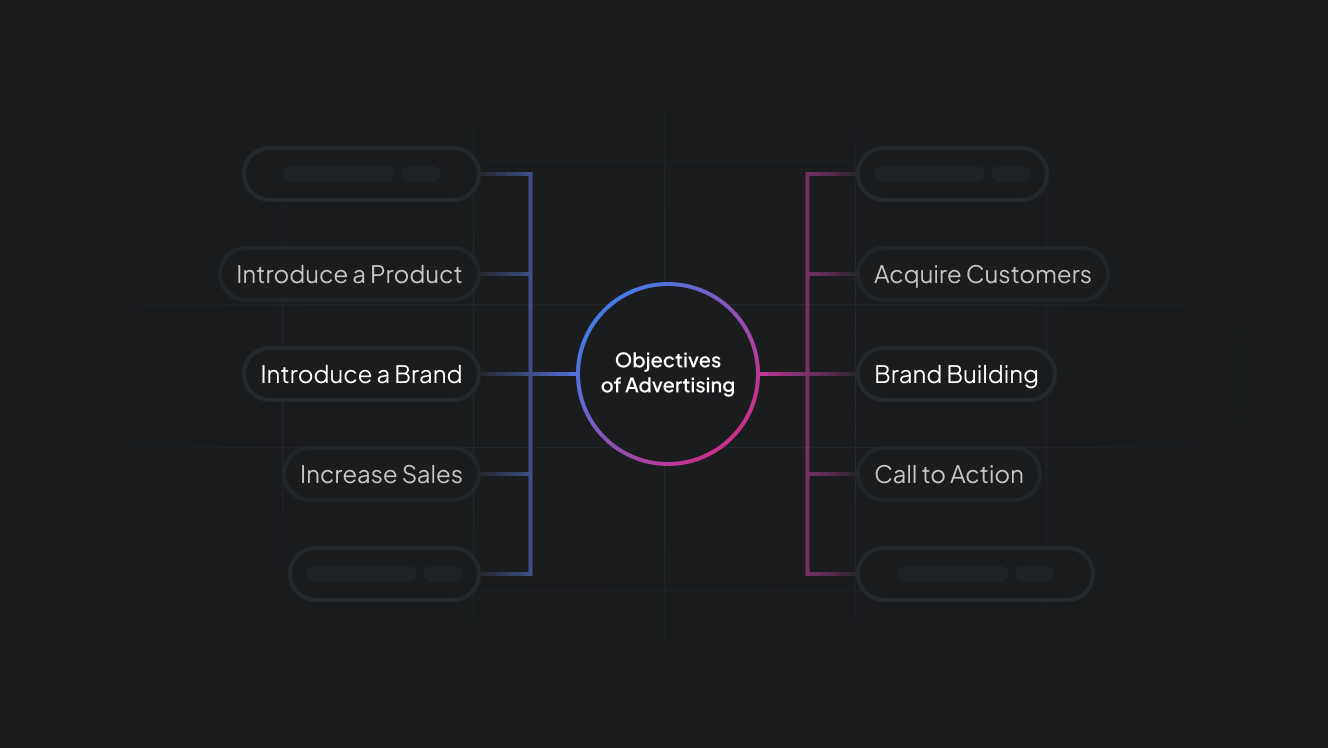
Advertising isn’t just about selling anymore. Today’s top objectives include:
- Building awareness of a product, service, or brand
- Generating demand and driving conversions
- Creating emotional connections with target audiences
- Positioning your brand in a competitive landscape
- Reinforcing brand loyalty and repeat purchase behavior
Each of these goals aligns with different campaign types, formats, and platforms. Whether you're running a Meta campaign, creating a seasonal push, or launching a new product, these objectives dictate your creative direction, audience targeting, and success metrics.
To see how these objectives play out in practice, browse through Cropink's case studies where real brands turn strategy into growth.
The 5 Core Advertising Objectives
Advertising isn’t just about making noise. It’s about moving people—toward awareness, interest, and eventually, action.
These five core objectives reflect how top-performing brands approach modern advertising: not just to sell, but to build brand equity, customer trust, and long-term growth.
Brand awareness
The first objective of advertising is to make your brand known. In 2026, brand visibility remains the foundation for growth, especially in a digital-first world where more than 63% of global ad budgets are now allocated to online channels.
Instead of blasting generic messages, smart brands use targeted ads and dynamic creatives to appear where their audiences are already active.
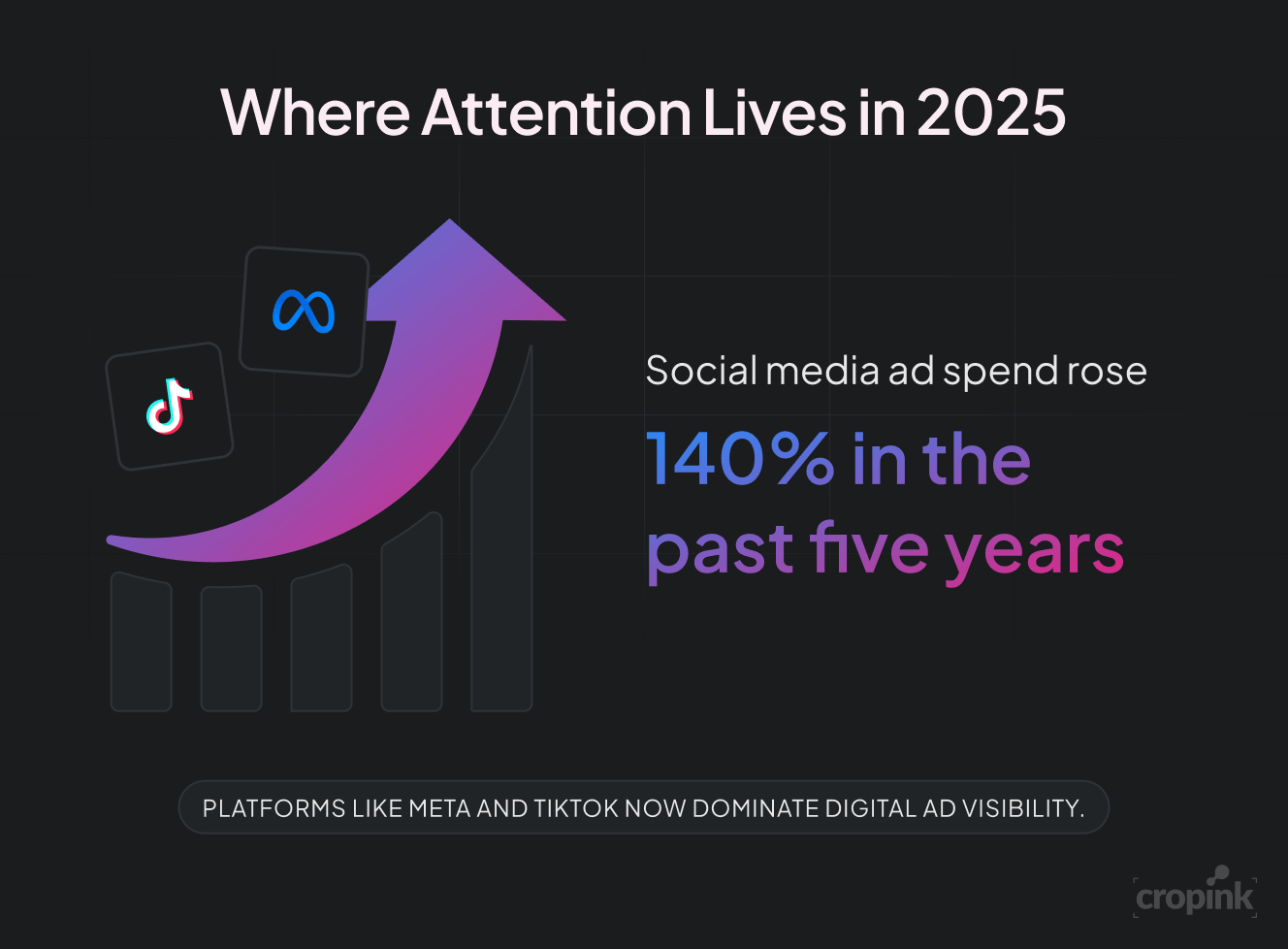
A good starting point is identifying where attention lives. Social media ad spend has jumped 140% in five years, meaning platforms like Meta and TikTok are often the best visibility builders.
For example, using display ads with strong visual identity or fashion ad examples with social proof can give you a faster lift in recall and impressions.
Even simple formats, like digital banners or in-feed placements, can do the heavy lifting, when tied to the right strategy.
Customer engagement
Once your audience knows who you are, the next challenge is keeping them interested. Customer engagement is about sparking interaction, from social likes to product demos.
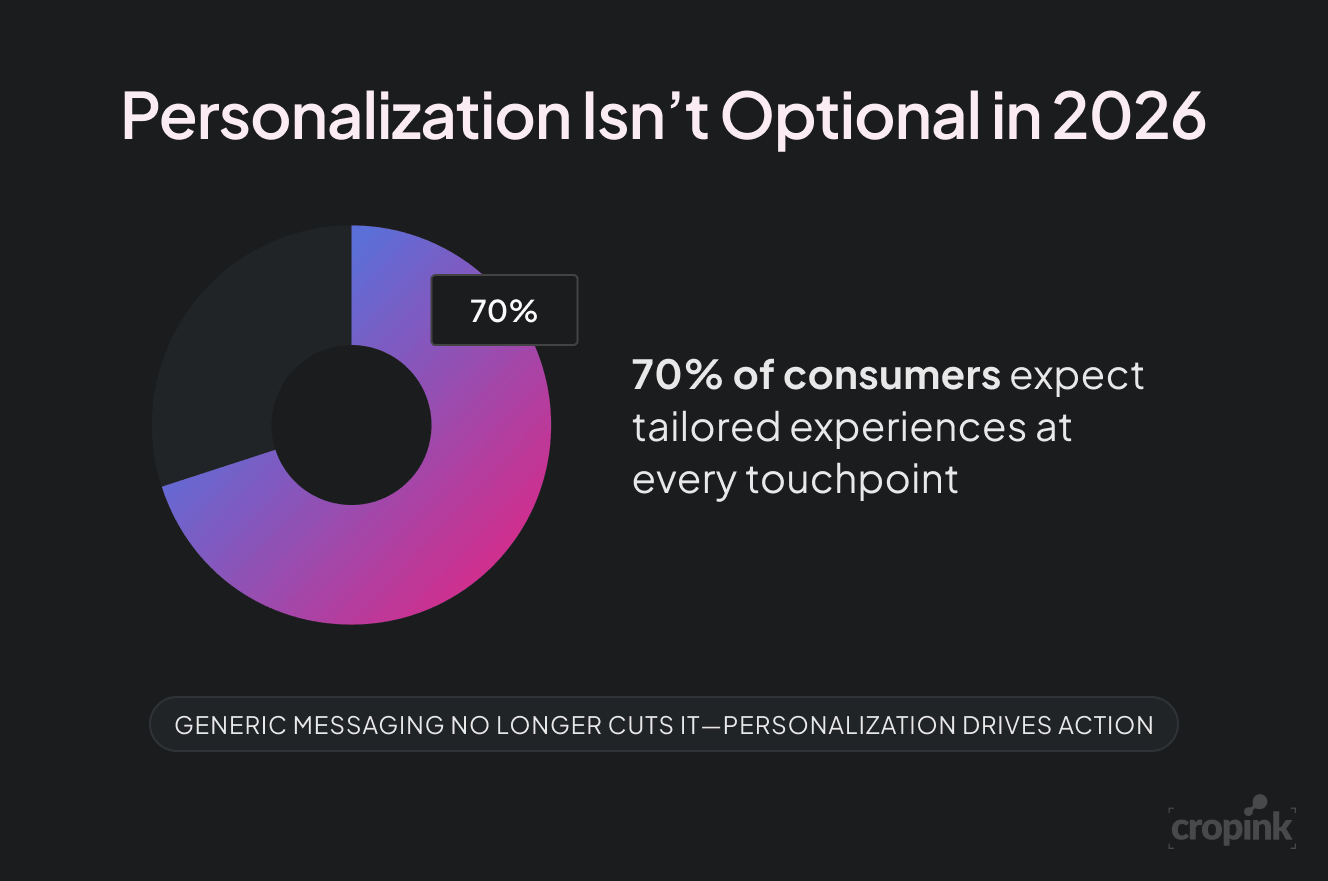
And in 2026, personalization is essential. Over 70% of consumers expect tailored experiences at every touchpoint.
When brands miss that mark, 76% say they feel frustrated. In fact, triggered emails convert 88% better than generic blasts because they respond to actual behavior, not random timing.
You don’t need endless tools. A few well-placed messages, synced to user behavior, can drive massive returns. Focus on:
- Personalized ad copy based on location or device
- Dynamic product feeds that adjust in real-time
- Engaging content formats like video or UGC
Lead generation and sales
For many brands, the most measurable goal of advertising is to drive leads or direct sales. It’s also where wasted budget becomes most obvious.
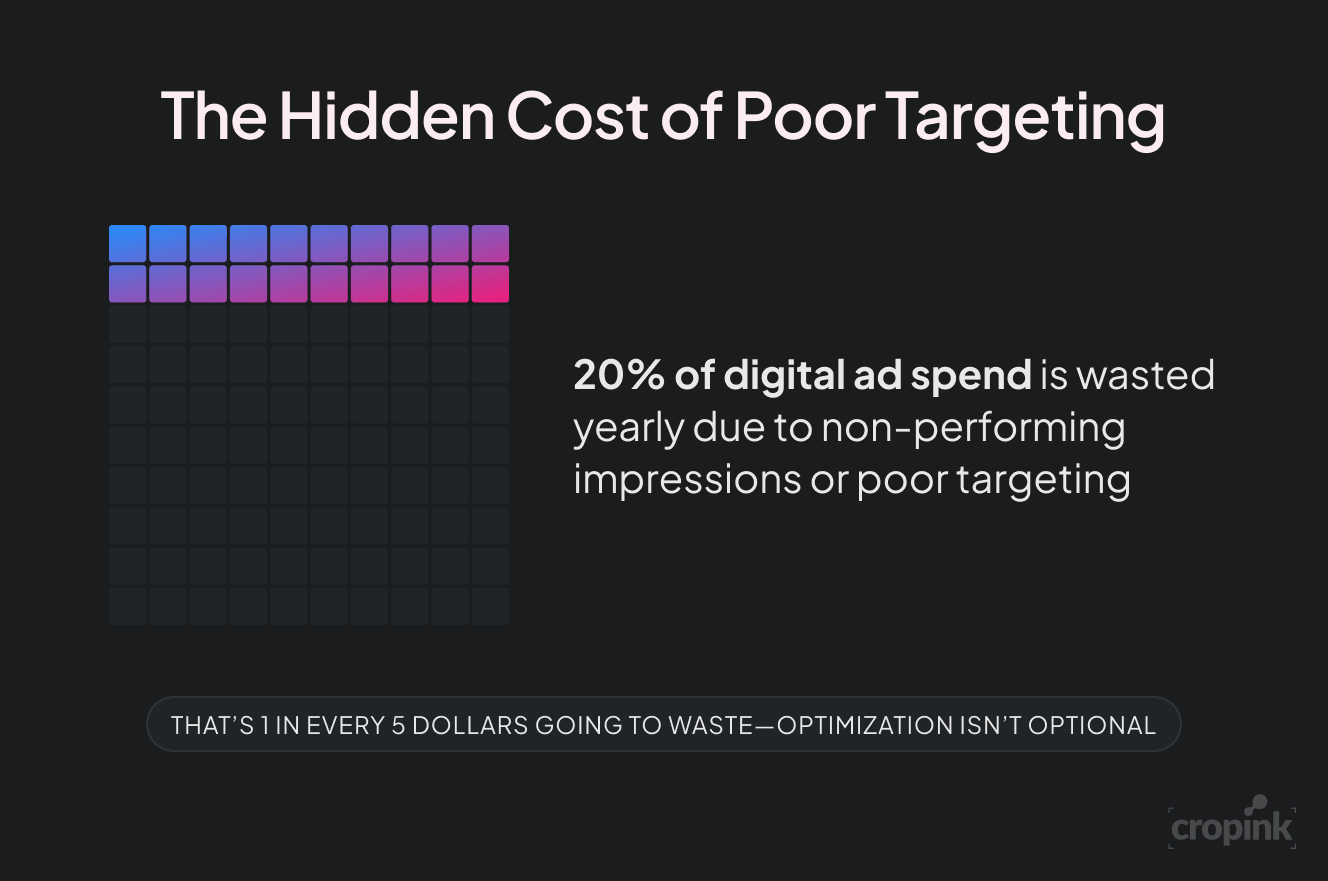
On average, marketers say up to 20% of their digital spend is wasted each year due to non-performing impressions or poor targeting.
That’s why precision targeting and real-time optimization matter more than ever.
According to Smartly.io’s 2026 trends report, 46% of marketers now use AI to scale creative, and 31% want predictive models to test performance before launch.
You can lower that ad waste by linking your creative and data together. For example, using Facebook ad metrics to optimize based on CTR or ROAS, or pulling from targeted advertising strategies to sharpen audience profiles.
Brand loyalty and retention
Getting customers to stay is often harder than getting them to buy. Advertising for retention focuses on staying top-of-mind and relevant long after the first purchase.
In a noisy market, loyalty grows when people feel seen and valued.
Data shows that personalized ads reduce returns by 10% and increase repeat purchases by 2.3%. Plus, 75% of rewarded customers go on to share or recommend the brand—turning loyalty into low-cost promotion.
Some ways brands maintain attention include:
- Loyalty-driven campaigns with exclusive content or offers
- Templates for seasonal reactivation ads
- Follow-up ads featuring testimonials or post-purchase experiences
Competitive positioning
Finally, effective advertising helps you claim space in the market. It’s not just about gaining share but standing out with clarity and distinction.
When 86% of marketers say AI-generated content risks looking the same, creative originality becomes a powerful differentiator. Whether it’s brand tone, storytelling, or avoiding misleading advertising, what you say, and how you say it, matters.
Campaigns built for positioning often emphasize:
- Clear brand values or mission
- Consistent tone and visual identity
- Competitive messaging without falling into common advertising fallacies
In a saturated landscape, your voice has to rise above the noise. That’s where every creative decision counts.
How to Align Advertising Objectives with Strategy
Advertising objectives only drive results when they’re grounded in strategic intent. That means every campaign should start by clearly identifying what success looks like, and mapping each objective to the most effective channels, creative approach, and performance benchmarks.
For instance, if the goal is brand awareness, your strategy might prioritize reach, frequency, and share of voice, using formats like display ads or video pre-rolls.
If the focus is lead generation, that same campaign might shift toward click-through rates, lead quality, and conversion journey analysis, with optimized landing pages and targeted social ads.
To make alignment work, marketers must:
- Match each objective with KPIs that matter
- Choose media formats and placements that support that goal
- Use creative that speaks directly to that outcome (e.g. UGC for trust, or benefit-first headlines for conversions)
- Continuously test and iterate campaigns based on performance data
Recent research shows that nearly 30% of marketing budgets go to waste due to poor alignment. That’s where tools like Cropink help close the gap by letting teams design objective-specific creatives, swap messages by performance stage, and adapt based on real-time insights. When your ads are built to match your goals from the start, results follow.
Examples of Objective-Driven Campaigns
Let’s break down a few campaign examples where the advertising goal was clear and the execution matched it perfectly:
Spotify Wrapped: Brand Loyalty & Engagement
Every December, Spotify turns user data into personalized stories. The objective? Reinforce user connection and increase sharing. With tens of millions of users posting their stats, the result is viral engagement that deepens loyalty, without spending extra on promotion.
Duolingo TikTok Strategy: Awareness and Positioning
Duolingo’s quirky owl mascot became a cultural icon thanks to its humorous, highly relatable TikTok presence. The objective was to increase brand awareness among Gen Z and reposition learning as fun. By aligning their content strategy with platform culture, they gained massive visibility with minimal spend.
Warby Parker: Lead Generation
Through sleek product-focused ads with virtual try-on features, Warby Parker turned a simple lead generation goal into a data-rich funnel.
Their display and social ads directed viewers to personalized quizzes and free try-on options, increasing opt-ins and trial-to-purchase conversion rates.
Each of these examples shows how clearly defined objectives shape not only messaging but also where and how that message is delivered. Platforms like Cropink give marketers the flexibility to adapt creatives across these strategies in just a few clicks, ensuring campaigns stay responsive and outcome-focused.
Ethical Considerations in Advertising Goals
Setting goals in advertising isn't just about what you can achieve, it's about how you achieve it. Ethical marketing objectives ensure long-term brand trust and minimize backlash, especially in today’s highly aware consumer climate.
Here’s how to stay ethical when defining advertising goals:
- Avoid manipulative framing or misleading stats. Ads should reflect truth, not exaggeration. If the goal is urgency, using scarcity tactics must be based on actual inventory, not artificial pressure.
- Respect user privacy, especially when personalization is an objective. Remember, 83% of users will share data for relevance, but only if they trust the brand to use it responsibly.
- Inclusive targeting should always guide awareness or positioning campaigns. Don’t exclude demographics or reinforce stereotypes.
In line with regulatory frameworks like the FTC and EU UCPD, ethical advertising isn’t just good practice, it’s the law.
When objectives prioritize transparency, fairness, and user benefit, performance follows. Platforms like Cropink support this approach with ethical design templates and data-informed decision-making tools to help campaigns stay both effective and trustworthy.
FAQs
The core objectives include building brand awareness, driving consideration, generating sales, positioning the brand, and retaining customers. Each one aligns with a specific stage of the customer journey.
Clear objectives guide your messaging, targeting, format, and KPIs. For example, a brand awareness ad on Meta differs vastly from a retargeting campaign focused on last-click conversions.
Yes, with the right structure. For example, a video ad may introduce a product (awareness) and include a testimonial (consideration), followed by a discount CTA (conversion).
Cropink automates dynamic ad creative, personalizes visuals based on live data, and speeds up time to launch, helping brands hit their objectives without reinventing the wheel each time.
Explore related ad strategy resources:
- 50+ Advertising Statistics
- Shopify Advertising
- Targeted Advertising
- Instagram Advertising
- Meta DPA Guide
- Leroy Merlin Case Study
Final Thoughts
Advertising today isn’t about shouting the loudest, it’s about aligning with behavior, goals, and culture. Whether your objective is visibility, conversion, or loyalty, your execution must be fast, flexible, and smart.
Cropink helps marketers align creative with their objectives using real-time data, automation, and creative flexibility. From awareness campaigns to hyper-targeted conversions, it’s your partner in building ads that perform.
Want to see how leading brands align execution with goals?
Sources
Ansherina helps brands create powerful digital marketing and performance marketing strategies. With a passion for ad design and audience engagement, she is dedicated to making brands more visible and impactful.
Leszek is the Digital Growth Manager at Feedink & Cropink, specializing in organic growth for eCommerce and SaaS companies. His background includes roles at Poland's largest accommodation portal and FT1000 companies, with his work featured in Forbes, Inc., Business Insider, Fast Company, Entrepreneur, BBC, and TechRepublic.
Related Articles

How Can Cropink Help?
Start with Cropink is easy and free
No credit card required