How Generation Z Shopping Habits Are Shaping E-Commerce in 2026
Discover how Generation Z shopping habits are reshaping online retail in 2026. With 75% shopping on mobile, 53% purchasing directly on social platforms, and 71% using AR to preview products, Gen Z demands personalized, value-driven, tech-powered experiences that brands must meet to stay competitive.


Gen Z is redefining how the world shops. In 2026, 74% prefer mobile shopping, 58% buy from social media, and 55.1% use BNPL.
Their spending power is set to reach $12 trillion by 2030, and 64% are willing to pay more for brands they trust. If your brand is not adapting, you risk falling behind.
Here is what you need to know about Generation Z shopping habits and how to stay relevant as they shape the future of retail.
Key takeaways
- Generation Z shopping habits are shaped by mobile use, social platforms, and immersive technologies like AR and AI
- Gen Z prefers mobile-first, in-app shopping with frictionless checkout and buy online pick up in-store (BOPIS) options
- Social commerce and influencer-driven purchases are central to Gen Z’s path to purchase
- Gen Z prioritizes brand values, including sustainability, inclusivity, and ethical practices
- AI-powered product recommendations and AR try-ons increase confidence and reduce returns
- Loyalty for Gen Z is built through experiences, exclusivity, early access, and digital rewards
How Gen Z Shops on Mobile
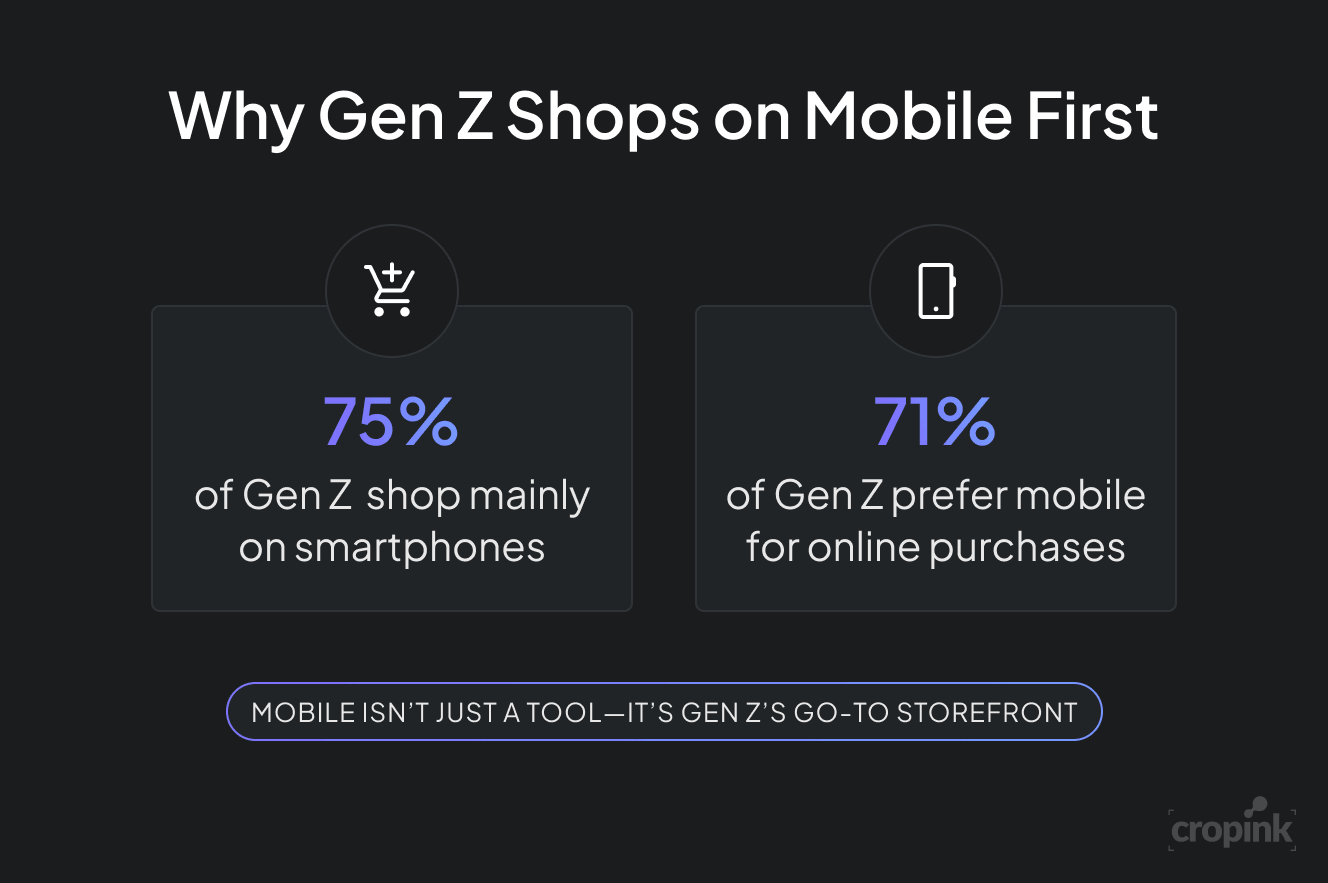
Mobile sits at the core of Generation Z shopping habits because it fits their lifestyle. Speed, convenience, and flexibility matter more than screen size. 75% of Gen Z shop primarily on smartphones, and 71% say mobile is their preferred device for online purchases.
Shopping happens everywhere, not just at home. Around 54% shop while working or multitasking, which explains why frictionless checkout is critical. Many skip browsers entirely, with 30% relying exclusively on shopping apps.
According to screen time statistics, Gen Z spends more time on their phones than any other generation, turning mobile platforms into primary conversion channels.
Mobile also handles high-value purchases. 70% prefer smartphones for orders over $150, proving trust in mobile payments has matured. Convenience extends beyond delivery, too. 86% use BOPIS monthly, blending online speed with in-store pickup.
Key mobile behaviors:
- 3× higher conversion rates from in-app shopping and mobile wallets
- 45% rank fast shipping as their top priority
- Apps outperform browsers in speed, security, and ease of use
Mobile shopping isn't just popular, it's performance-driven. With Gen Z's preference for in-app shopping and seamless mobile experiences, brands must optimize their product feeds and creative assets for this environment.
Cropink makes that easy. Whether you're selling via Instagram, TikTok, or your own app, Cropink helps you create high-converting catalog ads that feel native to mobile. No dev work needed, just smarter, branded templates you can update instantly.
Why Gen Z Shops on Social Media
Social platforms shape discovery, evaluation, and purchase for Gen Z. 69% browse online first, and for many, that journey begins on TikTok or Instagram rather than Google. 41% discover products through short-form video, making social feeds a replacement for traditional search.
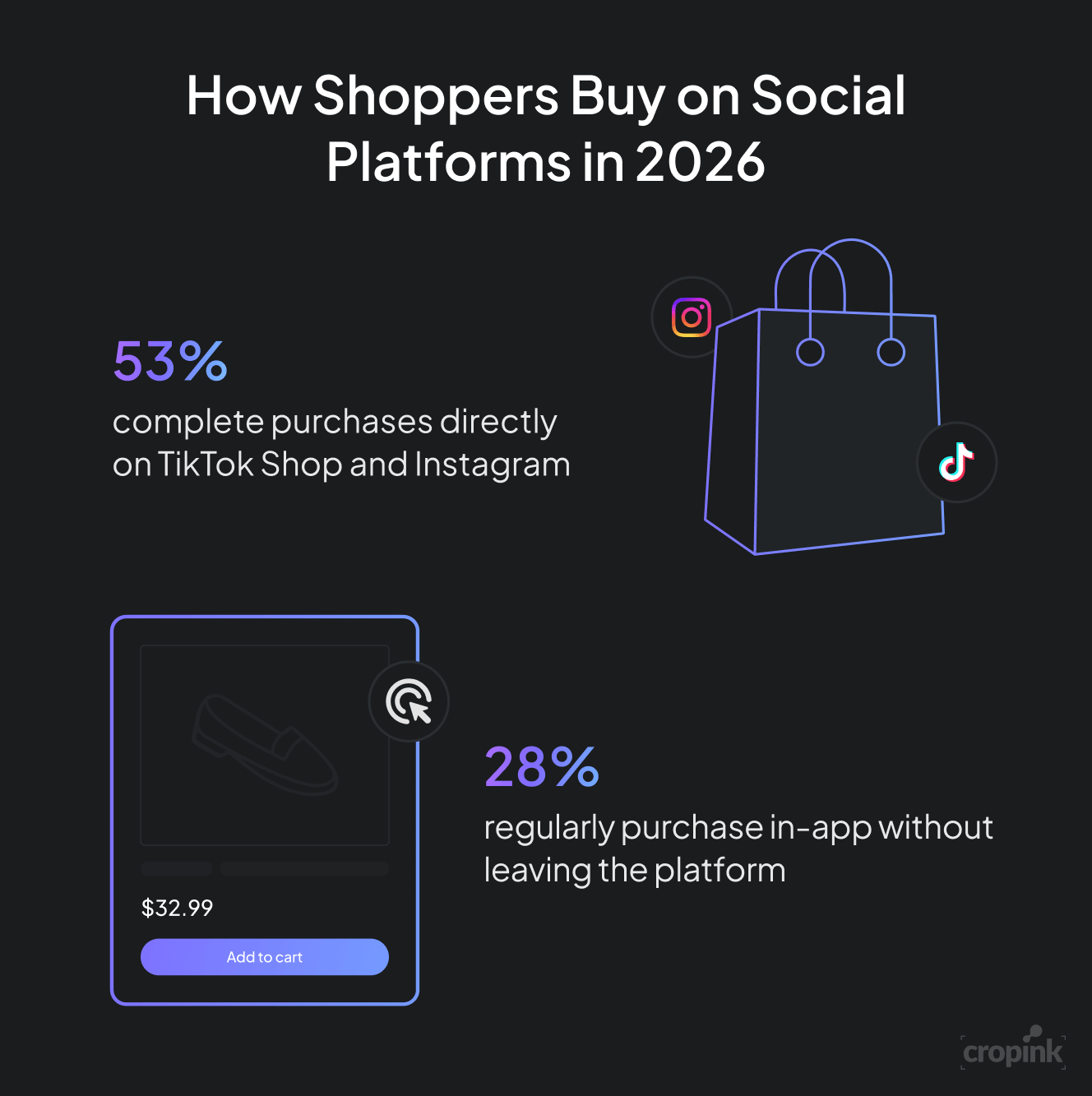
Buying behavior follows discovery closely. 53% complete purchases directly on social platforms like TikTok Shop and Instagram, while 28% regularly purchase in-app without leaving the platform.
Social commerce feels natural because content, recommendations, and checkout exist in one place.
Social shopping patterns include:
- 58% have bought a product they saw on social media
- 56% buy creator-recommended products weekly
- 18% actively use TikTok or Instagram Shops
Creating brand moments that match this behavior is crucial. If you’re planning social campaigns, knowing how to structure a brand awareness campaign on Facebook can help you capture Gen Z attention from discovery to conversion.
In a world where social content drives discovery and purchase, creative speed and relevance are everything. TikTok, Instagram, and other platforms demand visuals that catch the eye and fit the feed.
That’s where Cropink helps. Turn your product catalog into scroll-stopping dynamic ads that include creator-style elements, real reviews, and trending formats.
Just like influencers shape buying behavior, Cropink shapes how your products show up online, better, faster, and more personal.
How Influencers Shape Gen Z Buying Decisions
Trust defines how Gen Z buys, and creators win that trust. 64% trust influencers, compared to 28% who trust brand ads. This gap explains why traditional advertising struggles with this generation.
Smaller creators drive stronger results. Micro-influencers generate 40% higher engagement, and their content feels more relatable. Authentic user-generated content converts 58% of viewers, especially when it shows real use, honest opinions, and unpolished visuals.
Influencer impact goes beyond online checkout:
| Behavior influenced by creators | Share of Gen Z |
|---|---|
| Buy creator-recommended items weekly | 56% |
| Discover on social, buy in-store | 21% |
| Pay more for ethical brands | 60% |
Before buying, 40% read reviews, and 34% prefer buying directly from brands endorsed by creators they trust. Loyalty grows when values align, especially around ethics and transparency.
Influencers are no longer a marketing layer for Gen Z. They are a decision-making shortcut.
Influencer-driven commerce continues to rise, especially as Gen Z puts more trust in people than in polished campaigns.
With 56% buying creator-recommended products weekly, peer validation matters more than ever. These habits also tie closely to loyalty and retention.
When you explore retention statistics, you’ll see how consistent engagement through social proof keeps Gen Z coming back.
Gen Z Cares About Brand Values
For Gen Z, shopping isn’t just about price or product. Brand values influence their choices deeply. In 2026, 73% prefer brands with eco-friendly packaging and ethical sourcing, and 90% want companies to actively address social issues like inclusion, climate change, and fairness.
This generation is quick to act on what they believe. 60% buy from brands that align with their values, while 66% say they lose trust in brands that ignore ethics or sustainability. A full 70% will avoid unethical brands entirely.
They’re also willing to pay more for what they believe in:
- 79% wait for sales, but still pay premiums for cause-driven brands
- 39% have used BNPL to afford ethical or sustainable products
- 52% check ingredients or materials for health and transparency
Gen Z shops with purpose. If your brand values aren’t clear and visible, you’re invisible to them.
Gen Z Wants Personalized Shopping Experiences
Generic ads don’t cut it. 72% of Gen Z skip over generic promotions, but when shopping feels tailored, they engage. 62% expect AI-powered product recommendations, and 49% actively seek customizable products that reflect their personality or needs.
Personalization fuels performance:
- Tailored visuals boost engagement by 40%
- Personalized offers lift conversions by 29%
- 64% respond more to authentic brand tone
They also love interactive shopping. 69% enjoy online engagement with brands, especially when it feels real and dynamic. For them, shopping isn’t a transaction, it’s a dialogue.
Relevance beats reach. AI-driven personalization, custom offers, and a relatable brand voice make Gen Z feel seen.
If you’re running ads across social, understanding how Facebook ad placements influence reach and engagement can help fine-tune your targeting to match Gen Z’s scrolling habits.
Gen Z Shops Across Multiple Channels
Gen Z is fluid across platforms. 75% expect a seamless experience across mobile, social, and desktop, and 86% use BOPIS (buy online, pick up in-store) each month. They don’t think in terms of channels, they just expect consistency.
They blend experiences naturally:
- 55% switch between online and in-store when shopping for apparel
- 43% browse both web and physical stores evenly
- 60% visit websites before going to a physical store
- 21% discover on social and complete the purchase in person
Trust increases with experience design. A native interface for each channel builds 55% more trust, especially on voice and app platforms.
Gen Z expects brands to meet them where they are, and make it feel like one continuous journey.
Gen Z Likes to Co-Create with Brands
Gen Z doesn’t just want to be sold to, they want to shape the experience. 49% value product customization and feedback loops, making co-creation a real driver of loyalty.
They’re heavily influenced by content and participation:
- 58% are swayed by user-generated content
- 40% have co-created products or ideas via polls or DMs
- 37% show stronger loyalty to brands they helped shape
There’s also interest in social commerce and virtual try-ons. Around 22% have tried AR shopping, and 33% want to shop virtually with friends.
Involve Gen Z, don’t just target them. When they feel like part of the brand, they stick around longer.
Gen Z Loyalty Looks Different
Loyalty programs are evolving and Gen Z is leading the shift. Traditional points systems aren't enough anymore.
For this generation, loyalty is defined by experience, exclusivity, and access. In fact, brand loyalty statistics show 64% will pay more for early access and experiences that feel custom-made. Learn more about what drives true loyalty in 2026.
They expect more than just a discount. Brands that deliver interactive, engaging experiences are winning long-term commitment.
What actually drives retention:
- 82% stay engaged through digital rewards, recognition, or interactive benefits
- Gamified shopping experiences improve retention by 29%
- 55% use BNPL with brands they trust, showing that flexibility and financial trust are part of loyalty
- 41% are open to private-label products if the experience feels personalized
Personalization plays a major role. Generic loyalty programs fall short. Instead, they want early access, limited drops, and exclusive moments. 60% say early access is a loyalty dealbreaker, proving emotional connection matters more than discounts.
Gen Z expects innovation in every part of their journey, from AR try-ons to personalized offers and exclusive access. Loyalty isn't about points, it's about experiences that feel built for them.
Cropink helps you deliver that. You can easily adapt your product ads for every audience segment, campaign, and platform. From dynamic creative testing to smart retargeting, you’ll always stay ahead of what Gen Z expects.
Gen Z Wants AI and AR When Shopping
For Gen Z, technology is not optional. It’s an expected part of the shopping journey. They want tools that are immersive, useful, and intuitive, not just flashy.
Augmented reality is essential. 71% use AR try-ons to preview clothes, beauty products, or furniture before purchasing. This improves buyer confidence and reduces return rates by 40%.
Smart support matters just as much. Gen Z expects fast, real answers:
- 51% say AI-powered chatbots improve their support experience
- 58% feel more confident when they get real-time help
- 67% rely on reviews and real visuals to make purchase decisions
They also seek interactive and tech-forward experiences. 19% have joined live shopping events, and 23% have explored pop-up shops using immersive tech. Looking ahead, 50% are interested in trying AR or VR shopping tools.
Gen Z blends shopping with tech naturally. AI and AR help them make faster, smarter decisions, and brands that offer those tools earn trust and loyalty.
Frequently Asked Questions
Gen Z prefers to shop online using mobile devices, especially through apps. Around 75% shop primarily on smartphones, and many use features like mobile wallets and BOPIS for convenience. In-app shopping leads to 3× higher conversion rates, showing that speed and ease are essential.
Social media is influential for Gen Z because it's where discovery and purchase happen in one place. Platforms like TikTok and Instagram replace traditional search, and 53% of Gen Z complete purchases directly through these apps. Influencers and short-form videos guide their decisions more than ads.
Personalization drives Gen Z loyalty by making the experience feel tailored. 62% expect AI-powered recommendations, and 64% respond to authentic brand tone. Instead of points, they want exclusive access, unique offers, and digital rewards that feel meaningful and relevant to them.
Grow your eCommerce marketing strategy:
- Social Media for Business Marketing
- TikTok Dynamic Showcase Ads
- Most Followed Social Media Accounts
- Instagram Dynamic Product Ads (DPA)
- Instagram Catalog Ads
- Meta Ads Manager
Final Words
Generation Z shopping habits are reshaping how brands think, design, and deliver customer experiences. From mobile-first behavior and in-app purchases to value-driven buying and immersive tech like AR, Gen Z expects personalization, speed, and purpose at every touchpoint.
They don’t just browse, they co-create. They don’t just look for discounts, they look for connections. And if your brand doesn’t speak their language, they’ll scroll right past.
To keep up with Gen Z’s evolving expectations, brands need tools that are fast, flexible, and built for creative personalization at scale.
That’s where Cropink comes in. Whether you're trying to launch AI-powered product ads, run branded catalog creatives, or test what truly converts, Cropink helps you turn product data into high-performance visual ads in minutes, not days.
Sources
- Omni Calculator. 137+ Gen Z Online Shopping Statistics (2026)
- Exploding Topics. 85+ Stats on Gen Z Spending and Buying Habits
- Mintel. Gen Z Online Shopping Behaviour & Trends: What Brands Need to Know
- Statista. Gen Z: devices used to buy online
- Omni Calculator. 137+ Gen Z Online Shopping Statistics (2026)
- Exploding Topics. 85+ Stats on Gen Z Spending and Buying Habits
- PwC. The Gen Z paradox: Spending less, expecting more
- Cropink. Top Generation Z Marketing Statistics
- Analyzify. Marketing To Gen Z: Facts & Statistics & Tips
- Statista. Gen Z interest in brands reflecting its values
- Numerator. Gen Z Consumer Behavior: Brands, Retailers and Trends
Ansherina helps brands create powerful digital marketing and performance marketing strategies. With a passion for ad design and audience engagement, she is dedicated to making brands more visible and impactful.
Leszek is the Digital Growth Manager at Feedink & Cropink, specializing in organic growth for eCommerce and SaaS companies. His background includes roles at Poland's largest accommodation portal and FT1000 companies, with his work featured in Forbes, Inc., Business Insider, Fast Company, Entrepreneur, BBC, and TechRepublic.
Related Articles


How Can Cropink Help?
Start with Cropink is easy and free
No credit card required