Top 10 Trends in Online Shopping You Need to Know in 2026
Explore the top trends in online shopping for 2026 and beyond. With 60% of e-commerce sales on mobile, AI boosting sales by up to 59%, and social commerce reaching $1.17T globally, brands must adapt fast. Learn what’s changing, what’s working, and how to stay competitive in a rapidly evolving digital marketplace.


Online shopping is entering a new era in 2026.
It is smarter, faster, and more competitive than ever. Global revenue is set to reach $6.88 trillion, with growth climbing toward $7.38 trillion by 2027. Shoppers expect ultra-personalized, seamless experiences, and brands that cannot keep up risk falling behind.
With China, the US, and Western Europe accounting for over 80% of the market, the pressure is on.
Ready to stay ahead? Here are the biggest trends in online shopping shaping the future of e-commerce.
Key takeaways
- Online shopping in 2026 is defined by speed, personalization, and smarter experiences across mobile, social, and AI-powered channels.
- Personalized AI recommendations are driving up to 59% more sales and are now a baseline expectation for shoppers.
- With 60% of e-commerce sales happening on mobile, apps are leading the way with 3× better conversion rates.
- Social platforms now drive $1.17T in sales, and live shopping events deliver up to 30% conversion with unmatched engagement.
- 73% of consumers prefer eco-packaged products, making sustainability a key factor in trust and conversion.
AI personalization becomes the standard
AI is no longer a futuristic feature. In 2026, it is at the heart of how people shop online. From chatbots to smart pricing, shoppers now expect brands to understand what they want and when they want it.
The demand for tailored experiences is high. With 71% of consumers expecting personalized experiences and AI now powering real-time product suggestions, brands must rethink how they communicate value.
This shift aligns closely with evolving advertising goals, especially as customer expectations rise. Learn more about aligning ad strategies with modern buyer behavior in our guide to the objectives of advertising
AI recommendations can boost sales by up to 59%, while dynamic pricing and predictive suggestions are improving engagement and retention.
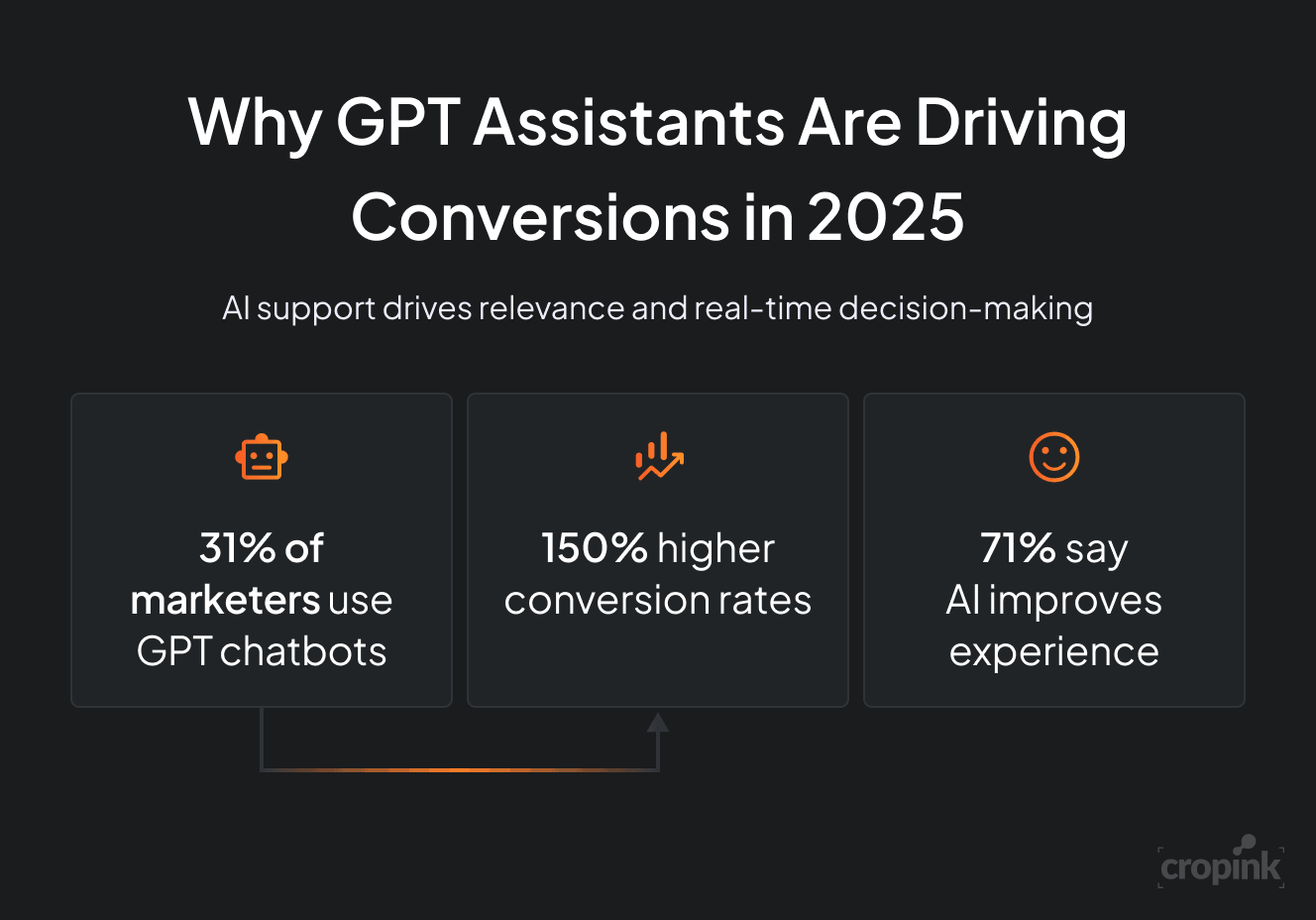
GPT-powered assistants and chatbots are becoming a staple. 31% of marketers use them on websites and social platforms to offer instant support. These bots handle real-time questions and guide shoppers toward products, contributing to 150% higher conversion rates. They also make the experience more relevant, with 71% of shoppers saying that AI support improves their satisfaction.
Real-time suggestions and curated storefronts are also driving serious revenue. Personalized recommendations:
- Increase revenue by 300%
- Boost average order value by 50%
- Deliver 40% more revenue through dynamically adjusted layouts
Currently, 71% of e-commerce sites offer AI-driven product suggestions, and adoption is even higher in the Nordic region at 90%.
Predictive personalization and dynamic pricing are helping brands stay competitive. Prices adjust automatically based on browsing behavior, purchase history, and stock levels. This approach balances profitability with customer satisfaction.
AI also enables smart bundling and layout changes that increase repeat purchases. With 66% of shoppers abandoning sites that feel impersonal, using AI to create a more tailored experience is becoming essential.
Modern e-commerce thrives on personalization, and that includes how ads are presented. Brands need to move fast, test often, and show the right message to the right shopper, at scale. That’s where tools like Cropink make a difference.
With Cropink, you can turn your product data into dynamic catalog ads that adapt to your audience. Add custom backgrounds, use on-image text, and apply real customer reviews, all while keeping your branding consistent.
Mobile commerce takes the lead
Mobile shopping continues to dominate.
With 60% of global e-commerce sales now happening on mobile and apps delivering 3× higher conversions, mobile-first design is more important than ever. Some of the best Shopify stores are leading this charge, combining fast performance with mobile-optimized UX to boost engagement and sales.
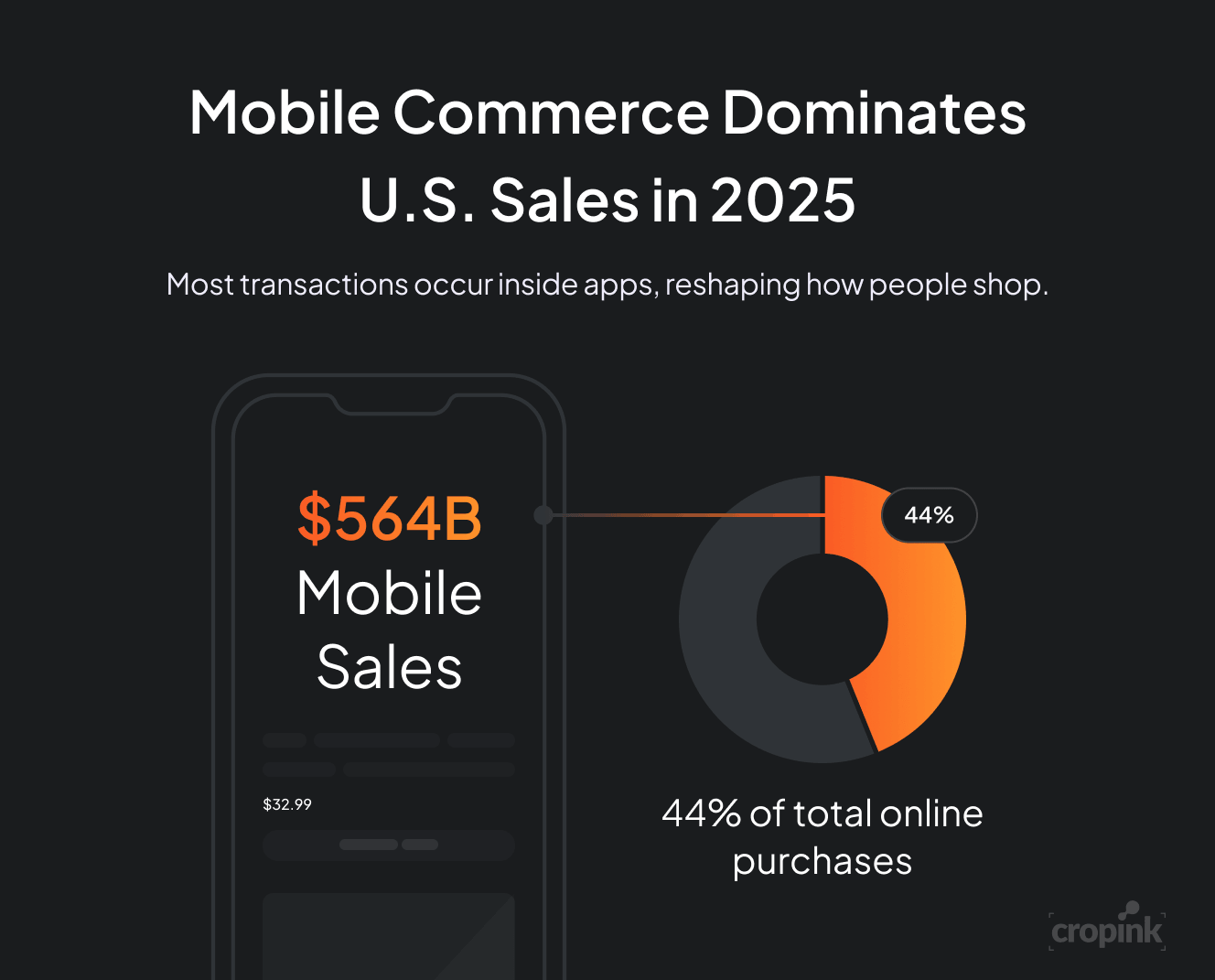
In the U.S., mobile sales reached $564 billion, making up 44% of all online purchases. Most of those sales now happen inside apps:
- 54% of mobile commerce occurs through apps
- Apps deliver 3× higher conversions and 10% higher average order values
Friction is disappearing too, thanks to fast, secure payments:
| Checkout Feature | Stat |
|---|---|
| Mobile wallets | 54% of global transactions |
| Digital wallets | Nearly 50% of all online checkouts |
| Biometric logins (apps) | Reduce cart abandonment from 70% to <25% |
With 187 million mobile shoppers in the U.S., and apps generating an average of $23.99 per download, mobile is the center of the online shopping experience.
Mobile is no longer just convenient, it's where most sales happen, and apps are leading the way.
Buy now, pay later gets smarter and safer
Buy now, pay later (BNPL) is now a core part of the checkout process. In 2026, 70%+ of online checkouts offer BNPL options, giving shoppers more flexibility and control. This mirrors the psychology behind bandwagon advertising, which encourages action through social proof and perceived popularity.
AI is driving smarter decisions:
- 90% of BNPL requests are approved instantly through AI-based risk assessments
- Credit offers are dynamically adjusted based on shopper data
Clearer regulations are boosting consumer confidence, helping BNPL grow to 15–20% of total e-commerce transactions in key markets.
Mobile is again leading adoption, with BNPL options embedded directly into app checkouts, keeping the experience fast and seamless.
With smart approvals and better transparency, BNPL is converting more shoppers without slowing them down.
Live shopping becomes a primary sales channel
Live shopping is one of the fastest-growing e-commerce channels in 2026. Shoppers are no longer just scrolling, they’re watching, engaging, and buying in real time.
Creating the right visual flow in these environments is key, and formats like showcase shopping ads can help you stand out with rich product visuals during live or interactive sessions.
- Livestreams convert at 10–30%, far above traditional content
- Engagement is 4× higher than static product listings
Platforms like TikTok, Instagram, and YouTube are leading the charge. Creator-led selling has already topped $500B globally, driven by real-time demos, direct Q&A, and strong community influence.
Affiliate marketing is getting a boost too:
| Tactic | Revenue Lift |
|---|---|
| Live affiliate tools | +25–40% |
Live shopping brings together content, community, and commerce, and it's converting like never before.
As shopping shifts into social and live formats, creative speed matters more than ever. Your visuals need to be scroll-stopping, your offers instantly updatable, and your brand consistent across formats.
Cropink makes this easier. You can enrich your product feed with dynamic designs, swap templates based on season or promo, and instantly update visuals, all without needing a designer.
Whether you’re launching a live shopping event or testing creative across TikTok and Instagram, Cropink helps you keep your ads fresh, branded, and high-converting.
Join 700+ companies already using Cropink to boost performance across social commerce.
Social commerce evolves into full-storefronts
Social platforms are no longer just for browsing, they're full shopping experiences. In 2026, 82% of shoppers use social media to discover products, and 53% make purchases directly in-app without ever leaving the feed.
For example, Pinterest requires a different approach than TikTok or Instagram. These Pinterest advertising guidelines break down how to optimize creative for that specific audience and channel.
Platforms like Instagram, TikTok, and Pinterest are building out full-storefront capabilities where product discovery, conversation, and checkout all happen in one place.
AI is making this smarter, too. Shoppers now see product matches based on posts and content they engage with. Features like group shopping and shared wishlists via DMs are adding a social layer to buying decisions.
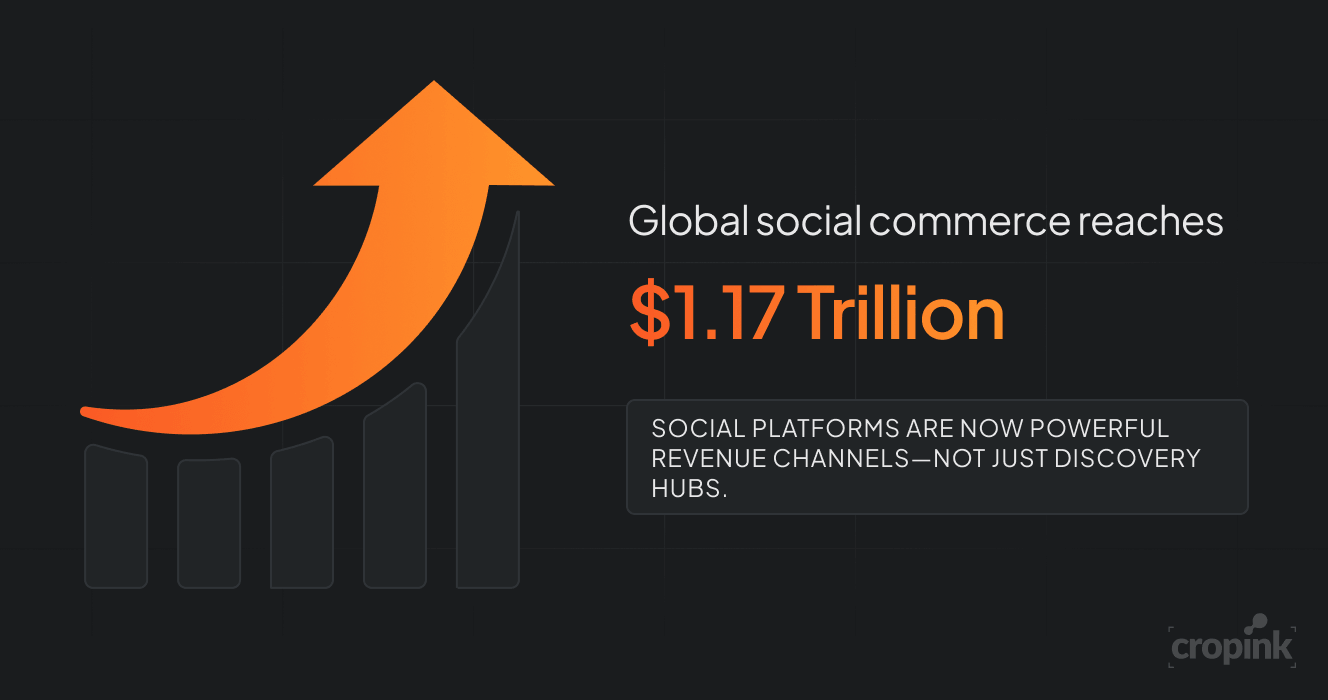
With global social commerce sales reaching $1.17 trillion, and 44% of Instagram users shopping weekly, the opportunity here is massive.
Social platforms are now shopping malls, and brands that show up where people scroll are winning the sale.
Sustainability becomes a shopping expectation
Eco-conscious shopping isn’t just a preference anymore, it’s a demand. 66% of consumers say they lose trust in brands that ignore sustainability, and 73% actively prefer products with eco-packaging and clear labeling.
Sustainability signals now influence purchase decisions:
- Green certifications boost sales by 28%
- 55% of shoppers expect emissions transparency during checkout
Shoppers want to know what they’re buying, where it came from, and what impact it has. Brands that provide that information are building loyalty. Those that don’t? They’re falling behind.
Sustainability has moved from trend to expectation. It now directly impacts trust, loyalty, and conversions.
Augmented and virtual reality improve product experiences
AR and VR are changing how people shop. In 2026, 71% of consumers prefer using AR to preview products, especially in categories like fashion, home, and beauty.
This shift is not just about engagement, it is also reducing friction. AR try-ons have been shown to cut return rates by 40%.
Virtual stores are taking things further. VR experiences increase engagement by 3×, offering immersive shopping journeys that mimic real-world browsing. At the same time, 3D product previews are now standard on 65% of top platforms.
AR and VR aren't just cool features, they make online shopping more confident, interactive, and satisfying.
Headless commerce supports flexibility and speed
Retailers are rethinking how their stores are built. 68% of enterprises now use API-driven storefronts for multichannel selling, and mid-sized brands have grown adoption by 45%.
Headless commerce gives teams the ability to launch faster and customize every customer touchpoint.
Benefits include:
- 50% faster time-to-market with custom UX
- No backend limitations when expanding to multiple channels
Whether it’s mobile, kiosk, social, or web, headless platforms make it easier to manage everything in one place, with full control over design and performance.
Headless commerce gives brands the freedom to innovate faster without being held back by tech limitations.
Subscription models get smarter and more flexible
Subscriptions are no longer one-size-fits-all. In 2026, they’re powered by AI and designed for long-term retention.
Personalized delivery cadences reduce churn by 37%, while features like pause and resume help retain 82% of users who might otherwise cancel.
AI is also boosting loyalty. Smart recommendations based on past behavior now increase retention by 29%, and the model is expanding beyond beauty and fashion.
Wellness and lifestyle subscriptions are growing by 22%, offering everything from vitamins to meditation kits.
Flexibility and personalization are turning subscriptions into long-term revenue engines instead of short-term promotions.
Cross-border shopping becomes the norm
Shopping across borders used to feel complicated. Slow shipping, unexpected fees, and confusing checkouts made international purchases less appealing. In 2026, that has changed completely. 40% of total e-commerce revenue now comes from cross-border transactions as retailers improve logistics, speed up fulfillment, and localize the shopping experience.
Today’s international shopper expects a smooth, native-feeling experience. Most are getting it thanks to:
- Multilingual websites that automatically adapt to the shopper’s region
- Localized payment options such as local wallets and bank transfers
- Duty and tax calculators that show all costs upfront
These improvements have made international checkout feel just as easy as buying from a local store.
Online marketplaces are also opening doors for smaller brands. Platforms like Amazon and Shopee have increased global reach for small businesses by 55%, offering infrastructure for fulfillment, translations, and marketing.
Consumers now shop globally without thinking twice, as long as pricing, delivery, and support feel trustworthy.
Cross-border commerce is a reliable growth strategy for brands that invest in localization and provide a frictionless customer experience.
Selling across borders means adapting fast to new markets, campaigns, and formats, without losing your brand identity. Cropink helps brands stay agile by letting you automate, localize, and update catalog ads at scale, across multiple platforms like Meta, TikTok, and Snapchat.
No dev work needed. Just connect your feed, choose a template, and go live, with full creative control and lightning-fast updates whenever needed.
Voice commerce continues slow but steady growth
Voice shopping may not be grabbing headlines, but it is steadily becoming part of daily life. In 2026, 25%of grocery and pet product purchases are made through smart speaker reordering. This works especially well for items that need frequent replenishment.
Voice shopping is built for speed and simplicity. Shoppers can reorder everyday products with a short command instead of browsing or typing.
Voice-driven search is also growing. 18% of e-commerce traffic is now influenced by voice queries, especially long, natural-sounding questions. Brands that optimize their content for how people speak are seeing more visibility and traffic.
Platforms like Meta offer robust options for aligning ad delivery with user intent, see what’s possible in our guide to Meta Ads targeting options.
The sector is growing at a consistent 12 to 15% compound annual rate, especially in homes where voice assistants are already part of the routine.
Quick snapshot:
| Voice commerce metric | Value |
|---|---|
| Smart speaker reorders | 25% of grocery and pet sales |
| Voice-influenced e-commerce traffic | 18% |
| Growth rate | 12–15% CAGR |
Voice commerce may not be flashy, but it is dependable and growing in categories where fast, no-touch shopping makes the most sense.
E-commerce education empowers a new wave of sellers
Selling online is more accessible than ever. In 2026, over 2 million new do-it-yourself sellers have launched businesses using AI tutors and microlearning tools that break down the process into manageable steps.
With guided lessons and real-time feedback, new entrepreneurs are quickly learning how to manage product research, storefront design, marketing, and customer support. These resources remove the guesswork and build confidence.
Professional certifications are also on the rise. Platforms like Meta, Shopify, and Google have seen a 60% increase in e-commerce certifications, helping sellers prove their skills and stay competitive.
Many of these sellers are building successful brands using:
- Dropshipping and print-on-demand
- Niche product stores with small inventory
- Social commerce to drive discovery and sales
AI is also taking on repetitive tasks. Sellers can automate product descriptions, email flows, and basic customer support, allowing them to focus on growth and strategy.
Education is lowering the barrier to entry. The sellers who continue learning and adapting are building stronger, more sustainable businesses.
Emerging trends to watch in 2026 and beyond
Alongside the big trends shaping e-commerce today, several fast-moving innovations are creating exciting new opportunities. These emerging shifts may still be gaining traction, but their influence is growing quickly.
| Trend | Current Impact |
|---|---|
| AI-generated visuals and content | Cuts creative production costs by 70% |
| Web3 loyalty programs | Adopted by 15% of brands |
| Ultra-fast delivery | Offered in 30% of major cities |
AI-generated content is helping businesses create product images, marketing copy, and social media visuals in minutes instead of days. This reduces production costs and speeds up launch cycles.
Web3-based loyalty programs are introducing token rewards, digital collectibles, and blockchain-powered incentives. Early adopters are using them to boost engagement and offer experiences traditional rewards cannot match.
Ultra-fast delivery is becoming standard in urban markets. Brands are now offering under 2-hour delivery in 30% of major cities, meeting rising expectations for speed and convenience.
These trends are more than just experiments. They are early signals of how e-commerce is changing again and offer new ways for brands to differentiate and grow.
Frequently Asked Questions
The latest trend in shopping is personalization powered by AI. Shoppers now expect product recommendations, pricing, and offers tailored to their behavior and preferences.
The latest trends in e-commerce include AI-driven personalization, mobile-first shopping, live commerce, sustainable packaging, buy now pay later (BNPL), and cross-border selling.
The latest buying trends include in-app purchases on social media, subscription-based models, AR-powered try-ons, and increased demand for fast, convenient delivery options.
Online selling is a trend because it offers wider reach, lower startup costs, and 24/7 convenience. Shoppers prefer the speed, personalization, and variety that online stores provide.
Final Words
Online shopping in 2026 is no longer just about convenience. It's a fast-moving ecosystem shaped by AI, mobile commerce, social selling, and rising consumer expectations around speed, personalization, and trust.
As trends like live shopping, cross-border selling, and voice commerce continue to grow, brands that move quickly and stay relevant will win.
Keeping up means being flexible and efficient. That’s where Cropink comes in. It helps you turn product data into high-performing catalog ads, complete with dynamic visuals, real reviews, and on-brand designs. You can launch faster, test creative, and scale campaigns across channels without complexity.
Whether you're focusing on mobile-first shopping, enhancing social commerce, or building personalized experiences, Cropink helps you stay ahead.
Ready to stay competitive in the evolving world of online shopping?
Sources
- Shopify. Global Ecommerce Sales Growth Report (2026)
- EcommTool. Ecommerce Statistics That Matter in 2026
- E COMMERCE GERMANY NEWS. Global outlook: predictions for e-commerce in 2026
- Unified AI Hub. How AI Is Transforming E-Commerce in 2026
- Fueler.io. How AI Personalization Boosts E-commerce Sales in 2026
- Lumina Data Matics. The eCommerce Revolution of 2026: Where Content Meets Intelligence
- SellersCommerce. AI In ECommerce Statistics
- WiserNotify. 50+ E-commerce Personalization Statistics & Trends (2026)
- Netguru. AI Ecommerce Personalization: What Actually Works in 2026
- AnchorGroup. AI in E-Commerce: 16 Key 2026 Trends & Stats
- Red Stag Fulfillment. Mobile Ecommerce Statistics: 57% of All Sales
- ZIK Analytics. 82 Most Important E-Commerce Statistics for 2026
- Mobiloud. 23 Mobile Commerce Statistics You Need to Know in 2026
- DroidSonroids. Mobile Commerce Trends, Statistics & Predictions 2026
- Meetanshi. Top E-commerce Payment Statistics in 2026
- Flowlu. E-commerce Statistics 2026: Global, Mobile, Social, B2B Data
- Hostinger. 2026 Social commerce statistics: Key trends & new data
Ansherina helps brands create powerful digital marketing and performance marketing strategies. With a passion for ad design and audience engagement, she is dedicated to making brands more visible and impactful.
Leszek is the Digital Growth Manager at Feedink & Cropink, specializing in organic growth for eCommerce and SaaS companies. His background includes roles at Poland's largest accommodation portal and FT1000 companies, with his work featured in Forbes, Inc., Business Insider, Fast Company, Entrepreneur, BBC, and TechRepublic.
Related Articles


How Can Cropink Help?
Start with Cropink is easy and free
No credit card required