11 Facebook Ad Copy Examples + How to Write Better Ads
What makes someone stop scrolling and click an ad? These 11 Facebook ad copy examples break down the formulas, hooks, offers, and audience callouts that make ad copy work, so you can use the same ideas in your next campaign.


Although your image or video is most likely to have the greatest impact, you can’t discount Facebook ad copy’s effect on your ad performance.
Actually, poorly written ad text costs 2.4 times more per lead than ads with the best-performing text, according to AdEspresso.
And that's why today we’re helping you understand the making of great copy with these 11 Facebook ad copy examples.
For this blog, we’ll look at the entirety of a Facebook ad, including the primary text, headline (40 characters), description (25 characters), text on graphics/videos, and CTAs.
Key takeaways
- When creating ad copy, lead with the most interesting part of your offer, whether that's a discount, desired outcome, or something else your audience really cares about.
- Sell the benefit, not just the feature, by showing how your product helps and why your customer should care.
- Make it obvious who your ad is for by using the words, problems, or situations your ideal customer immediately recognizes.
- Give shoppers enough specific information to feel confident taking the next step, especially when your product or offer needs more explanation.
- Make your creative work with your copy, using the image or video to reinforce the message and show the product or outcome you're selling.
What length should your ad copy be?
Meta recommends that “Primary text should span 1–3 lines at most.”
For most ads, about 125 characters is enough to make a great ad.
However, longer copy can still be great for performance.
AdEspresso tested seven different versions of the same ad, ranging from a single sentence to six paragraphs. They kept the image, headline, link description, CTA, audience, budget, and campaign setup the same, so ad text length was the main variable.
| Ad copy length | Number of leads | Cost per lead (CPA) |
|---|---|---|
| One paragraph | 32 | $4.83 |
| Three paragraphs | 28 | $5.40 |
| Six paragraphs | 27 | $5.44 |
| Bullet points | 25 | $5.64 |
| Bullet points + emojis | 20 | $7.38 |
| One sentence - A | 13 | $10.82 |
| One sentence - B | 12 | $11.74 |
The mid-to-long versions produced the lowest cost per lead and the highest number of leads.
In short, long ad copy is not entirely a bad thing. It can be more effective in certain instances, like when advertising for B2B audiences or a lot more complex products.
That said, don't write more just to make your ad longer.
Write enough to give your target audience the information they need to become interested enough to click your CTA.
Specificity increases the likelihood that people will take action on your campaign.

Facebook Ads Specialist
The best Facebook Ad copy examples to inspire your next Meta campaign
Here are examples of campaigns we loved, why we loved them, and what you can copy from each to inspire your next Facebook ad.
1. Desired outcome
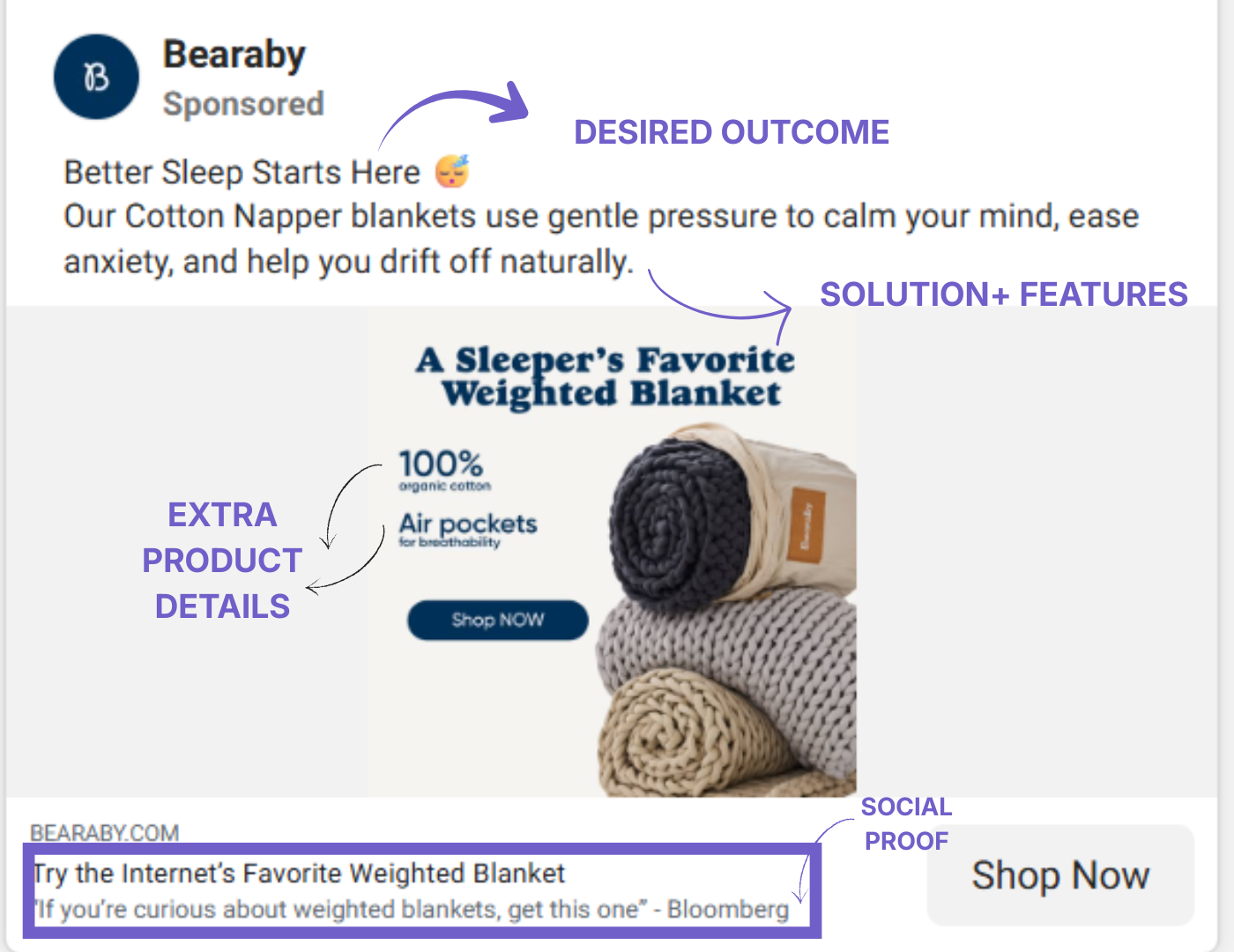
Bearby uses the problem-solution ad format for this ad. However, in this case, the problem is implied through the promise of better sleep rather than directly stated. The copy starts with the desired outcome, then presents the weighted blanket as the way to get there.
And instead of just telling you the benefit (better sleep), they also show you how (gentle pressure), which can help calm the mind, ease anxiety, and make it easier to drift off.
They’ve perfected the art of not merely listing benefits.
From this one ad, the shopper has a pretty good idea of what this weighted blanket can do for them and their sleep.
Bearaby also seems to know that social proof can produce an 18% uplift in sales, as they've included a mention from Bloomberg to build instant credibility.
I also love how the creative reinforces the quality of the blanket by mentioning its breathability and 100% cotton make.
2. Relatable problem
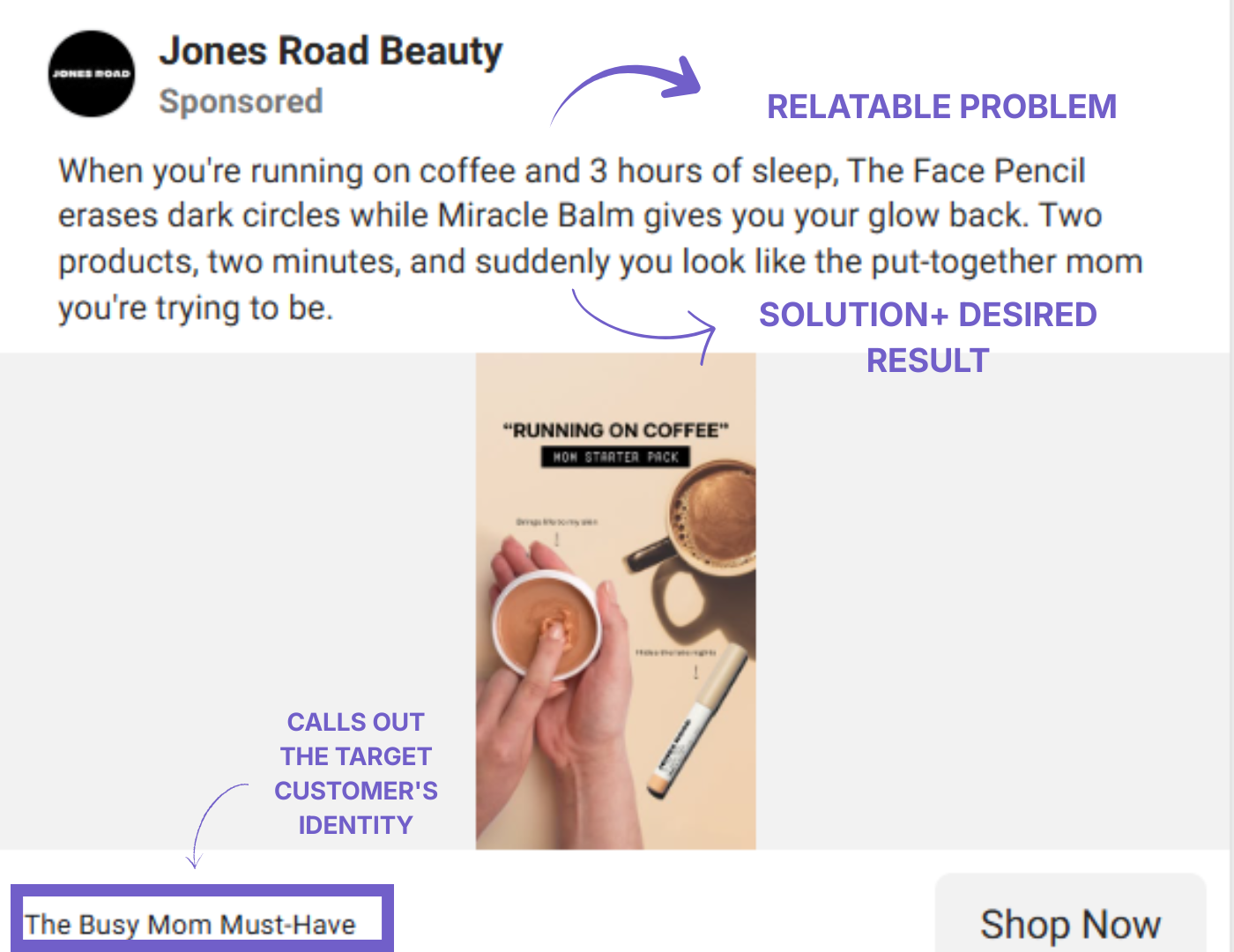
Jones Road Beauty also uses the problem-solution ad format, but it adds a small before-and-after element.
The problem is very relatable: you’re running on coffee and 3 hours of sleep. The solution is the Face Pencil and Miracle Balm, with the result being that you look more put-together.
And because creative is the new targeting, this Facebook ad copy example calls out its ideal customer by implicitly mentioning their identity, which is a mom who wants to look like a put-together, even when she’s exhausted.
They repeat the identity call-out in the headline so there’s no mistaking who this product is for.
3. Guarantee to create trust
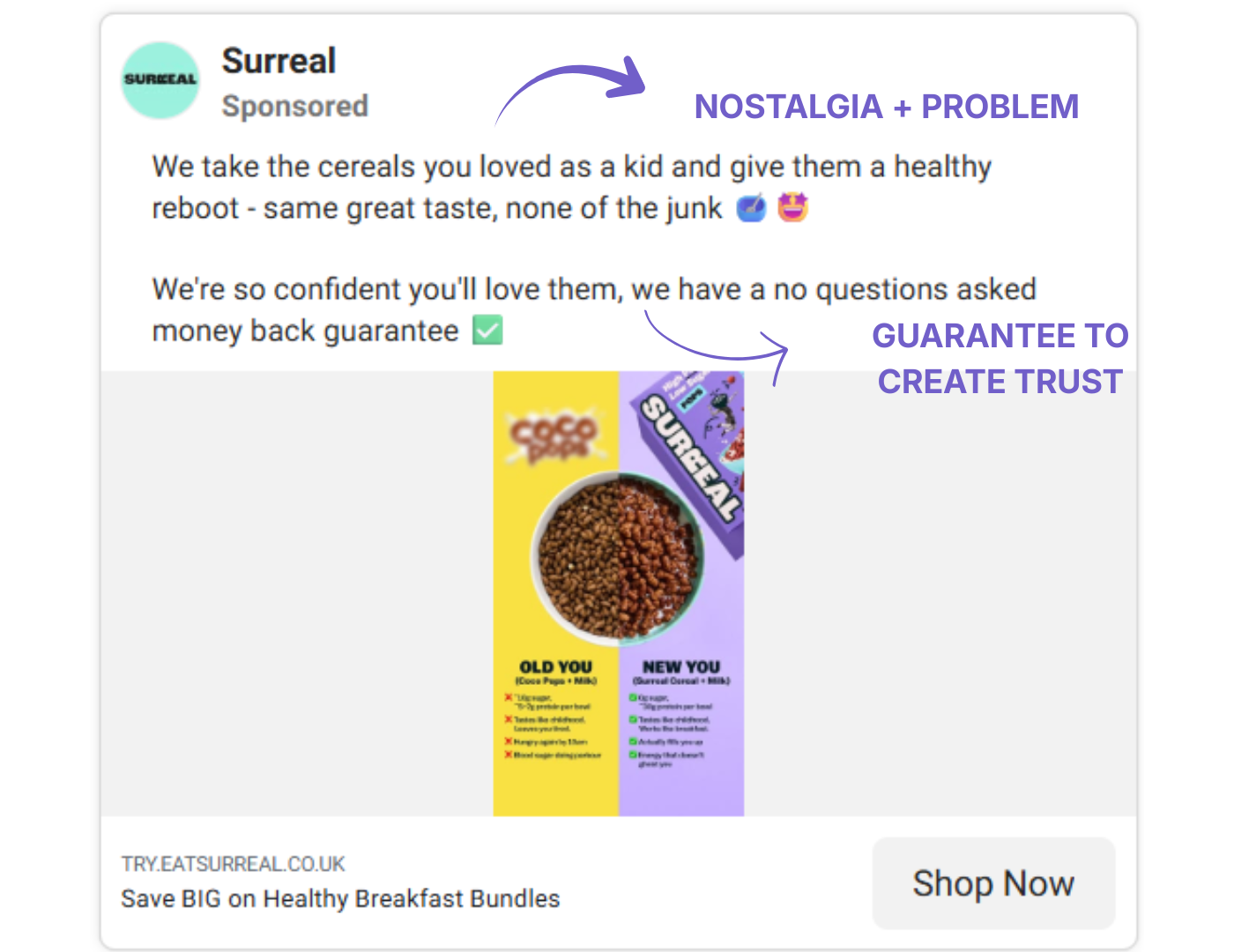
Surreal uses a contrast-based copy format. It takes something the audience already knows and likes, then presents a healthier version of it.
The copy evokes nostalgia for the cereals the shopper loved as a kid, then introduces a contrast: a healthy reboot with the same great taste and none of the junk.
That works great for people who miss the taste and nostalgia of childhood cereal but now care more about what they eat. Surreal doesn't ask them to give up the part they enjoy. It positions the product as a way to have both.
The creative adds to that idea by putting the old cereal and the new cereal side by side with more benefits of choosing Surreal Cereal + Milk.
The ad also adds a money-back guarantee.
For someone who is unsure whether a healthier cereal can actually taste good, that removes some of the risk of trying it.
4. Make the deal feel exclusive
Savage X Fenty shows that a good offer doesn't need a big story or long copy to back it up. This ad uses an offer-led format, where the deal itself does the persuading rather than a benefit or emotional hook.
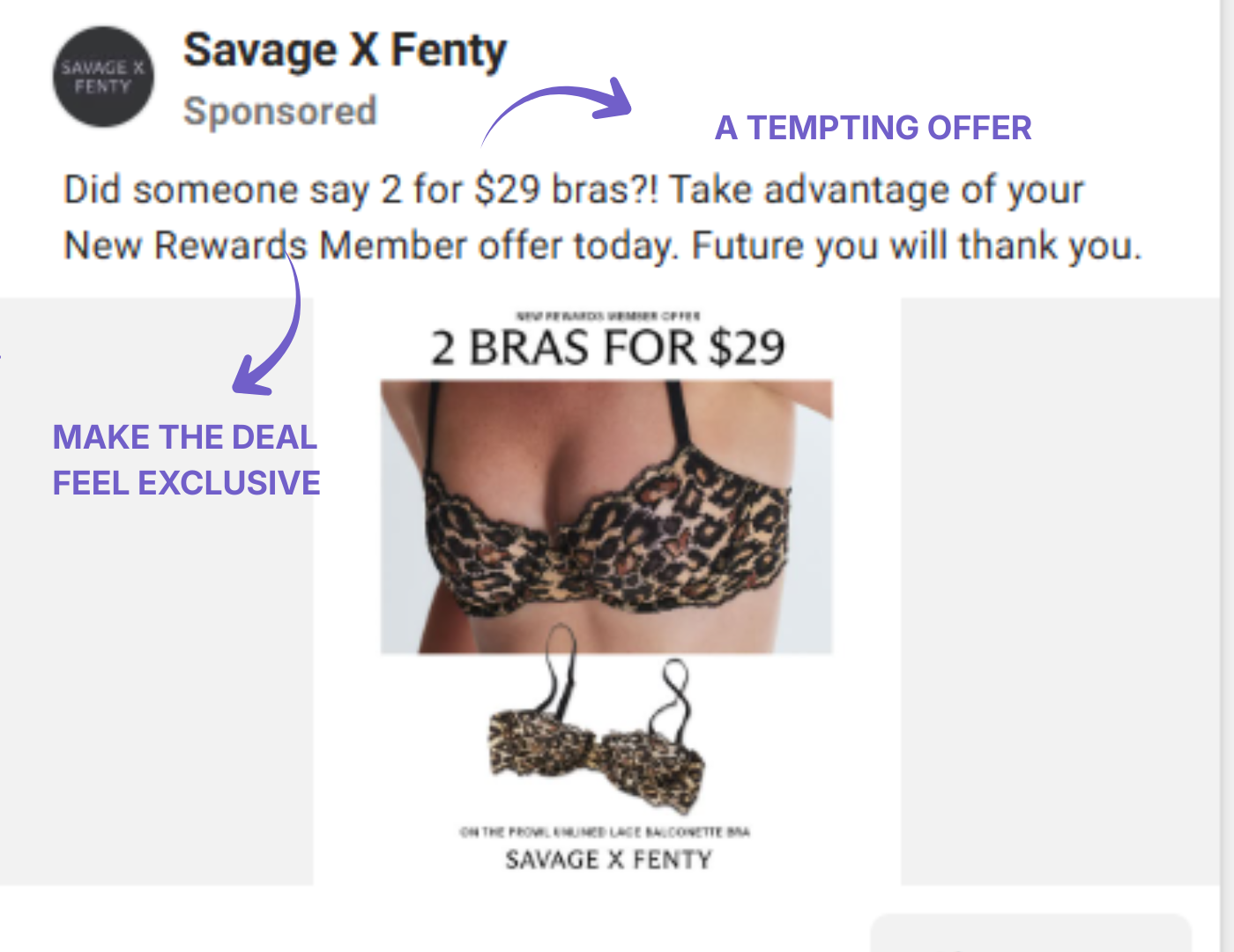
The copy leads with the price, not the product. 2 for $29 bras?! front-loads the number because that's what makes this interesting enough for someone to click and learn more.
They also gate it behind a New Rewards Member label, which does two things at once:
- It makes the shopper feel like they're getting an exclusive perk.
- And it nudges non-members to sign up to unlock similar offers later.
There's no countdown timer or expiry date attached. It's vague on purpose. The shopper doesn't know exactly when the offer ends, so the safest move is to act now rather than come back later.
5. Point features to benefits
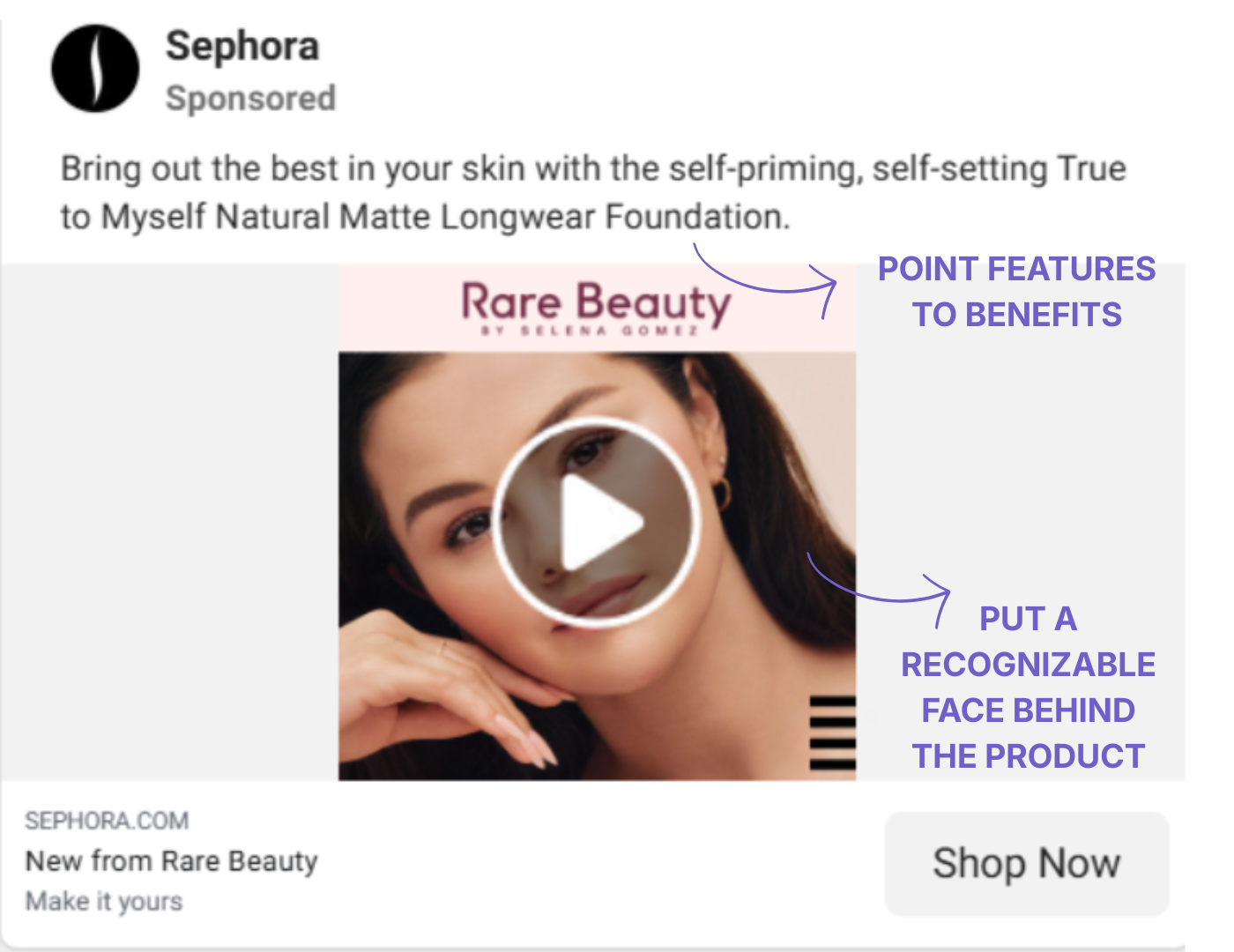
If your product has several features, the challenge is making sure they don't read like a list of specifications.
Rare Beauty handles this by connecting each feature to what the shopper gets from it.
The ad uses a feature-advantage-benefit format. It emphasizes features such as a self-priming, self-setting, natural matte, long-wear foundation, and then connects those features to the bigger benefit of having better-looking skin.
That is critical because beauty shoppers aren't buying a foundation for its technical self-setting properties. They want their makeup to look good and stay that way. The features give them a reason to believe the product can deliver that result.
The video does some of the selling too.
Featuring Selena Gomez, a well-known figure closely associated with Rare Beauty, gives the product an instantly recognizable face and makes the creative more attention-grabbing.
6. Make retargeting feel conversational
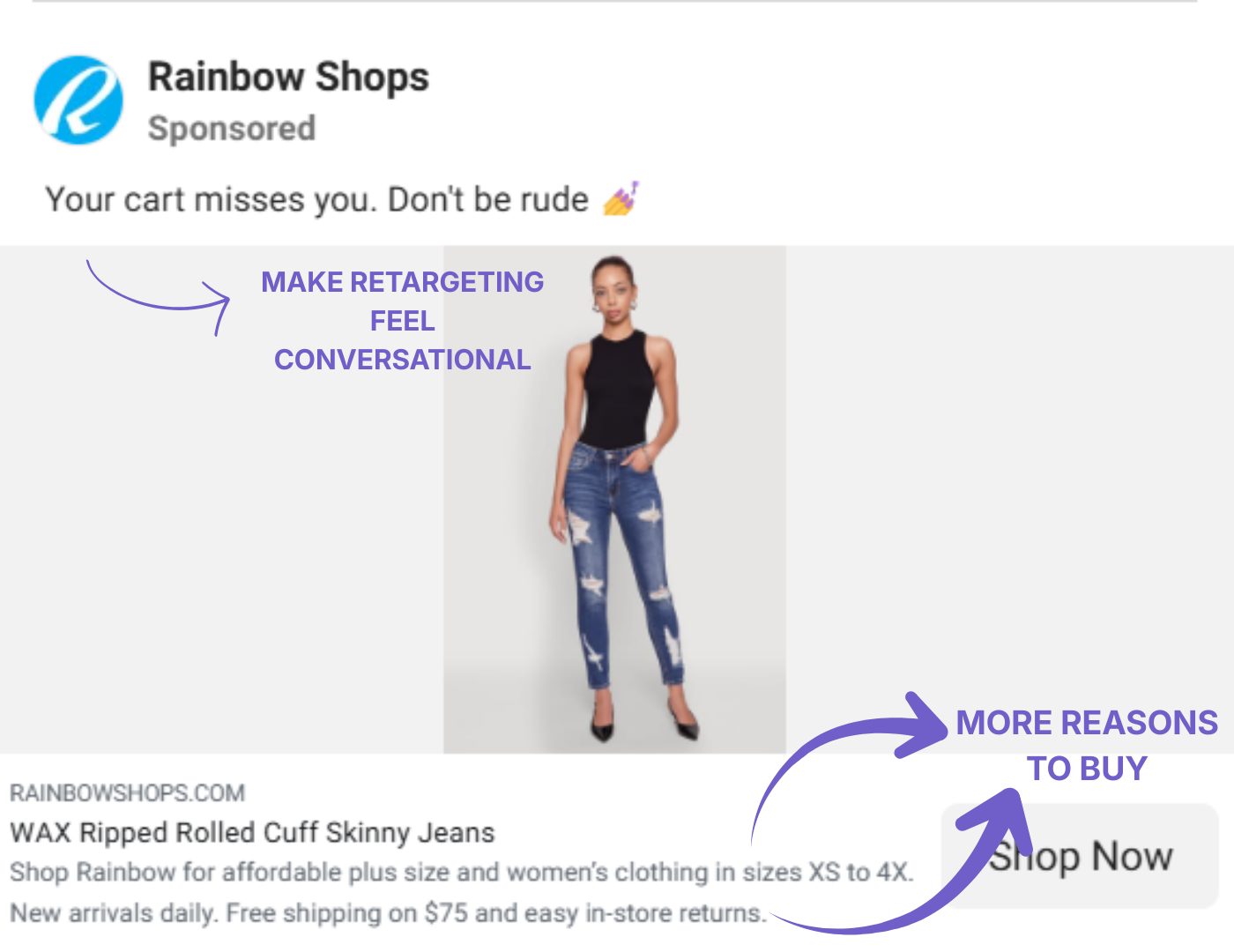
Rainbow Shops uses personification here to give the abandoned cart a voice and emotion. It makes a routine retargeting message playful rather than transactional.
That playful tone matches the rest of Rainbow's voice across their other ads, so it's not a surprise.
The description does a lot of work too.
Calling out sizing early, from petite to plus size, means shoppers immediately know this brand is created with them in mind. That also increases trust for shoppers who are used to guessing whether a brand carries their size at all.
The free shipping threshold and the mention of new arrivals daily are two more reasons to act:
- Variety, since there's always something new to come back for.
- And a low-friction incentive that removes one more reason to hesitate.
7. Show the value before asking for the click
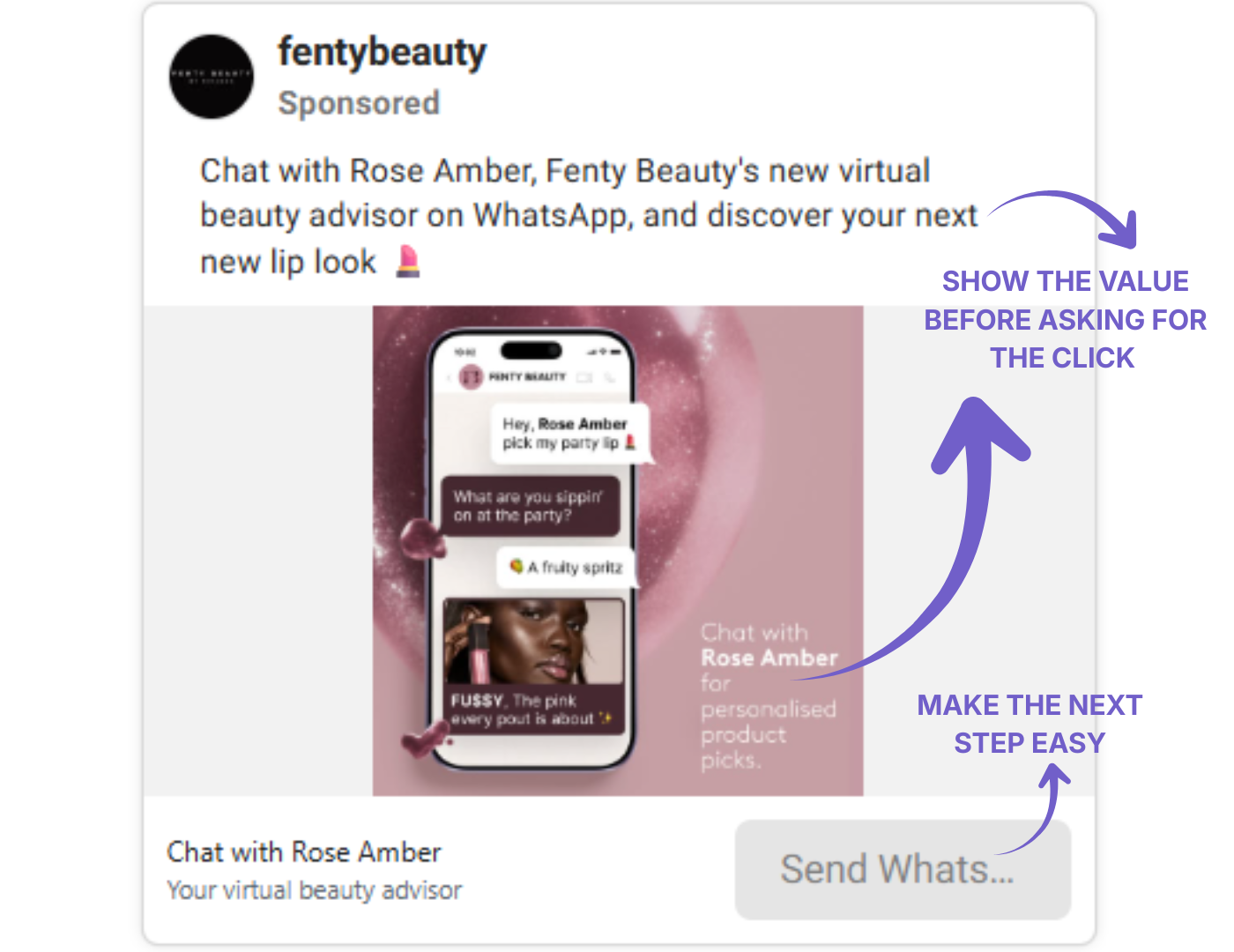
One mistake that brands make with their Facebook ad copy is simply touting the features. But what use are features if your audience doesn’t know how they benefit them or their situation?
Fenty Beauty doesn’t make that mistake.
They show shoppers the what (Rose Amber, a chatbot) and the why (personalized lip product recommendations).
The CTA and headline keep bringing users back to the action Fenty Beauty wants them to take. With just one click, they can try Rose Amber. Talk about removing friction!
The accompanying creative also helps make the experience feel more tangible. Rather than only telling shoppers that Rose Amber can help them find a lip product, the ad shows the chatbot in action so users know what to expect.
8. Sell the experience, not just the room
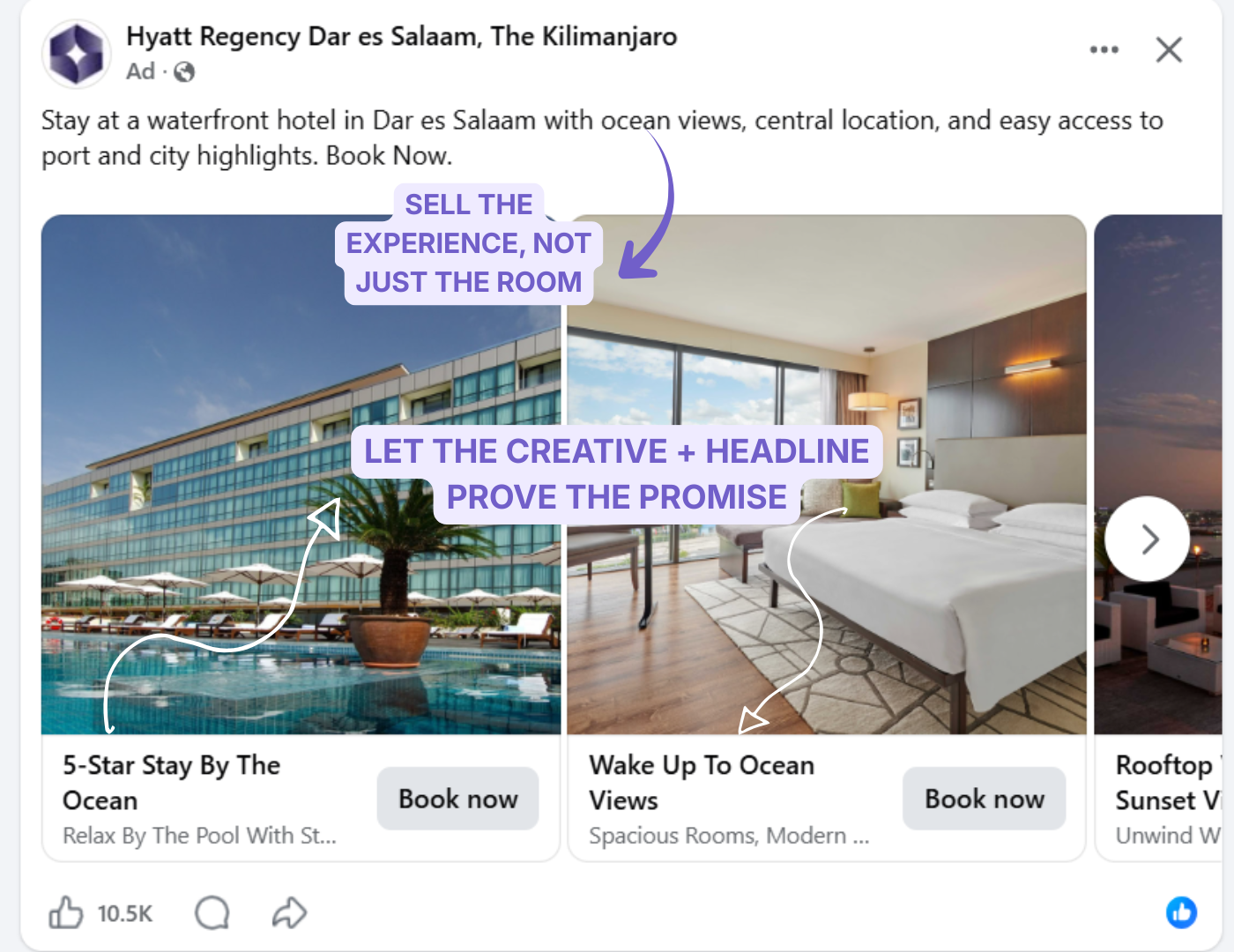
This is what an ad looks like when the copy and creative marry perfectly.
The copy gives you the reasons to consider Hyatt Regency: waterfront location, ocean views, proximity to the port, and easy access to city highlights. But it doesn't try to sell all those benefits with words only. There are accompanying carousels that use images to bring the copy to life.
You can actually see the views, the location, and what the stay offers. And that's important for a hotel ad because the audience isn't merely looking for a room. You also have to expose what their trip will feel like.
9. Keyword your audience identifies with
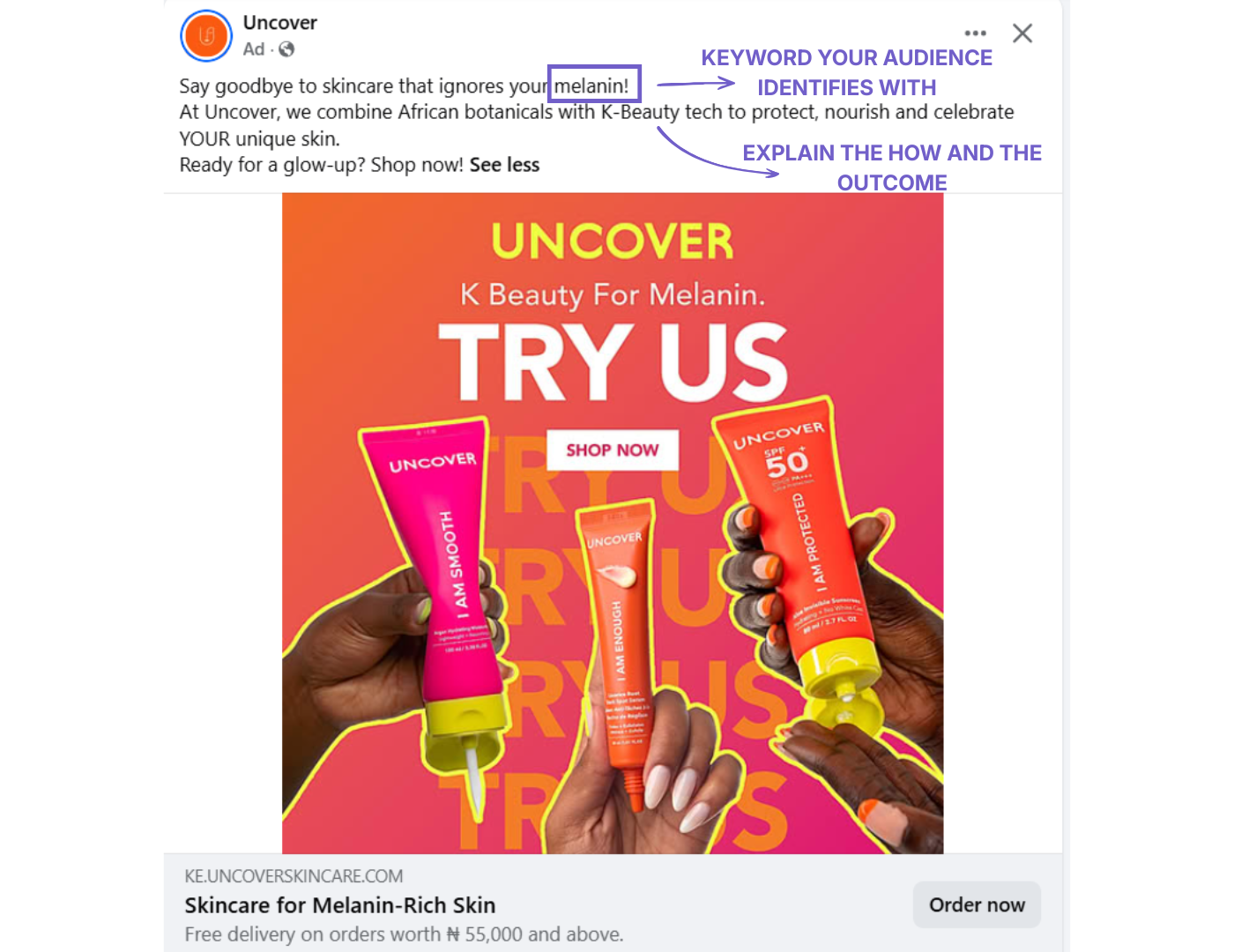
Uncover shows us how to use keywords that our target audience can relate to, naturally. In this case, that keyword is melanin.
And they don't just drop the word into the copy and call it a day. The creative matches it too. The images feature Black skin tones, immediately making the ad feel relevant to the people Uncover wants to reach.
Then they repeat the keyword in the headline: Skincare for melanin-rich skin.
This makes it very clear who the product is for. If you're looking for skincare specifically for melanin-rich skin, you don't have to wonder whether this ad is meant for you.
The primary text does a different job. It explains how the product works for melanin-rich skin and what outcome shoppers can expect.
10. Talk about the benefit without the jargon
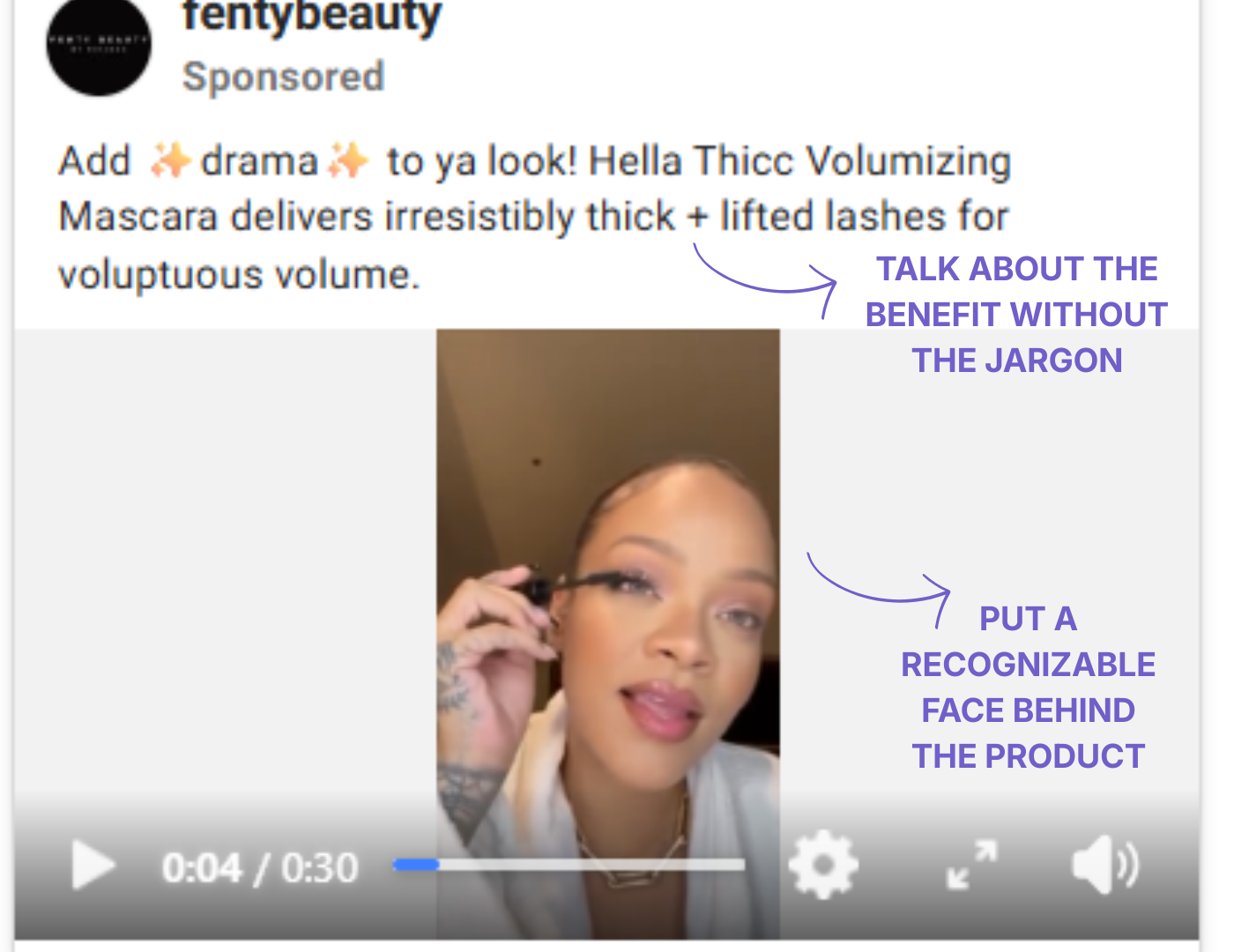
Fenty Beauty is using the same tactic of putting a recognizable face behind the product that we saw in a previous Rare Beauty Facebook ad copy example. It makes the creative more attention-grabbing because their audience has seen Rihanna and is likely a fan.
The copy itself keeps that same playful energy.
Add drama to ya look! feels much more like something you'd say to a friend than a traditional beauty ad.
They also manage to mention the product benefit without stuffing the copy with beauty jargon. The mascara is there to give shoppers thick, lifted lashes and dramatic volume, and that's enough to get shoppers interested in learning more about the product.
11. Sell them the dream
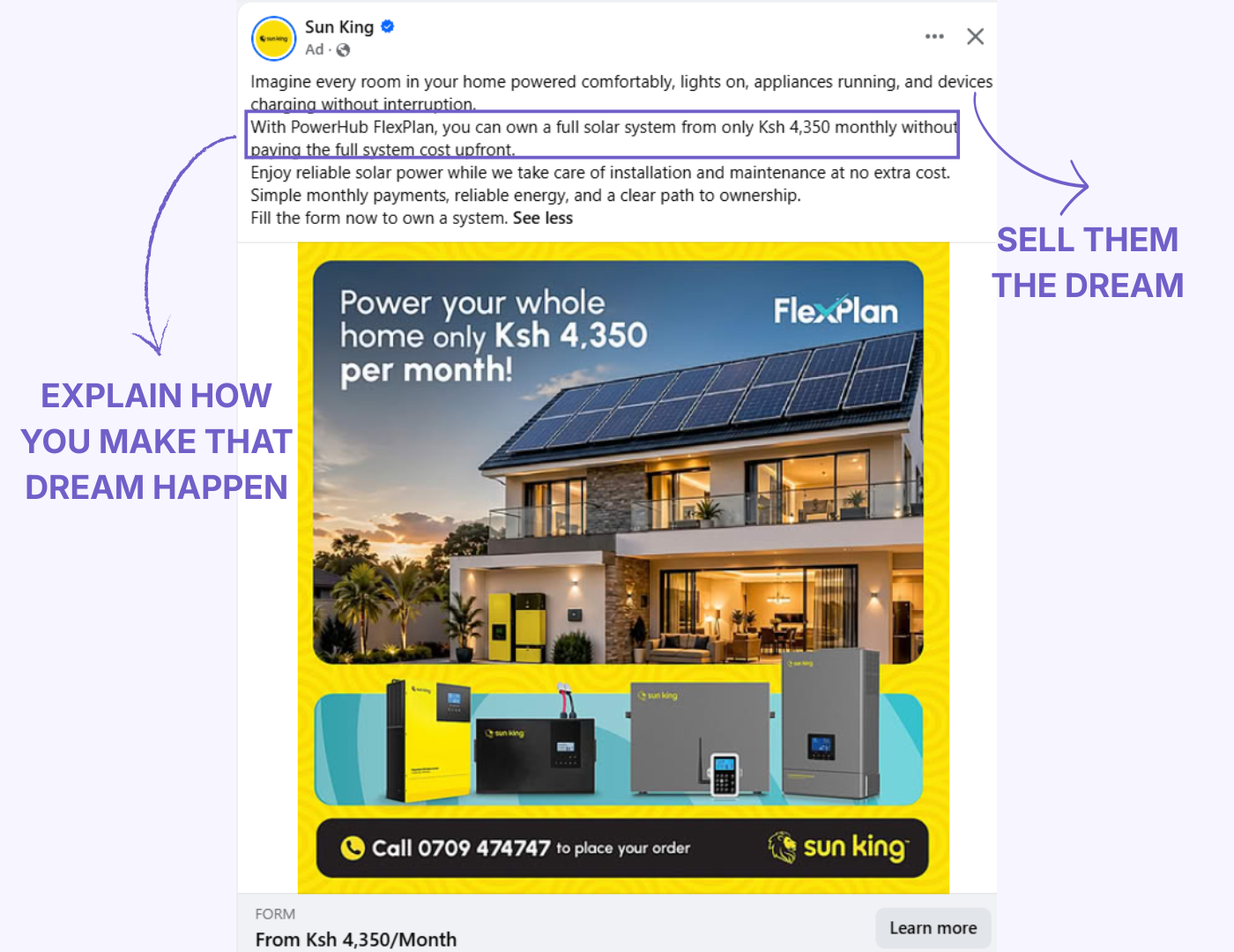
Sun King is a good example of the before → after → bridge formula. The ad starts with the problem: unreliable or inconvenient electricity. It then shows the desired outcome: every room in your home powered comfortably. Finally, it introduces PowerHub FlexPlan as the bridge between the two.
This works great for a product like this because people aren't really looking for a PowerHub. What they want is reliable electricity at home. Leading with that outcome makes the product immediately relevant to the problem they're trying to solve.
The copy also provides shoppers with more information about the plan, including the price and what it comes with. Remember, we said that specificity is always necessary if you want to reduce friction and get people ready to take the next step.
Best practices for creating Facebook ad copy
By this point, you already know that creating Facebook ad copy is not complicated. The one rule of thumb is to always put yourself in your target audience’s shoes before anything else.
In addition, make sure you’re keeping in line with these six best practices.
1. Lead with the most interesting information
In journalism, it’s a cardinal sin to bury the lede.
That should also be your motto when creating Facebook ad copy.
For Fenty, it was a discount, and for Bearaby, it’s sleep. In fact, if you looked at all the Facebook ad copy examples we shared, you’ll see them implement this same tactic.
Always show them the most interesting part first, then explain it more if they need additional information. Don't make someone read three sentences to get to the one thing that could have made them stop scrolling.
2. Features should rarely be the main focus
For a hyper problem-aware audience, it’s okay to just list features and skim on the benefits because it’s self-explanatory. But for most audiences, it’s better to let benefits take the lead and features take a supporting role.
This is a good process for arriving at the core message of your ad: Feature → How it helps → Why the shopper cares.
3. Make it painfully obvious who the ad is for
Write for a person, not a demographic. Think about what your ideal customer would recognize and say, ‘Yep, that's me.’
A tried-and-tested way to do this is to use keywords that define your audience.
For example, melanin-rich mainly refers to a black or African audience, which is Uncover’s ideal customer.
You can also be direct by naming the exact person you’re aiming for. See the Jones Road Beauty Facebook ad copy example.
4. Use specificity to make the next step feel easier
Vague promises make shoppers work too hard to figure out what they're actually getting. On the other hand, Specificity wins people over because it quells their anxiety and questions.
In the Sun King ad example, they provide shoppers with enough information to understand what they're signing up for with PowerHub FlexPlan. The ad spells out:
- The price
- What the plan includes
- Installation
- Maintenance
- Ownership
Of course, don’t assume your audience is dumb, but also, don't be so vague that nobody is compelled to give you a try.
5. Keep your voice on-brand
If you’re a serious type of brand, misplaced humor will only lead to a marketing fail.
However, if you’re playful, customers expect your ads to have the same level of personality.
Look at Rainbow Shops’ ad copy.
Your cart misses you. Don’t be rude. is a cheeky way to remind someone about their abandoned cart. A more corporate brand could easily make that line feel awkward, but it works for Rainbow because the brand already speaks to its customers in a playful, conversational way.
6. Make your creative support your ad copy
Your creative shouldn't feel like a separate piece of the ad. It should either continue what you've introduced in the copy or reinforce the same idea. Just don't repeat the exact same wording unless it's the main CTA.
It should also make the product or outcome you're selling immediately clear. If someone has to squint at your creative or figure out what they're looking at, you've lost them.
And if you have an ecommerce shop, my guess is that you have 20+ products to sell. That's a tall order when you need a creative for every product.
But creative automation tools can make that work much easier without taking away the creativity or uniqueness that Facebook ads need.
For example, with Cropink, you can create 100s of ads in a couple of minutes, with each one tailored to the product you're selling.
You can include what makes each product unique, offers, customer reviews, USPs, and much more.
Take this example made with Cropink. The creative doesn't just show the product. It stresses the product's USPs and offers, giving shoppers more reasons to click Shop Now.
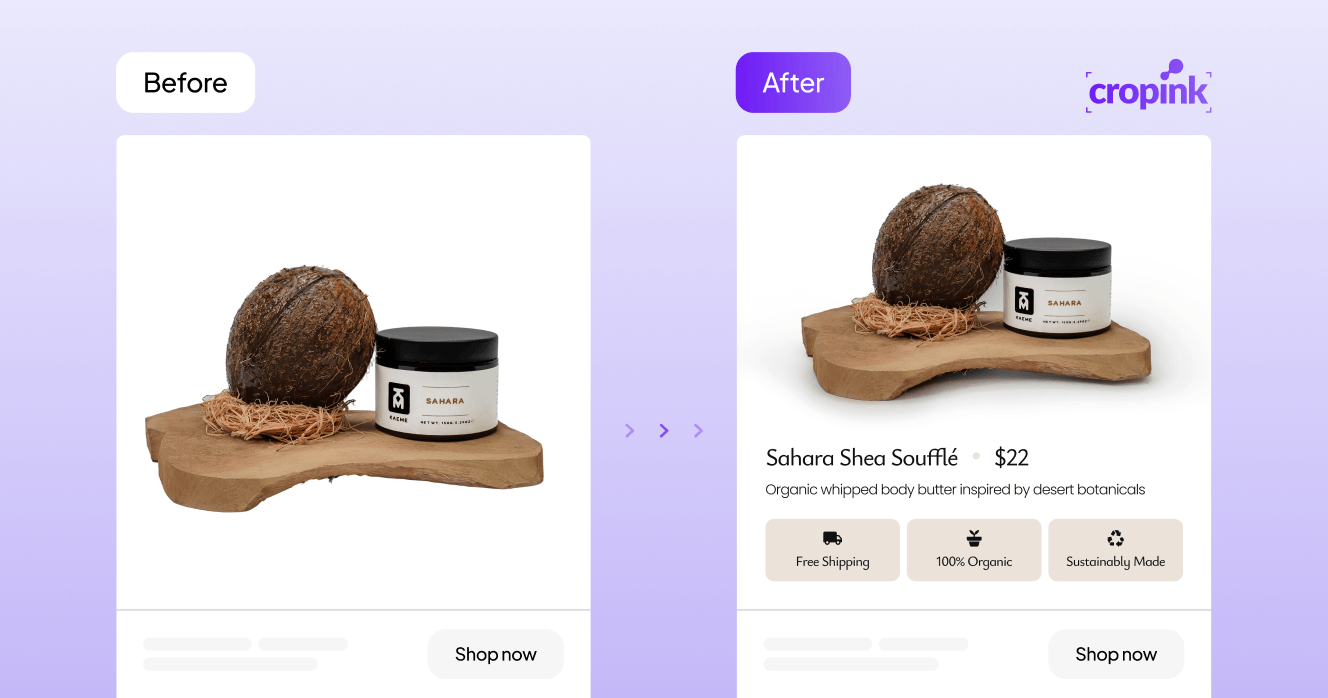
See more examples of how you can customize your Facebook ad creatives with Cropink.
Facebook ad copy checklist
Use this checklist to ensure you’re creating relatable, personalized ads that will make people interested in trying your products.
- Hook: Did I lead with the most interesting part?
- Audience: Will my target customer recognize themselves in this?
- Benefit: Did I explain why the product matters?
- Specificity: Have I given enough detail to make the offer clear?
- Creative: Is the copy working cohesively with the ad creative?
- Offer: If I have a powerful offer, did I make it impossible to miss?
- Friction: Have I dealt with an obvious reason someone might hesitate?
- Urgency: Is there a reason to act now?
- Voice: Does this actually sound like my brand?
- CTA: Is it obvious what I want the shopper to do next?
Final thoughts
Creating high-performing copy is a formula, and now you have the secret key thanks to these 11 Facebook ad copy examples.
The biggest takeaway is that you should always think about your target audience, what they care about most, and the challenges they’re facing. If you create ad copy from this angle, you’ll never miss the mark.
That said, don’t ignore the ad creative.
Your graphics should also contain copy that either addresses the user’s hesitation or paints a picture of the outcome they hope for.
Either way, Cropink can help you make creatives that support your ad copy, highlight your product’s USPs and offers, and give shoppers more reasons to click.
Learn more about how it works.
FAQs
What are the elements of a successful ad copy?
A successful Facebook ad copy should quickly tell the shopper what you're offering, why it matters to them, and what they should do next. That can include a powerful hook, a benefit, supporting product details, an offer, a reason to act, and a CTA.
How long should Facebook ad copy be?
There isn't one perfect length for every Facebook ad. Meta recommends that the primary text should span 1–3 lines at most, and about 125 characters is enough for most ads.
But that doesn't mean longer copy can't work. An AdEspresso experiment found that the one-paragraph version generated 32 leads at a $4.83 cost per lead, compared with 12–13 leads and a cost per lead above $10 for the two one-sentence versions.
What makes an ad copy persuasive?
Good ad copy connects what you're selling to what your audience actually cares about. Don't list features alone. You should also explain how they help and why the shopper should care.
How do you write ad copy for ecommerce products?
Start with the benefit or outcome your customer wants, then give them the details that help them decide. You can choose to include a combination of the offer, USP, customer review, guarantee, and free shipping.
Sources
- Meta. Creative best practices for text in ads
- AdEspresso. Facebook Ad Copy Length: Short or Long Which is Best? (a $1,000 Experiment)
- Copy Hackers. Long Copy for Facebook Ads Works – better than images
- Dixa. 3 Statistics That Show How Customer Reviews Influence Consumers
- AMZG Media. Silent Scrollers: Why 85% of Users Watch Without Sound—And What That Means for Your Content
Damaris is a Digital Marketing Specialist who writes about digital marketing and performance marketing. At Cropink, she creates data-driven content to help businesses run better ad campaigns for better performance and ROI.
Leszek is the Digital Growth Manager at Feedink & Cropink, specializing in organic growth for eCommerce and SaaS companies. His background includes roles at Poland's largest accommodation portal and FT1000 companies, with his work featured in Forbes, Inc., Business Insider, Fast Company, Entrepreneur, BBC, and TechRepublic.
Related Articles


How Can Cropink Help?
Start with Cropink is easy and free
No credit card required