Portrait vs Landscape vs Square: Which Ad Format Wins?
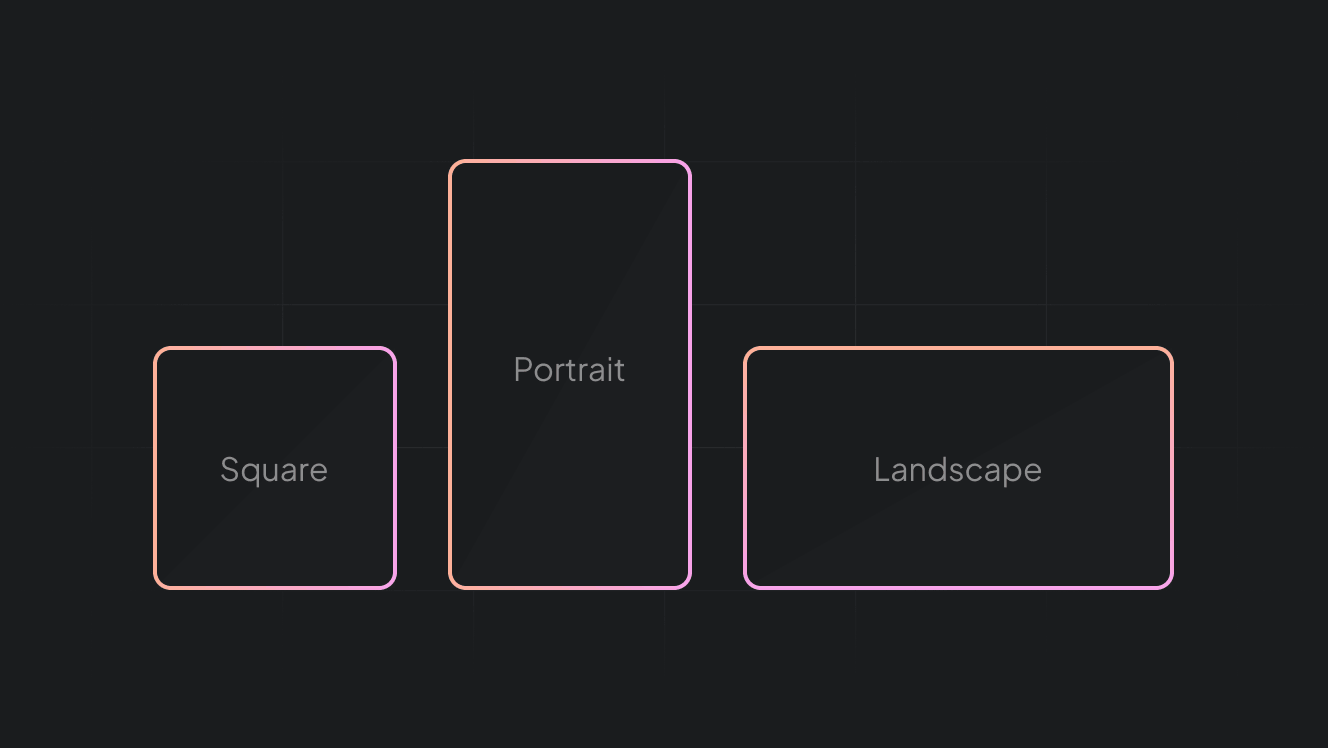
Portrait, landscape, and square each win on different platforms. Portrait 9:16 drives 10–20% more conversions on YouTube. Landscape 16:9 outperforms vertical by 2–4x on LinkedIn. Square cut Meta CPL from $9 to $3. This guide shows exactly which format wins where.


Nobody talks about aspect ratios at dinner parties.
But if you are running ads, the choice between portrait ratio, landscape, and square is quietly one of the most expensive decisions you make.
Get it wrong and your ad runs with 78% of the screen wasted, triggers cropping that cuts off your logo, or simply does not qualify for the placement you paid for.
This guide breaks down what each format actually is, where it genuinely wins, where it embarrassingly loses, and exactly which one to use on each platform.
No fluff, just the format decisions that move the needle.
Key takeaways
- Portrait (9:16) fills the entire mobile screen and drives 10 to 20% more conversions on YouTube campaigns vs. landscape, per Google.
- Square (1:1) is the safest universal format, working across 80% of placements, but is not optimal anywhere.
- Landscape (16:9) still dominates on YouTube pre-roll, LinkedIn, and desktop-heavy placements, where horizontal (16:9) outperforms vertical by 2x to 4x in view rate on LinkedIn.
- 4:5 portrait takes up 35% more mobile screen space than square on Meta feeds and outperforms 1:1 by up to 15% in feed placements.
- Switching from landscape to square reduced CPL from $9-10 to $3-4 in real campaign tests on Meta.
- The platform you are running on should determine your format, not creative convenience.
- For Meta Advantage+ campaigns, providing both 9:16 and 1:1 lets the algorithm serve each in the placement where it performs best.
Portrait, landscape, and square: What each format actually means
Let's kill the confusion fast. These terms describe the relationship between an image or video's width and height, and they matter more than most advertisers realize.
| Format | Aspect Ratio | Dimensions (px) | What It Looks Like |
|---|---|---|---|
| Portrait (full vertical) | 9:16 | 1080 x 1920 | Tall, fills entire smartphone screen |
| Portrait (feed-friendly) | 4:5 | 1080 x 1350 | Taller than square, shorter than full vertical |
| Square | 1:1 | 1080 x 1080 | Equal width and height, neutral and compact |
| Landscape (widescreen) | 16:9 | 1920 x 1080 | Wide, horizontal, designed for TV and desktop |
| Landscape (display) | 1.91:1 | 1200 x 628 | Slightly shorter landscape, used in display and news feeds |
Here is the number that should change how you think about this forever.
On a phone held vertically, a 9:16 portrait ad covers 100% of the screen. A 16:9 landscape ad on the same screen covers roughly 22% of it. The other 78%? Your competitor's content.
Why aspect ratio affects performance more than most advertisers think
Most advertisers obsess over copy, creative, and targeting, then upload whatever size file they happen to have. The brands that consistently outperform treat format as a first-order creative decision.
Here is why getting this wrong costs real money.
- Screen coverage drives attention. A vertical ad that fills the phone screen removes every surrounding distraction. A landscape ad on mobile? The viewer sees your content, their notifications, and someone else's Reel all at once.
- Platform algorithms favor native formats. Meta, TikTok, and Instagram favor formats that match the placement's native behavior. Serving a landscape video to a Reels placement is not just a design problem. It is an auction problem.
- Wrong format triggers cropping. Platforms auto-crop ads that do not match placement specs. If your logo or CTA lands in the crop zone, your ad runs with a broken experience. Broken experiences do not convert.
- Format determines where your ad can run. A 16:9 landscape video uploaded to Instagram Reels may not qualify for the Reels placement at all. Wrong format means smaller inventory, higher CPMs, and less reach.
Portrait ratio ads: When vertical wins
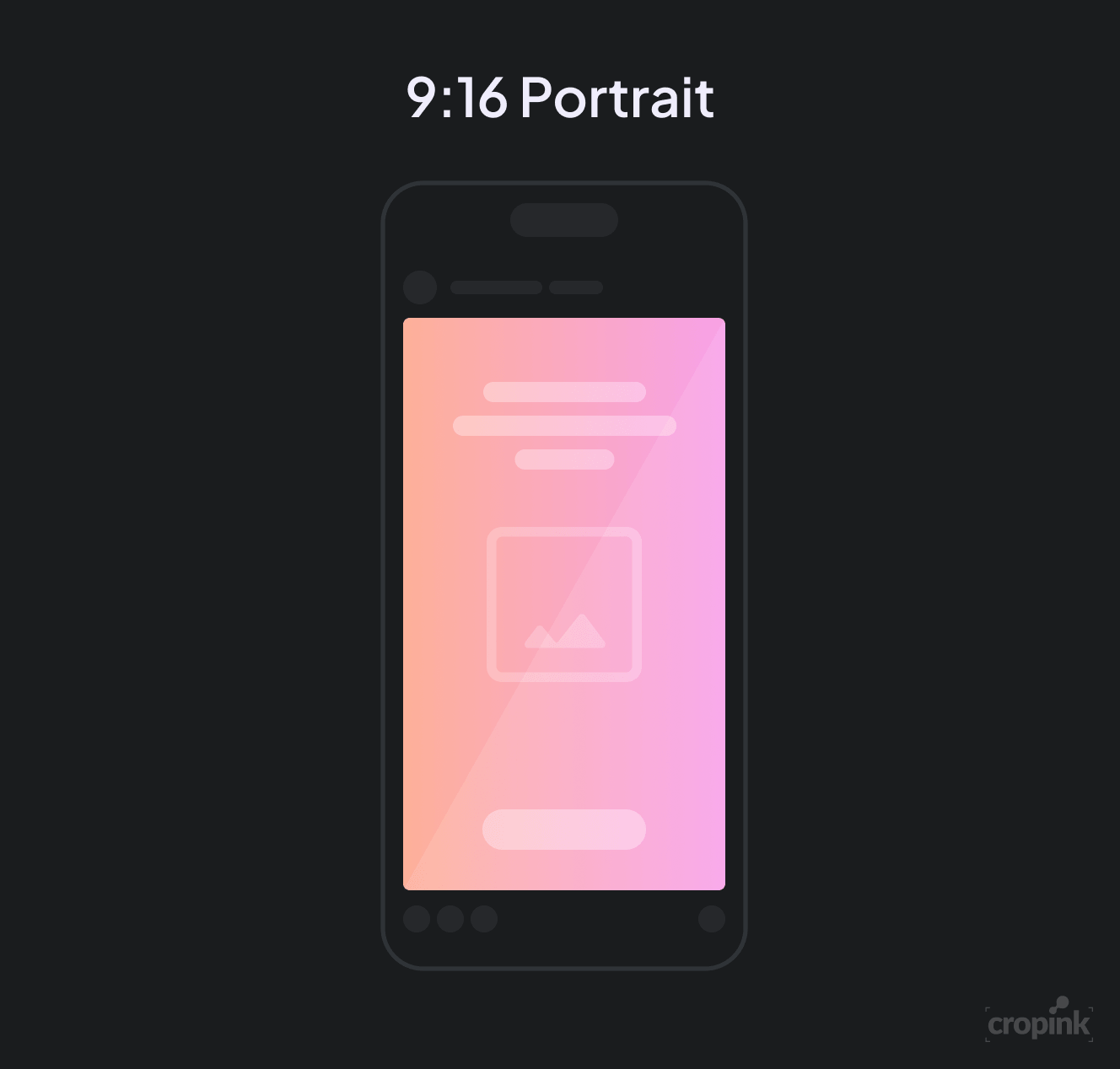
Portrait ratio, specifically 9:16 (1080x1920px), is the format that took over social media and never gave it back.
TikTok built its entire platform around it. Instagram Reels, YouTube Shorts, Facebook Stories, and Snapchat followed. It is the native format of every short-form vertical surface that matters right now.
The reason is simple: people hold their phones vertically more than 90% of the time. A 9:16 ad that fills that screen completely creates a fully immersive experience with zero visual competition.
No thumbnails. No sidebar content. No competing text. Just your ad, edge to edge.
What the data shows
The numbers are not close. Here is what platform-level research actually says about portrait performance.
- Google confirms that campaigns including vertical 9:16 video see 10 to 20% more conversions vs. campaigns using only landscape.
- Vertical videos can achieve up to 90% higher completion rates compared to horizontal video on mobile-first platforms, per video research.
- Portrait 9:16 covers 75% of the YouTube app screen on impression, and 100% if the user taps fullscreen. Landscape covers a fraction of that.
- TikTok, Instagram Reels, YouTube Shorts, Facebook Stories, and Snapchat all use 9:16 as their default native format. Being off-format on any of these placements means your ad already starts at a disadvantage.
4:5 portrait: the feed-friendly middle ground
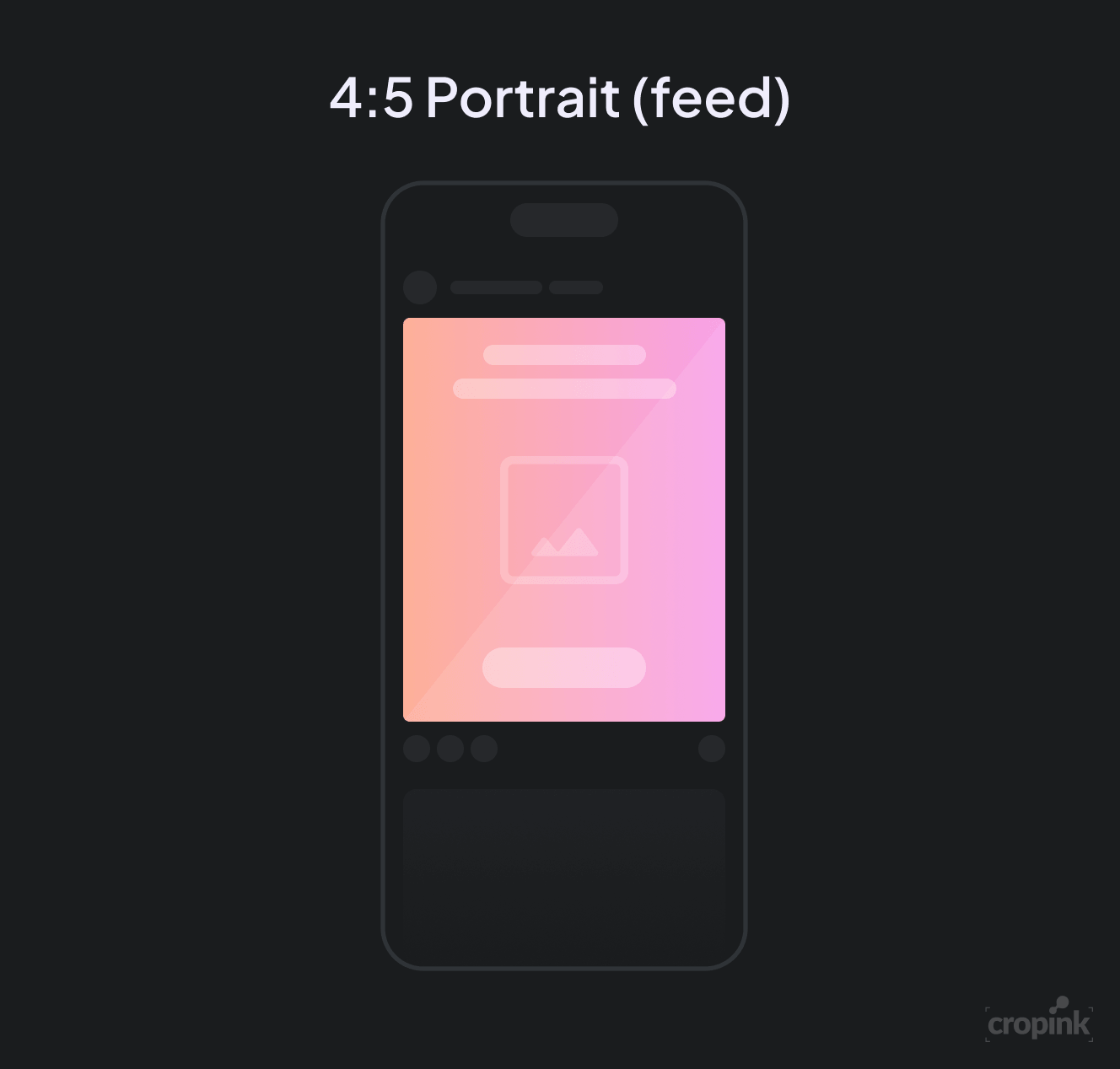
Full 9:16 is overkill for a feed. Enter 4:5 (1080x1350px), the format Meta's own creative guidance recommends for feed placements.
It takes up 35% more mobile screen space than square, outperforms 1:1 by up to 15% in feed placements, and works acceptably across Stories and Reels with minor cropping.
Think of 4:5 as the 9:16's practical older sibling. Not as dramatic, but better suited to the feed environment.
Format and creative work together directly in Meta DPA catalog campaign design, where the right ratio determines how much of the feed your product actually owns.
Where portrait underperforms
Portrait is dominant on mobile social. It is not dominant everywhere. Here is where it actually loses.
- LinkedIn desktop: Portrait video sits in a narrow column on desktop. Landscape fills the content area naturally and significantly outperforms vertical in view rate and completion rate.
- YouTube pre-roll: Traditional in-stream pre-roll on YouTube is still a landscape-dominant environment. 9:16 works for Shorts but not for standard in-stream placements.
- Connected TV (CTV): CTV screens are horizontal. A 9:16 portrait ad on a 65-inch television is a poor experience by any measure.
Landscape aspect ratio ads: When horizontal still wins
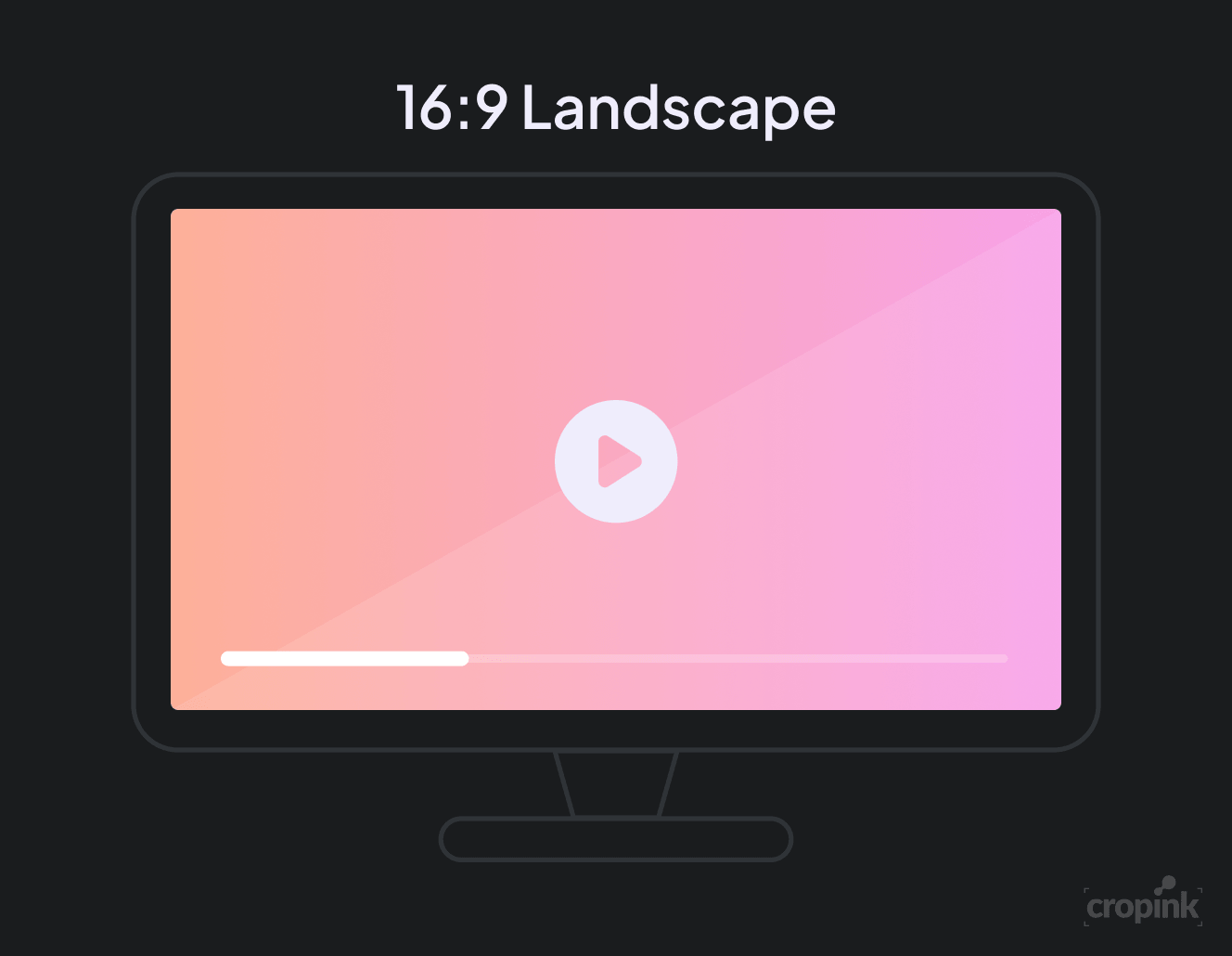
Landscape, primarily 16:9 (1920x1080px), is the format digital advertising was built on. It matches the proportions of every television set, desktop monitor, and laptop screen ever made.
And despite years of 'vertical is taking over' headlines, it still dominates in several key environments.
Landscape is not dead. It is just misapplied. The brands struggling with it are the ones running it on mobile-first platforms where it was never going to win anyway.
Where landscape dominates
Let's be specific. Here are the placements where the landscape aspect ratio genuinely outperforms everything else.
- YouTube in-stream pre-roll: 16:9 is the native format for YouTube's standard video experience. It fills the desktop video player cleanly and represents the highest-reach video placement on the platform.
- LinkedIn: Analysis of over $140,000 in LinkedIn ad spend found that horizontal 16:9 video outperformed vertical 9:16 and square 1:1 in view rate, completion rate, and cost efficiency by 2x to 4x. This is the one major platform where landscape is the clear winner.
- Connected TV (CTV): CTV screens are horizontal by default. Landscape is the only format that fills them without awkward black bars or scaling issues.
- Google Display Network: Display ads in landscape (1200x628px, 1.91:1) are among the highest-reach inventory on the GDN. For responsive display ads, Google requires both landscape and square images.
- Facebook desktop feed: While mobile dominates overall Meta usage, desktop users see landscape ads naturally. Brands with desktop-heavy audience segments often see stronger landscape performance on Facebook.
Landscape's mobile problem
On a phone held vertically, a 16:9 landscape ad takes up roughly 22% of the screen. The other 78% shows whatever else is on the page. That is not a copywriting problem.
No headline is good enough to overcome a format that gives away three quarters of the viewer's screen to competing content.
Running landscape as your primary format on Meta or TikTok for a mobile audience is one of the most preventable sources of wasted ad spend. Mobile drives the majority of social ad impressions globally, and landscape gives most of that audience 78% less screen coverage than portrait.
Square ads (1:1): The format that wins nowhere and works everywhere
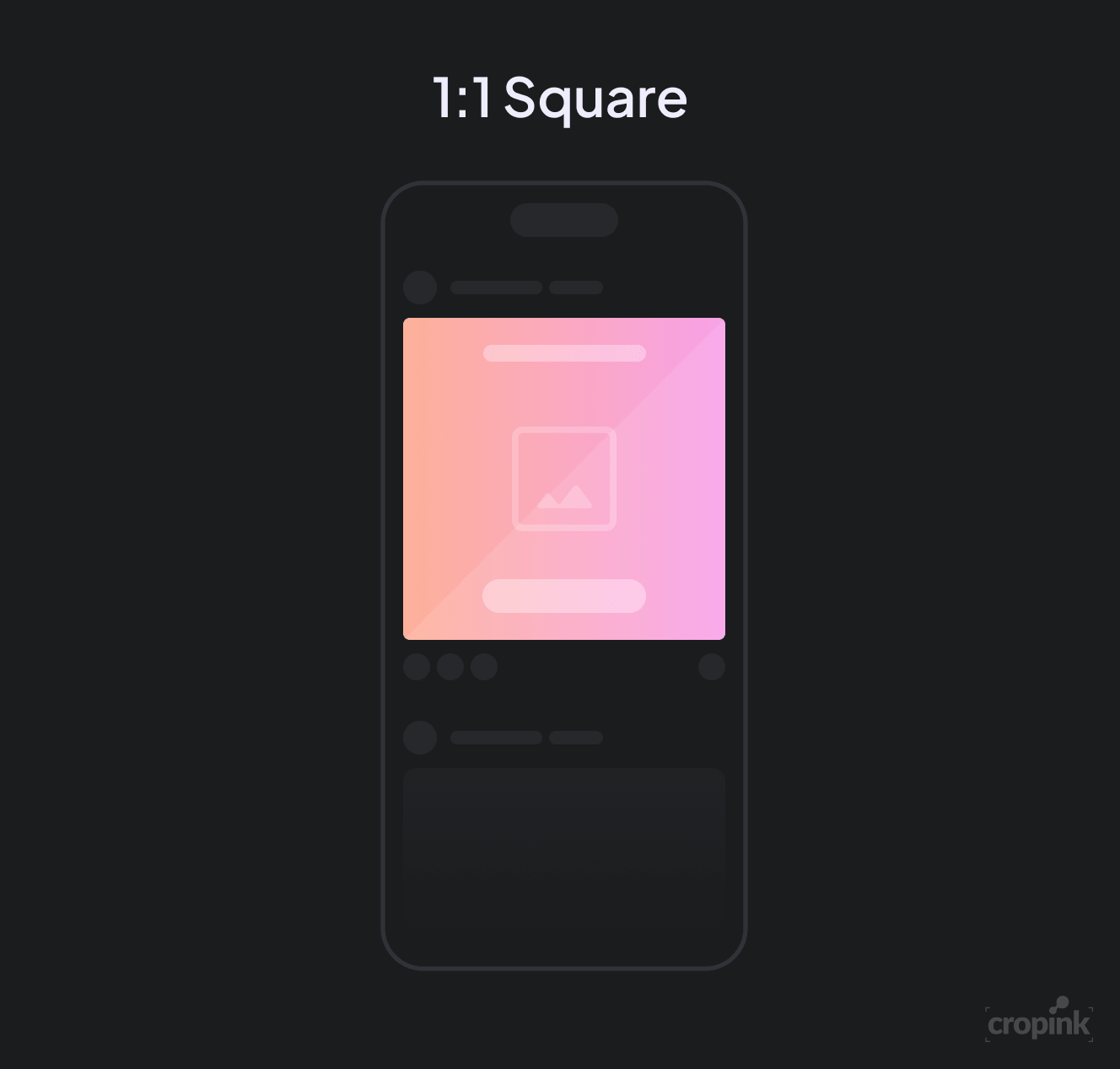
Square (1:1, 1080x1080px) is the most widely used aspect ratio in social media advertising. Not because it is the best format. Because it works across roughly 80% of placements without breaking.
It is the format you choose when you need one creative to run everywhere. It is not the format you choose when you want to actually win.
What square does well
In fairness, the square earns its place. Here is what it genuinely does well.
- Universal compatibility: Square runs cleanly in Facebook feed, Instagram feed, LinkedIn feed, Twitter/X feed, and most display placements without cropping or awkward letterboxing.
- Mobile and desktop balance: Unlike landscape (which is too wide for mobile) or 9:16 (which is too tall for desktop), square performs acceptably on both. It is the compromise format.
- Lower CPL than landscape on Meta: Real campaign tests switching from landscape to square on Meta reduced cost per lead from $9-10 down to $3-4. Square claims significantly more mobile screen space than landscape, which drives better engagement metrics and lower costs.
- Carousel ads: Square is the native format for carousel ads on Meta and LinkedIn. For ecommerce brands running catalog-based carousel ads, 1:1 is the correct format.
Where square falls short
Safe is not the same as good. Here is where square leaves real performance on the table.
- Feed placements on Meta: 4:5 portrait takes up 35% more screen space on mobile. More screen space equals more attention. Square is acceptable in the feed, but 4:5 consistently outperforms it by up to 15%.
- Stories and Reels: Square format in a 9:16 Stories placement appears with black bars above and below. It does not fill the screen and signals that the creative was not made natively for the placement.
- YouTube: Square video does not fill the standard YouTube video player, which is built for 16:9.
Platform-by-platform format guide
The right format depends entirely on the platform and placement. Here is the definitive breakdown by channel.
| Platform / Placement | Best Format | Recommended Dimensions | Notes |
|---|---|---|---|
| TikTok In-Feed | Portrait 9:16 | 1080 x 1920px | 9:16 is the only format that fills the TikTok screen natively |
| Instagram Reels | Portrait 9:16 | 1080 x 1920px | Cropping occurs with any other format |
| Instagram Stories | Portrait 9:16 | 1080 x 1920px | Full-screen format. Other ratios leave dead space. |
| Instagram Feed | Portrait 4:5 | 1080 x 1350px | 35% more screen than 1:1. Outperforms square by up to 15%. |
| Facebook Feed | Portrait 4:5 or Square 1:1 | 1080 x 1350px or 1080 x 1080px | 4:5 for mobile-heavy audiences; 1:1 for desktop/mobile mix |
| Facebook Stories / Reels | Portrait 9:16 | 1080 x 1920px | Full-screen, immersive. Match TikTok creative if repurposing. |
| Facebook Carousel | Square 1:1 | 1080 x 1080px | Native carousel format. Consistent across all cards. |
| YouTube In-Stream | Landscape 16:9 | 1920 x 1080px | Native YouTube video format. Fills desktop player. |
| YouTube Shorts | Portrait 9:16 | 1080 x 1920px | Square and landscape may not qualify for Shorts placement. |
| LinkedIn Feed | Landscape 16:9 | 1920 x 1080px | 16:9 outperforms 9:16 by 2x to 4x on LinkedIn in ad spend analysis. |
| Snapchat | Portrait 9:16 | 1080 x 1920px | Full-screen vertical is the only native format. |
| Google Display (Responsive) | Landscape 1.91:1 + Square 1:1 | 1200 x 628px + 1200 x 1200px | Provide both. Google automatically serves the best fit. |
| Connected TV (CTV) | Landscape 16:9 | 1920 x 1080px | Horizontal screens only. Portrait is unusable on CTV. |
Portrait vs landscape vs square: head-to-head comparison
To make this clearer, here is a direct comparison across the metrics that matter most to paid advertising performance.
| Metric | Portrait (9:16 / 4:5) | Square (1:1) | Landscape (16:9) |
|---|---|---|---|
| Mobile screen coverage | 75 to 100% (9:16) | Moderate | ~22% held vertically |
| Best platform | TikTok, Reels, Stories, Shorts | Meta feeds, carousels, LinkedIn | YouTube, LinkedIn, CTV |
| Conversion lift vs. landscape | +10 to 20% on YouTube | CPL 60% lower than landscape on Meta | Baseline |
| Platform compatibility | High for mobile-first | Universal (~80% of placements) | High for desktop/TV |
| Algorithm preference | Preferred on TikTok, Reels, Stories | Neutral | Preferred on YouTube, LinkedIn |
| Cropping risk | High if run on desktop-first placements | Low across most placements | High on mobile-first placements |
| Production complexity | Requires purpose-built vertical creative | Easiest to repurpose across platforms | Standard production, easy to repurpose for TV |
Which format should you use? A decision framework
Stop guessing. The right format is determined by your platform and your audience, not by whatever file you happen to have sitting in your design folder. Here is how to decide.
If your audience is primarily on mobile social (TikTok, Instagram, Snapchat)
Portrait 9:16. Full stop. Build it vertically from the start, not as a desperate crop of a landscape video you already made.
Keep key visual elements and text in the center 75% of the frame to avoid UI overlay coverage at the top and bottom.
If you are running Meta feed ads (Facebook and Instagram feed)
Use 4:5 portrait (1080x1350px) as your primary format. It takes up 35% more mobile screen space than square and consistently outperforms 1:1 in feed placements. Meta catalog ads running in the feed and Facebook dynamic product ads both benefit directly from 4:5, which maximizes feed visibility for product creative.
Reserve 1:1 square for carousel ads, where it is the native and optimal format.
If you are running Meta Advantage+ (automatic placements)
Give the algorithm what it needs: both 9:16 and 1:1. Meta will serve each in the placement where it performs best.
This is the lowest-effort path to covering all placements without managing each one manually. Meta Advantage+ uses creative variety to optimize across placements automatically, so more formats means more surface area for the algorithm to work with.
If you are running YouTube campaigns
Use 16:9 landscape for standard in-stream pre-roll. Use 9:16 portrait for YouTube Shorts. Add square (1:1) as a supplementary format for YouTube app environments that automatically compress vertical video.
If you are running LinkedIn campaigns
This one surprises people. Use 16:9 landscape as your primary video format. Analysis of over $140,000 in LinkedIn ad spend shows horizontal video outperforms vertical and square by 2x to 4x in view rate and completion rate. LinkedIn is the one major platform where the landscape aspect ratio is the clear, data-backed strategic choice.
For static image ads, 1.91:1 landscape (1200x627px) is the native format for LinkedIn sponsored content.
If you are running Google Display or Performance Max
Provide both landscape (1200x628px at 1.91:1) and square (1200x1200px at 1:1) for responsive display ads. Google automatically serves the format that fits the available ad slot.
For portrait display, 9:16 at 900x1600px is supported and valuable for mobile interstitial placements. The more format variations you give Google, the more inventory it can access and optimize across. More variety equals more reach, usually at lower CPMs.
How to build a multi-format creative strategy without doubling your production budget
The most common objection to format optimization is cost. Building separate 9:16, 4:5, 1:1, and 16:9 versions of every creative sounds like four times the work and four times the budget.
It is not. Here is how to do it without losing your mind or your budget.
Film vertically, crop horizontally (not the other way around)
Shoot everything in 4K or higher resolution vertically, at 9:16. You can crop down to landscape, square, or 4:5 in post without losing quality.
Try it in reverse, cropping a landscape video into 9:16, and you get either an uncomfortably zoomed-in close-up or the dreaded black bars. Film vertically first, always.
Design with safe zones from the start
Every platform covers parts of your creative with UI elements: buttons, captions, ad labels. If your product, logo, or CTA lands in those zones, it gets buried. Design around them from day one.
Here is exactly what to keep clear for each placement.
- Meta Feed: Top 14%, bottom 35%, 6% on each side.
- Meta Stories and Reels: Top 14%, bottom 20%.
- TikTok In-Feed: Top 10% (ad label), bottom 15% (caption bar and action buttons).
- YouTube Shorts: Top 10%, bottom 15%.
Use dynamic templates for product ads
For ecommerce brands running dynamic product ads, the format challenge multiplies fast. One product becomes three formats. A hundred products becomes three hundred assets. Building each one manually is not a strategy, it is a full-time job.
This is exactly the problem Cropink solves. Cropink dynamic templates generate every format automatically from one design system, pulling product data directly from your connected product data feed and applying your brand identity across every SKU.
Adapt the concept, do not just resize the file
A 9:16 vertical ad cropped to 16:9 is not a landscape ad. The composition is wrong, the text is in the wrong place, and the visual hierarchy collapses.
Multi-format creative means adapting the concept for each format, not rescaling one file and hoping for the best.
What works as a centered product shot in 1:1 may need to become a top-anchored hero with a text overlay below in 9:16. Building ad creative systems that flex formats without losing brand consistency is the production discipline that separates high-output teams from everyone else.
Format mistakes that are quietly draining your ad budget
We at Cropink have seen these same mistakes show up across accounts of every size. They are all avoidable. Here is what goes wrong and how to fix it.
| The Mistake | The Fix |
|---|---|
| Running 16:9 landscape on TikTok or Instagram Reels | Build 9:16 natively. Landscape leaves 78% of the screen empty and signals the content was not made for the platform. |
| Cropping landscape video to 9:16 with black bars | Black bars signal repurposed content. Platforms and audiences respond poorly. Film vertically from the start. |
| Using 9:16 portrait on LinkedIn as the primary format | LinkedIn is a desktop-heavy platform. 16:9 landscape outperforms vertical by 2x to 4x in view rate and completion rate. |
| Using square as a universal default and never testing further | Square works everywhere but wins nowhere. On Meta feeds, 4:5 consistently outperforms 1:1 by up to 15%. |
| Placing logos or CTAs in platform UI overlay zones | Design within safe zones for every placement. Key visual elements covered by captions or buttons are wasted creative. |
| Providing only one format to Meta Advantage+ | Provide both 9:16 and 1:1 at minimum. Meta needs format variety to optimize across all placements. |
| Assuming what works on one platform works on another | Format-platform fit is specific. Always check the native format for each placement before launching. |
Choose better formats for your ads:
Frequently asked questions
What is portrait ratio in advertising?
Portrait ratio refers to ad formats that are taller than they are wide. The two most common portrait ratios in advertising are 9:16 (1080x1920px), used for Stories, Reels, TikTok, and Shorts, and 4:5 (1080x1350px), used for Meta feed placements.
Portrait format is the dominant format for mobile-first social media advertising because it matches how users naturally hold their phones.
What is the landscape aspect ratio in advertising?
Landscape aspect ratio refers to ad formats that are wider than they are tall. The most common landscape ratios are 16:9 (1920x1080px) for video and 1.91:1 (1200x628px) for display and static image ads.
Landscape is the optimal format for YouTube in-stream pre-roll, LinkedIn video ads, Connected TV, and Google Display Network placements.
Is portrait or landscape better for Facebook ads?
For Facebook feed ads, 4:5 portrait (1080x1350px) is the best-performing format, taking up 35% more mobile screen space than square and outperforming 1:1 by up to 15% in feed placements.
For Facebook Stories and Reels, 9:16 is the correct format. For Facebook Carousel ads, 1:1 square is the native and optimal format.
Which aspect ratio gets the most engagement?
It depends on the platform. On TikTok, Reels, and Stories, 9:16 portrait gets the most engagement because it fills the screen. On LinkedIn, 16:9 landscape outperforms all other formats by a significant margin. On Meta feeds, 4:5 portrait outperforms square by up to 15%.
There is no single universal winner. Platform-specific format strategy always outperforms a one-size-fits-all approach.
Can I use the same creative in portrait and landscape?
Not effectively. Resizing a landscape creative to portrait (or vice versa) typically produces broken composition, cut-off text, and poorly framed subjects. The best approach is to film in high resolution vertically and crop to other formats in post.
For product ads at scale, dynamic template tools automate multi-format creative production so you do not have to build each version manually.
Choose better formats for your ads:
Final words
There is no universally winning ad format. There is only the right format for the right platform. Anyone who tells you otherwise is selling you a shortcut that does not exist.
Portrait 9:16 wins on TikTok, Reels, Stories, and Shorts. Landscape 16:9 wins on YouTube, LinkedIn, and CTV. Square 1:1 is the safe universal fallback. Portrait 4:5 is the current best practice for Meta feed ads.
The brands that consistently outperform are the ones that build format-specific creative, respect platform safe zones, and stop treating aspect ratio like a technical checkbox nobody actually needs to think about.
If you are running dynamic product ads across Meta, TikTok, and Snapchat, building every format variation manually is not sustainable. Cropink generates on-brand ads in every format automatically, pulling directly from your live product feed in real time. One system, every format, at the scale your catalog demands. Try Cropink for free
Sources
- Google Ads Help. Use Square and Vertical Video to Engage Mobile Customers
- Dataslayer. Meta Ad Formats 2025: Complete Guide for Marketers
- AdEspresso. Square Image vs. Landscape: What Works Best? A $1,200 Experiment
- B2Linked (LinkedIn Ads Show). What Video Format Performs Best on LinkedIn Ads? Vertical, Horizontal, or Square?
- CineRads. Video Ad Sizes and Aspect Ratios in 2026: 9:16 vs 4:5 vs 1:1 Explained
- AdsUploader. Meta Ads Size Guide 2026: All Facebook Ad Specs
- Confect. 9x16 Aspect Ratio Guide
- Cropink. What Is a 9:16 Aspect Ratio? Guide for Social Media and Ads
- YellowHEAD. Ultimate Social Ad Specs and Size Guide
Ansherina helps brands create powerful digital marketing and performance marketing strategies. With a passion for ad design and audience engagement, she is dedicated to making brands more visible and impactful.
Leszek is the Digital Growth Manager at Feedink & Cropink, specializing in organic growth for eCommerce and SaaS companies. His background includes roles at Poland's largest accommodation portal and FT1000 companies, with his work featured in Forbes, Inc., Business Insider, Fast Company, Entrepreneur, BBC, and TechRepublic.
Related Articles


How Can Cropink Help?
Start with Cropink is easy and free
No credit card required